Andrew A. Snelling, B.Sc. (Hons), Ph.D. (Geology), was for many years a Geologist, Senior Research Scientist, and Editor of the CEN Technical Journal (now Journal of Creation) at Creation Science Foundation (now Creation Ministries International), Brisbane, Australia. From 1998, he worked for the Institute for Creation Research, USA, where he was an Associate Professor of Geology. Since 2007, he worked for Answers in Genesis USA.
Andrew completed a Bachelor of Science with degree in Applied Geology with First Class Honours at The University of New South Wales in Sydney. He graduated with a Doctor of Philosophy (in geology) at The University of Sydney for his thesis entitled A geochemical study of the Koongarra uranium deposit, Northern Territory, Australia.
What others are saying:
Those who support Snelling’s work view ‘The Genesis Flood Revisited” as a valuable resource, reaffirming their belief in a literal interpretation of the biblical flood account. They appreciate Snelling’s scientific arguments, which they feel validate the accuracy and historicity of the Genesis flood narrative.
A Review:
Title: A Masterful Reexamination of the Genesis Flood: An Indispensable Resource for Biblical Creationists
In 1974, this writer read the original Genesis Flood by John C. Whitcomb and Henry M. Morris. It was one of several factors that opened a thirst for apologetics.
Without fear of contradiction, “The Genesis Flood Revisited” by Andrew A. Snelling is a well-researched book that provides a comprehensive and scientific examination of the biblical flood account. The book is an invaluable resource for young-earth creationists seeking to solidify their beliefs and understand events in the Old Testament, along with New Testament confirmation of these events.
“The Genesis Flood Revisited” is generally suitable for readers of varying levels of scientific knowledge, although some sections are rather technical. If some book sections are too technical, the reader can pass over them. The book is truly encyclopedic.
Snelling’s book is in the eight by 11 format and is massive, totaling 670 pages. On pages 641 to 670, Snelling treats the reader to numerous charts and figures, enabling the reader to visualize some of the technical concepts in the book. This reviewer has both the hardback and the Kindle editions. The Kindle version may be a solution for those on a tight budget.
As seen in the bio, Snelling is a highly respected geologist with extensive experience in the field. Snelling challenges conventional scientific interpretations while presenting a compelling case for the legitimacy of the Genesis flood account.
One of the book’s major strengths is Snelling’s ability to integrate biblical scholarship with geological evidence. He expertly navigates through the complex field of flood geology and demonstrates how the Earth’s geological features can be explained within the framework of a cataclysmic global flood. Snelling convincingly demonstrates from Scripture and the geological record the case for a universal flood as opposed to a local flood in Chapter Fourteen.
This reviewer is particularly interested in how Snelling explains in Chapters 99 and 100 ‘The Radioactive Methods for Dating Rocks” and “The Assumptions of Radioactive Dating.” In dealing with this topic, he addresses common arguments by skeptics and presents compelling counterarguments supported by scientific data. Additional dating issues are covered in Chapters 101 through 106.
Another area covered is in Section X, Chapters 113 through 126, “Problems For Biblical Geology Solved —Formations Implying Slow Deposition.” Snelling consistently approaches the subject matter with scientific rigor. In addition, Snelling’s attention to detail and comprehensive analysis makes his work difficult to dismiss, even by those who hold opposing views.
The author convincingly defends Creation in Six 24-hour days. He does so in the following paraphrase and summary that this reviewer gleaned from the book:
1. The use of the word “Yom” in the Hebrew Old Testament outside Genesis 1 is principally understood as literal 24-hour days. In over 2000 instances, “Yom” almost always refers to a typical day.
2. The phrase “and there was evening and there was morning” is consistently linked to each of the six creation days in Genesis 1. This phrase strongly suggests a regular 24-hour day cycle.
3. The sequential numbering of the days in Genesis 1 further supports the interpretation of literal 24-hour days. Each day is numbered from the first to the sixth, indicating a clear progression of time.
4. The creation account was written in a narrative form, not as a poetic or figurative piece, which suggests the author intended to convey a literal understanding of the creation days.
5. Exodus 20:11 reaffirms a literal interpretation of the creation days. In the Ten Commandments, God commands the Israelites to remember the Sabbath day by working for six days and resting on the seventh day, in alignment with the six-day creation account of Genesis. This commandment implies that the creation days are the same 24-hour days we experience.
6. The astrological markers used: In the creation account in Genesis, the word “Yom” is consistently followed by numerical modifiers such as “first day,” “second day,” and so on (Genesis 1:5, 1:8, 1:13). This pattern suggests that “Yom” should be understood as literal 24-hour days, as opposed to more extended periods of time.
7. The Hebrew language: The Hebrew word “Yom” has a consistent and primary usage throughout the Old Testament to refer to a literal, 24-hour day. In fact, out of the 2,301 times the word is used in the Old Testament, “Yom” overwhelmingly refers to a literal day. It would be inconsistent to interpret “Yom” differently in the context of the creation account.
8. The Sabbath commandment: In Exodus 20:8-11, God declares that the Israelites are to remember and keep the Sabbath day holy. The commandment explicitly states that they are to work for six days and rest on the seventh, just as God worked for six days and rested on the seventh, which suggests a parallel between the days of creation and the days of the week, implying that the days of creation were literal 24-hour days.
9. The narrative structure of Genesis: The creation account in Genesis is written in a straightforward narrative style, using the phrase “And there was evening and there was morning” to describe each day of creation, which this phrase is consistently used throughout the Bible to indicate the passing of a 24-hour day.
10. The purpose of the creation account: The purpose of the creation account is to provide a foundation for understanding God’s work in creating the world. Interpreting the “Yom” as literal 24-hour days aligns with the straightforward reading of the text and allows for a clear understanding of God’s creative activity.
In conclusion:
“The Genesis Flood Revisited” leaves no subject untouched. It is a valuable and comprehensive exploration of foundational events in the Bible and deserves recognition as an important contribution to the ongoing interchange between science and faith. As said in the title of this review, Snelling’s book is truly “masterful” and a fitting tribute to the original Genesis Flood book. Snelling’s book is also a testament to fifty years of hard work in researching and understanding the scientific and geological work involved. The book is a cause for celebration!
End of Review.
“Study to shew thyself approved unto God, a workman that needeth not to be ashamed, rightly dividing the word of truth.” (2 Timothy 2:15)
Mr. Kettler has previously published articles in the Chalcedon Report and Contra Mundum. He and his wife, Marea, attend the Westminster, CO, RPCNA Church. Mr. Kettler is the author of 17 books defending the Reformed Faith. Books can be ordered online at Amazon.
A Flight from Reality, Impotent “Upper Story” Pietism, a Hellenistic Dreamworld by Jack Kettler
In this study, the author borrows from Francis A. Schaeffer’s use of the expressions “upper story” and “lower story.” The phrases will not be used in the same way Schaeffer used them. Schaeffer used them as a divide between the rational as opposed to rationalism. In this study, the terms will use the terminology of Greek Platonic dualism with its ideas/forms invisible/visible motif.
Greek dualism can manifest itself in Christianity as false piety, seeking to escape the material world. The “upper story,” in contrast to the “lower story,” is where the pietist seeks to find a spiritual flight or withdrawal from the world or from what is called dead orthodoxy. There are many manifestations of Pietism, making it sometimes difficult to identify. Some religious groups have elements of Pietism, whereas others are fully committed.
As explained below in the entertaining article “The Nine Spiritual Laws of White-Wine Pietism,” Pietism can be fashionable and worldly. The Pietism explained in this article is a flight from doctrinal confessional Christianity. White-Wine Pietism is an open game for satire like that used in the long-running show South Park. Other expressions of Pietism can be seen in groups that embrace escapist eschatology, like Dispensationalism, where phrases such as “why polish the brass on a sinking ship?” are commonly heard. Regardless of its form, Pietism ultimately results in a withdrawal from society and can be seen as a way to escape from reality.
Brief definitions, a contrast:
Pietism stresses personal prayers and meditations over religious formality, doctrinal orthodoxy, and Christian political activism.
Whereas,
Piety, conversely, is the quality of being sanctified and reverent, strived for by all believers.
For those wanting a hilarious and accurate look at Pietism, the film Babette’s Feast is excellent! It is a thoroughly enjoyable film and won an Oscar. There are many manifestations of Pietism in the film. The present study will focus on the extreme dichotomy between the spiritual and material, as seen in some groups influenced by Pietism. The use of false Pietism terminology is an essential qualification of this study. True Piety is something to be practiced and sought after by all Christians.
In Pietism, Christians strive to escape to the pure spiritual “upper story” world and not be contaminated by the “lower story” or sinful material world. In Pietism, there is a spiritual/material or upper story/lower story divide. In Pietism, the material world is sinful and hopeless, “why polish brass on a sinking ship.” Because of this pessimism, the pietist must escape. Sometimes, this dualism comes in the form of the “Higher Life movement,” where the experiential takes precedence over doctrinal confessions. Historically, one aspect of this dualism manifested itself in the monkish life, for all practical purposes, navel-gazing. Today, many have heard the phrase that a person can be so spiritually minded that they are no earthly good. The “cultural mandate,” developed by Abraham Kuyper, is missing in many pietistic circles.
Worldviews:
Hebraic thinking posited a unified view of man and God’s world. The spiritual and material were not in conflict. There was one world, and it was God’s world. God was concerned with how humanity lived in the world. Hence, God’s law is a guidepost or instruction manual on how to live in the real world. God instructed Israel on how to worship Him. It involved the real world. For example, tithes were brought to worship with material things such as grain, oil, and animals. Inheritance laws and instruction for education are important. The correct doctrine is important; false prophets were condemned.
The Western world and its legal tradition are built upon this Hebraic thinking. Considering the birth of Christianity, Christ did not repudiate this viewpoint. He encouraged it. Jesus did not repudiate God’s law. See Matthew 5:17. God’s law was not a manual to escape this world but to provide Godly order in society. Today, this worldview is called the Judeo/Christian worldview.
Pietism is often manifested as a detachment from the material world and its concerns. In some cases of Pietism, the dichotomy between the spiritual and material reveals itself as some things are spiritual and others are not. For example, prayer meetings are on a superior level than engaging in Christian political activity. Biblically, these two activities should not be juxtaposed.
The Roots of False Pietism:
In Greek philosophy, the spiritual/material dualism is seen in the writings of Plotinus, the third great master of Hellenistic thought.
Plotinus argues that the material world is evil, and the goal is to escape to a higher level.
Plotinus, in his first Ennead, puts it this way:
“Since Evil is here, “haunting this world by necessary law,” and it is the Soul’s design to escape Evil, we must escape hence. But what is this escape? “In attaining Likeness to God,” we read. And this is explained as becoming just and holy, living by wisdom, the entire nature grounded in Virtue…. And elsewhere he [Plato] declares all the virtues without exception to be purifications…. The solution is in understanding the virtues and what each has to give: thus the man will learn to work with this or that as every several need demands. And as he reaches to loftier principles and other standards these in turn will define his conduct: for example, Restraint in its earlier form will no longer satisfy him, he will work for the final disengagement; he will live no longer, the life of the good man such as Civic Virtue commends but, leaving this beneath him, will take up instead another life, that of the Gods….What art is there, what method, what discipline to bring us there where we must go?” (1)
The final goal for Plotinus is as follows in the second Ennead:
“There is another life emancipated, whose quality is progression towards the higher realm, towards the good and divine, towards that Principle which no one possesses except by deliberate usage but so may appropriate, becoming each personally, the higher, the beautiful, the Godlike.” (2)
According to Plotinus, one must seek disengagement and leave things beneath us. The “higher realm” or the “upper story” is essential.
In general, in Pietism, the goal is similar to Plotinus that is to escape to the higher spiritual realm:
The goal of the pietistic Christian is to escape worldliness. To accomplish this, Pietism turns inward in order to flee this world. Pietism can be described as quietism and retreatism; in other words, an escape. Pietism is quiet and has nothing to say as society degenerates other than escape or retreat. The problem is, eventually, there is nowhere to hide. Another danger of a pietistic higher life movement, as it is sometimes known, can include a downplaying of the importance of doctrine. For example, Roman Catholics and Evangelicals find common ground in the “upper story” tongue-speaking movement.
Observations on Pietism:
“Nietzsche may have been accurately describing the feeble pietism that surrounded him, the saccharine portraits of Jesus from childhood, but he could not have been more incorrect in his analysis that as a religion of the “sick soul,” the preaching of Christ was simply a message of resignation to the powers and principalities. On the contrary, it was the most radical renunciation of the herd mentality that keeps us addicted to the power brokers of this age.” – Michael S. Horton has been the J. Gresham Machen Professor of Theology and Apologetics at Westminster Seminary California.
“Prayer and action … can never be seen as contradictory or mutually exclusive. Prayer without action grows into powerless pietism, and action without prayer degenerates into questionable manipulation.” – Henri Nouwen was a Dutch Catholic priest, professor, writer, and theologian.
“The doctrine of vocation or calling gained currency as men began to take time and history seriously. If the goal of the Christian life is a Neoplatonic flight from this world, then pietism has effectively undermined the doctrine of non-ecclesiastical callings. To speak of having a calling is usually to speak of the clergy and clerical office.” – R. J. Rushdoony was an Armenian-American Calvinist philosopher, historian, and theologian.
“The purely emotional form of Pietism is, as Ritschl has pointed out, a religious dilettantism for the leisure class.” – Max Weber was a German sociologist, historian, jurist, and political economist, who is regarded as among the most influential theorists of the development of modern Western society.
Karl Barth describes Pietism as a phenomenon that promotes individualism rather than social-mindedness. If this is true, on the surface, Pietism may appear to be God-centered, when in reality, it may be man-centered under cover of religiosity.
Barth referring to a pietist named Gerhard Tersteegen, whom he had sympathy:
“For him, the world was only a deafening noise from which one must escape!” (3)
Karl Barth was a Swiss Reformed theologian. Barth is best known for his commentary on The Epistle to the Romans. Also noteworthy was his involvement in the Confessing Church, including his authorship of the Barmen Declaration.
“As one white-wine pietist told me recently: “Who cares how many natures Christ has? It’s enough to just love Jesus.” The point regularly made by white-wine pietists is that the quest for theological depth, clarity, and maturity lead one away from Jesus Christ and the Scriptures and frustrate the work of the Holy Spirit.”
2. Subjectivity is spiritual.
“White-wine pietists encourage people to look inside themselves to their very core. Here one finds purity of motive, willingness to follow God, good thoughts, marital fidelity, and truth-telling. To the extent these qualities do not exist in one’s heart, the more one must strive to obtain them through various well-tested ladders of ascent (for example, fasting, accountability groups, a “discipleship” relationship, prayer, and displaying “integrity” in one’s profession). While the Reformation identifies the heart as the problem, white-wine pietists see it as the answer.”
3. Liturgy dulls.
“White-wine pietists distrust ordered worship – it shackles the heartfelt response. These pietists in confessional churches incessantly clamor to “update” worship so that the “spirit can lead.” Thus Lutherans, for example, now experience the strange phenomenon of having an Amy Grant song in the middle of a “modified” Divine Service. In response to questions about this dubious practice, a white-wine pietist told me roughly the following: “We’ve been doing this liturgy-thing for years and nobody knows what they are saying anymore. It’s only meaningful and alive to you because it’s new to you. Anyway, the liturgy is a sixteenth-century German invention. Frankly, it’s all rote and boring to us (and too hard to understand) and to our children. By the way, can you believe how the public schools dummy down to the lowest common denominator? It is scandalous!” The result is that we now have more user-friendly services because the historical (and thus liturgical) service doesn’t “work” for white-wine pietists who have specialized needs within varying age groups, as well as soccer games at 12:10 P.M. on Sunday.”
“Pastors of white-wine pietists are encouraged to use their word processors on Thursday night to rearrange the liturgy in order to “surprise” victims on Sunday morning. Unfortunately, evangelicals coming to the Reformation come precisely to get away from “surprises.” (A “surprise” on Sunday morning is usually prefaced with the “worship leader” asking: “Does anyone have something that they would like to share this morning?”) The stability of an historic liturgy and its constant reminder each Sunday that we are in need of the gospel and the forgiveness of sins is what I, for example, found so utterly compelling about the Lutheran Church. Instead, white-wine pietists encourage services that end up being cheesy, mid-1970s praise meetings (but without bell-bottom pants) that eclipse the gospel, promote a theology of glory, and teach the congregation that they don’t “participate” unless they’re up front with the white-wine Yuppie “leadership team” doing piano bar music.”
4. The Sacraments are scary.
“White-wine pietists neither promote nor defend growth in and by the sacraments. Why? Because the objective forgiveness of sins in the means of grace is gospel through and through. White-wine pietists drink from the chalice of the law and either turn sacraments into ordinances or downplay their centrality in the Christian life (“once a month is more than enough – and why not do it on Sunday night so it is less time-consuming?”).”
5. Catechesis is for teenagers or intellectuals.
“The new white-wine pietists (like their forefathers) disdain the systematic learning of Christian doctrine. Catechesis, it is thought, smells of Rome, and we all know how little good catechism class does them, right? There is the perception among white-wine pietists in confessional churches that confirmation classes are to be endured and that works like Luther’s Small Catechism are to be thankfully put on the shelf at the end of the eighth grade. The concept of a thorough theological education from the earliest grades through adulthood is gone. Pietism has killed it. White-wine pietists keep the coffin nailed shut.”
“Vacuous Sunday school curricula that catechizes one in the theology of glory (with no emphasis, of course, on the sacraments) are brought in wholesale and fed to the children. Youth rallies stress the inner spiritual life over objective growth in faith through the means of grace (word and sacrament). Yet no one understands why kids are leaving confessional churches in droves for the evangelical movement as soon as they get to college. Of course, they are! Why stay? Johnny Angel goes to college and soon realizes that the evangelical parachurch organizations and other non-denominational Bible churches do a theology of glory with more enthusiasm and quality. The very churches that bemoan declining membership have set the next generation up for the completely logical next step.”
6. Small groups promote “real” growth and “accountability.”
“I thought I had left the horizontal approach to Bible study back with my white-wine pietist past. Not so. The Relational Bible Study School of Theology is being resuscitated by the new white-wine pietists operating in confessional churches. The result is an erosion of confidence in the value of corporate worship tied in with the worship of all Christians throughout time, in the sacraments and the word as the only sure means of growth in the Christian life, and in the liturgy as both cross-and counter-cultural.”
“Pietism created The Horizontal School of Theology. That school will never support an emphasis on confessional orthodoxy or on sacramental corporate worship. Small groups within churches that do not foster commitment to corporate worship and thus to the means of grace are enemies of the cross of Christ. The premise of such groups is that word and sacrament are not enough to meet individual felt needs. Everyone is different, so everyone must be met on a different level. Some have daily sins to confess and to be absolved from and some don’t. All have something different they need or want from the church salad bar on Sunday morning. This is a malignant American individualism, and it smells of Lucifer’s droppings.”
7. Doctrinal hymns are elitist, but praise choruses edify.
“As the white-wine-pietist son of a Lutheran minister told me recently, the first priority should be on whether the song can be sung easily and only then should one focus on the text of the song. Since the key is to experience God directly, immediately, and quickly (like an Egg McMuffin), the easiest way is by using the ubiquitous Maranatha praise book dearly cherished at the local McChurch.”
“It is known among trained musicians that within certain groups simply playing certain chords will immediately elicit the response of closed eyes or raised hands (somewhat like Pavlov’s dogs salivating at the ringing of a bell). It has nothing to do whatsoever with any content that is being sung – it is simply a matter of musical form eliciting a certain emotional response. Because of their abject ignorance of doctrine, the new white-wine pietists disparage the historic hymnody of the church and encourage a musical style that allows them to put one arm around their girl-friend and the other in the air. While Bach signed his works with “Soli Deo Gloria,” the music of white-wine pietism is signed with the godly reminder that it is “used by permission only, Big Steps 4 U Music, License #47528695, copyright 1986, administered by Integrity Hosanna Music, Incorporated.”
“The hymns of the Reformation are often theologically dense and difficult to sing. They can elicit an emotional response too, such as contrition, falling prostrate in fear of God, or despairing of the merit of one’s good works. The impression is given that because there is a language and style to learn, and that it is difficult, it is not worth making the effort. If I had listened to this kind of advice during the first year of law school, I would never have become a lawyer. To those who say you can put any content to any praise chorus and get the appropriate result, I respond: Then why don’t we put the content of Luther’s catechetical hymn “From Depths of Woe I Cry to Thee” to the Beach Boys’ “Fun, Fun, Fun ‘Til Daddy Takes the T’ Bird Away?”
8. The Holy Spirit hates apologetics.
“White-wine pietists despise apologetics, because it deals with rational argumentation, and pietists distrust the mind. The heart promotes worship while the mind just gets in the way. The new white-wine pietists are no different from their sixteenth-century predecessors (and Luther’s nemeses) the so-called “Zwickau Prophets,” Carlstadt and Muenzer – they put the head and the heart at war with one another. While we would gladly agree that no human effort (intellectual or otherwise) can ever be attributed as the cause of regeneration or saving faith, Scripture calls us to give a defense of the hope that is within. This takes work, study, and contact with the objections of unbelievers. White-wine pietists don’t do well in these waters, though to their credit they often socialize well with unbelievers. It is easier to attack apologetics as trying to “argue people into the kingdom” than it is to do serious, time-consuming study. Historically, pietism has ignored and disdained apologetics, placing it in tension with the “testimony from the heart.” Historically, pietism has ignored and disdained apologetics, placing it in tension with the “testimony from the heart.”
“The new white-wine pietists, unlike their fundamentalist forefathers, do go into the marketplace to “win the lost.” But their method of winning the lost is presenting a theology of glory based on their “lifestyle of integrity,” their “model family,” or by showing unbelievers how “tight” their “fellowship group” is. Mormons and all other moralists or anyone else with their lives halfway together, however, should be profoundly unimpressed. A reasoned and vigorous (and thus apostolic) defense of the cross is simply gone. In fact, it is arrogantly mocked as a strictly unspiritual endeavor. The “good news” preached by the new white-wine pietists is never really that good, because the bad news of the law is never fully grasped or preached in its awful severity.”
9. Growth in faith comes through obedience to the law.
“This is the central theological sulfur of all strains of pietism. The Reformation in general, and Luther in particular, were emphatic that the prime function of the law was to slay and kill Adam, the first pietist. Growth in the Christian life is a growth in grace – that is, a growth in the life and salvation given by Christ and springing out of the daily forgiveness of sins. A focus on the forgiveness of sins will always push a person to the means of grace, where a holy God promises and delivers that forgiveness. The new white-wine pietist, true to his origins, has an individualistic and pragmatic interest in the church. Pietists interest themselves in the work of the church to the extent that it fosters relationships, love for God “fellowship,” a growing commitment to small groups, and access to God unencumbered by the means of grace or by liturgy, in favor of more emotional worship.” (4)
Gary North explains the helplessness of Pietism when it comes to real-world issues:
“Christian pietists who self-consciously, religiously, and confidently deny that Christians should ever get involved in any form of public confrontation with humanism, for any reason, have recognized this weakness on the part of antinomian Christian activists. They never tire of telling the activists that they are wasting their time in some “eschatologically futile reform program.” Such activism is a moral affront to the pietists. Those of us who have repeatedly marched in picket lines in front of an abortionist’s office have from time to time been confronted by some outraged Christian pietist who is clearly far more incensed by the sight of Christians in a picket line than the thought of infanticide in the nearby office. ‘Who do you think you are?” we are asked. “Why are you out here making a scene when you could be working in an adoption center or unwed mothers’ home?” (These same two questions seem equally appropriate for the pietist critic. Who does he think he is, and why isn’t he spending his time working in an adoption center or an unwed mothers’ home?) … The pietistic critics of activism also understand that in any direct confrontation, Christians risk getting the stuffings – or their tax exemptions – knocked out of them. They implicitly recognize that a frontal assault on entrenched humanism is futile and dangerous if you have nothing better to offer, since you cannot legitimately expect to beat something with nothing.” (5)
More on the dangers of Pietistic dualism in Churchianity or Christianity Part 6-retreatism pietism Churchianity and the recovery of Christianity:
“All dualism since Ockham, and especially as expressed in pietism, has had the cultural effect of weakening the church and strengthening the state. With its retreat inward, pietism was completely unable to combat the forces of the Enlightenment, just as Lutheranism was found powerless with the rise of the Third Reich. The Enlightenment perspective saw the state, not the church, as the truly universal institution; the church was the area of private faith, whereas the state was the realm of reason. The state would therefore assert itself as the new arbiter of order. Given pietism’s primary concern for ‘spiritual life,’ it did not contest this claim. The same is true of modern evangelical pietism. It has allowed the state to move into and control most of life, and we have given up the majority of that ground uncontested. While on the one hand emphasising the church and spiritual life, pietism actually allows the church to become an essentially peripheral institution, irrelevant to life in the world… An immediate offspring of this dualism and pietism is retreatism.” (6)
In the real world:
When the state asserts its authority over the church, for instance, the pietists are not up for the fight. Because of its withdrawal from society, Pietism creates a power vacuum that the state will gladly rush in to fill. Sadly, in Pietism, political action is viewed with suspicion because of its dependence upon Greek Platonic dualism. Escape to the “upper story” is an escape to nowhere. Additionally, as noted by Plotinus, “There is another life emancipated, whose quality is a progression towards the higher realm.” In other words, the invisible and the world of ideas is superior to the visible and the imperfect world of forms. The problem with this is that it is fiction.
Jesus did not limit the Christian life to only private worship or gospel preaching.
“Your kingdom comes, Thy will be done, on earth as it is in heaven.” (Mathew 6:10)
God’s world is a unified whole, not Greek “upper story,” or “lower story” dualism.
Retreating and evacuating is a methodology for losing culturally in history. Andrew Sandlin has noted this when he quotes Winston Churchill:
“Wars are not won by evacuations…. We shall fight on the beaches, and we shall fight on the landing grounds, we shall fight in the fields and the streets, we shall fight in the hills; we shall never surrender.” – Winston Churchill
Bio: Andrew Sandlin is a Christian minister, cultural theologian, and author; the founder and president of the Center for Cultural Leadership in Coulterville, California; ana a faculty member at Blackstone Legal. – Wikipedia
Thank God that Churchill was not a pietist. Churchill’s call to battle helped save Western Civilization. Thankfully, most Christians during the War for Independence were not Pietists. During the War for Independence, in the English parliament, the conflict was sometimes referred to as the Presbyterian revolt or that the colonies followed the Presbyterian parson, John Witherspoon.
In conclusion, it can be said that the philosophical positions advanced by the Greeks influenced the areas of epistemology, ontology, ethics, and teleology. The Greek influence is a sufficient explanation for positions that some Western religions and philosophies have adopted. Regrettably, this includes Pietism.
These Greek concepts have influenced present-day Pietism. While admitting that Pietism may not be aware of the source of some of its positions, it nevertheless is dependent upon Greek philosophical ideas, namely, fleeing to the “upper story.”
Mark Rushdoony describes what has been the result of Pietism in our culture:
“Pietism, in fact, saw Christianity as a retreat from earthly, worldly concerns, which it increasingly abandoned.” (7)
The present reign of the Lord Jesus Christ is not Pietism:
“For he must reign, till he hath put all enemies under his feet.” (1 Corinthians 15:25)
According to Paul in 1 Corinthians, this reign is a present reality and will climax in the Second Coming.
Jesus did not teach, “Do not waste your time polishing the brass on a sinking ship.” Not only is this contrary to Christ’s present reign, but it is implicitly bad eschatology.
Christ reigns in both the upper and lower stories. In both the invisible and visible. In the world of ideas and forms. Anything less is a truncated Christianity. Christians must engage the culture and transform it.
The cultural mandate:
“And God blessed them, and God said unto them, be fruitful, and multiply, and replenish the earth, and subdue it: and have dominion over the fish of the sea, and over the fowl of the air, and over every living thing that moveth upon the earth.” (Genesis 1:28)
“In the total expanse of human life, there is not a single square inch of which the Christ, who alone is sovereign, does not declare, ‘That is mine!’” Abraham Kuyper
Christians must proclaim the Lordship of Christ over every aspect of life and culture, not flee to the “upper story.”
The reader should consult Messiah the Prince, by William Symington, to learn more about Christ’s present reign and the implications for the present world.
Escaping Cultural Relevance by Gary North:
“Here is a major dilemma for the modern church:”
“Christians confidently affirm that “the Bible has answers for all questions.” But one question is this: What relevance should Christianity have in culture? Modern antinomian Christians emphatically deny the judicial foundation of Christianity’s cultural relevance in history: biblical law and its biblically mandated sanctions.”
“Most Christians prefer pietism to cultural relevance, since civil responsibility accompanies cultural relevance.”
“They seek holiness through withdrawal from the prevailing general culture.”
“This withdrawal has forced them to create alternative cultures – ghetto cultures – since there can be no existence for man without culture of some kind.”
“Mennonites have achieved a remarkable separation from the general culture, though not so radical as tourists in Amish country like to imagine, by abandoning such modern benefits as electricity in their homes and the automobile.”
“But they travel in their buggies on paved highways, and they use electricity in their barns.”
“They are always dependent on the peace-keeping forces of the nation.”
“Pietistic Christians have longed for a similar separation, but without the degree of commitment shown by the Amish.”
“They send their children into the public schools, and they still watch television.”
“The result has been catastrophic: the widespread erosion of pietism’s intellectual standards by the surrounding humanist culture, and the creation of woefully third-rate Christian alternatives.”
“The ultimate form of personal Christian withdrawal from culture is mysticism: placing an emotional and epistemological boundary between the Christian anger the world around him.”
“But there is a major theological risk with all forms of theistic mysticism.”
“The proponents of theistic mysticism again and again in history have defined mysticism as union with God.”
“But their primary motive is to escape social responsibility and social ethics.”
“By defining mysticism as metaphysical rather than ethical, mystics have frequently come to a terribly heretical conclusion: their hoped-for union with God is defined as metaphysical rather than ethical.”
“They seek a union of their being with God.”
“The mystic’s quest for unity with God denies the Bible’s ultimate definition of holiness: the separation of God from the creation.” (8)
In closing, Bavinck’s Critique of Pietism:
“Like so many other efforts at reforming life in Protestant churches, Pietism and Methodism were right in their opposition to dead orthodoxy. Originally their intention was only to arouse a sleeping Christianity; they wished not to bring about a change in the confession of the Reformation but only to apply it in life. Yet, out of an understandable reaction, they frequently went too far in this endeavor and swung to another extreme. They, too, gradually shifted the center of gravity from the objective to the subjective work of salvation. In this connection it makes essentially no difference whether one makes salvation dependent on faith and obedience or on faith and experience. In both cases humanity itself steps into the foreground. Even though Pietism and Methodism did not deny the acquisition of salvation by Christ, they did not use this doctrine or relate it in any organic way to the application of salvation. It was, so to speak, dead capital. The official activity of the exalted Christ, the Lord from heaven, was overshadowed by the experiences of the subject. In Pietism, instead of being directed toward Christ, people were directed toward themselves. They had to travel a long road, meet all sorts of demands and conditions, and test themselves by numerous marks of genuineness before they might believe, appropriate Christ, and be assured of their salvation. Methodism indeed tried to bring all this—conversion, faith, assurance—together in one indivisible moment, but it systematized this method, in a most abbreviated way, in the same manner as Pietism. In both there is a failure to appreciate the activity of the Holy Spirit, the preparation of grace, and the connection between creation and re-creation. That is also the reason why in neither of them does the conversion experience lead to a truly developed Christian life. Whether in Pietistic fashion it withdraws from the world or in Methodist style acts aggressively in the world, it is always something separate, something that stands dualistically alongside the natural life, and therefore does not have an organic impact on the family, society, and the state, on science and art. With or without the Salvation Army uniform, Christians are a special sort of people who live not in but outside the world. The Reformation antithesis between sin and grace has more or less made way for the Catholic antithesis between the natural and the supernatural. Puritanism has been exchanged for asceticism. The essence of sanctification now consists in abstaining from ordinary things.” (9)
As noted by Bavinck says pietistic, “Christians are a special sort of people who live not in but outside the world.” Thus, in Pietism, platonic dualism manifests itself, and to use Schaeffer’s terminology, they attempt to live in the “upper story.”
Pietism, like any other movement, has its own set of dangers that can negatively impact escapists. One significant danger is its emphasis on personal piety and individual spiritual growth. While striving for personal holiness is commendable, focusing solely on one’s spiritual journey can lead to a self-centered mindset. Pietistic escapists who become engrossed in their quest for personal perfection may lose sight of the communal aspect of faith, failing to recognize the importance of serving others and engaging in the greater world. As a result, the dangers of Pietistic escapism lie in the potential alienation from society and the neglect of social responsibilities that are essential for a mature and meaningful biblical faith.
In the past, Christians built schools, hospitals, orphanages and participated in society at every level. Today, not so much; instead, one hears about not polishing brass on a sinking ship, an ultimate expression of cultural pietistic escapism. Pietism is widespread, along with rampant prophetic speculation. With ten million and millions more illegal/migrants overrunning the country, arguing about when and if there is a pretribulation rapture almost rises to the definition of insanity.
And finally, a Role Model:
“There is not a square inch in the whole domain of our human existence over which Christ, who is Sovereign over all, does not cry, Mine!” – Abraham Kuyper
“Abraham Kuyper, 29 October 1837 – 8 November 1920) was the Prime Minister of the Netherlands between 1901 and 1905, an influential Calvinist theologian and a journalist. He established the Reformed Churches in the Netherlands, which upon its foundation became the second largest Calvinist denomination in the country behind the state-supported Dutch Reformed Church.”
“In addition, he founded the Vrije Universiteit Amsterdam, the Anti-Revolutionary Party, and a newspaper. In religious affairs, he sought to adapt the Dutch Reformed Church to challenges posed by the loss of state financial aid and by increasing religious pluralism in the wake of splits that the church had undergone in the 19th century, rising Dutch nationalism, and the Arminian religious revivals of his day which denied predestination. He vigorously denounced modernism in theology as a fad that would pass away. In politics, he dominated the Anti-Revolutionary Party (ARP) from its founding in 1879 to his death in 1920. He promoted pillarisation, the social expression of the anti-thesis in public life, whereby Protestant, Catholic and secular elements each had their own independent schools, universities and social organisations.” – Wikipedia
“Study to shew thyself approved unto God, a workman that needeth not to be ashamed, rightly dividing the word of truth.” (2 Timothy 2:15)
Notes:
Plotinus, The Six Enneads, Vol. 17 of Great Books of the Western World, Trans. by S. Mackenna and P.S. Page, (Chicago: Encyclopedia Britannica, 1952), pp. 1.2, 1; p. 6. 1. 2, 3; p. 7. 1. 2, 7; p. 10. 1. 3, 1; p. 10.
Plotinus, 2.3, 9; p. 45.
Eberhard Busch, Karl Barth and the Pietists: The Young Karl Barth’s Critique of Pietism & Its Response, (Wipf and Stock (June 15, 2016), p. 19.
Craig Parton, The nine spiritual laws of white wine pietism, Intrepid Lutherans, https:// vdma. wordpress.com /2010/11/18/the-nine-spiritual-laws-of-white-wine-pietism/
Gary North, Tools of Dominion, (Tyler, Texas, Institute for Christian Economics, 1990), p. 15.
Christian Concern, Churchianity or Christianity part 6-retreatism pietism churchianity and the recovery of Christianity, online resource, https: // Christian concern. com/
Dualism, Rev. Mark R. Rushdoony is president of Chalcedon and Ross House Books. He is also editor-in-chief of Faith for All of Life and Chalcedon’s other publications. https:// sites. Google. com/site/world view address/clients/dualism
Gary North, Leviticus: An Economic Commentary; Introduction, (Tyler, TX, Institute for Christian Economics, 1994), p. 2-3.
Herman Bavinck, Reformed Dogmatics: Sin and Salvation in Christ, trans. H. Bolt, Editor J. Vriend, translator, Vol. 3, (Grand Rapids, MI: Baker Academic, 2006), 3.567–68.
Mr. Kettler has previously published articles in the Chalcedon Report and Contra Mundum. He and his wife, Marea, attend the Westminster, CO, RPCNA Church. Mr. Kettler is the author of 17 books defending the Reformed Faith. Books can be ordered online at Amazon.
Corruption of the Civil Law and Remedies by Jack Kettler
Corruption of the law can refer to legal corruption, which refers to the abuse of power by public officials or politicians that is unethical or outright instituting wicked practices, as seen in the bullet list below. Such an idea is not a foreign concept in the Scriptures.
“Shall the throne of iniquity have fellowship with thee, which frameth mischief by a law?” (Psalm 94:20)
“Woe unto them that decree unrighteous decrees, and that write grievousness which they have prescribed.” (Isaiah 10:1)
The above passages highlight the conflict between man-made laws and divine laws. The religious leaders of Jesus’ day had more than 600 man-made laws they were required to obey, but God’s laws for the world are found in the Bible.
In the case of Israel, as seen above, justice had been corrupted, and man’s manufactured law, instead of being in accord with God’s Law, Israel had become opposed to it. Man’s law was working towards injustice and unrighteousness. This corruption seemed unbearable because the rulers of the day claimed to be acting according to the law, seeking to hide their unrighteousness under the cover of the law.
While both passages deal with the corruption of law in the Psalmist’s and Isaiah’s day, the problem is just as pronounced now. One example is how wicked leaders use the machinery of the law to crush and ruin their opponents and advance their interests.
The Western world law codes are based upon biblical law:
The influence of biblical law on Western legal systems is a topic of much debate. While it is true that the Ten Commandments and other directives contained in the Pentateuch of the Hebrew and Christian Scriptures have informed our notions of right and wrong, some would argue that it is difficult to say to what extent they have influenced Western law codes.
That being said, Christianity has had a profound impact on Western culture, and the rule of law, in particular, has profoundly influenced virtually everything that makes the West unique. The societies where the rule of law exists are the societies that hold a belief in a divine lawgiver standing over and above his creation as judge and jury. Historically, the rule of law prevails, whereas monotheistic Christianity shapes the consensus worldview.
Christianity has played a significant role in shaping Western culture and its legal systems. Law codes did not arise in a void absent from the influence of a worldview.
For example, to name first, and second-degree murder, manslaughter, rape, self-defense, restitution, bearing false witness, kidnapping, adultery, fornication, laws of inheritance, and crimes of passion. The modern-day application of eternal principles from the Old Covenant is one of the many aspects of the Judeo/Christian worldview that has made an indelible impact on the law codes of modern nations.
Examples of modern-day governmental corruption of the law:
• Favored status for sexual deviants • Abortion • Putting debt upon future generations • Favored status for the pagan religion of Mohammedism • Failure to follow its own laws • A Two-Tiered Justice System • Banning biblical truth from the public square • Intrusion into the marketplace, creating financial bubbles (housing, stock market) that burst • Pagan indoctrination of children in government schools • Political public lying • Anti-Christian foreign policy • Confiscatory levels of taxation or theft by the government • Onerous levels of regulatory abuse • Debasing the currency • Corruption and mistrust of elections • The rise of police state tyranny
What should Christians do when civil authorities make unjust laws? Like the Psalmist, believers should pray:
“Pronounce them guilty, O God! Let them fall by their own counsels; Cast them out in the multitude of their transgressions, for they have rebelled against You.” (Psalms 5:1)
“When he is judged, let him be found guilty, and let his prayer become sin. Let his days be few, and let another take his office.” (Psalms 109:7-8)
“His trouble shall return upon his own head, and his violent dealing shall come down on his own crown.” (Psalms 7:16)
“Break the arm of the wicked and evildoer; call his wickedness to account till you find none.” (Psalms 10:15)
“O God, break the teeth in their mouths; tear out the fangs of the young lions, O Lord! Let them vanish like water that runs away; when he aims his arrows, let them be blunted. Let them be like the snail that dissolves into slime, like the stillborn child who never sees the sun.” (Psalms 58:6-8)
“Let sinners be consumed from the earth, and let the wicked be no more! Bless the Lord, O my soul! Praise the Lord!” (Psalms 104:35)
“When the righteous thrive, the people rejoice; when the wicked rule, the people groan.” (Proverbs 29:2)
The Prophet Isaiah pronounces woe upon wicked rulers:
“Woe unto them that call evil good, and good evil; that put darkness for light, and light for darkness; that put bitter for sweet, and sweet for bitter!” (Isaiah 5:20)
Calvin’s comments are correct to the point when the law is perverted:
“20. Wo to them that call evil good. Though some limit this statement to judges, yet if it be carefully examined, we shall easily learn from the whole context that it is general; for, having a little before reproved those who cannot listen to any warnings, he now proceeds with the same reproof. It is evident that men of this sort have always some excuse to plead, and some way of imposing on themselves; and, therefore, there is no end to their reproachful language, when their crimes are brought to light. But here he particularly reproves the insolence of those who endeavor to overthrow all distinction between good and evil.”
“The preposition l (lamed), prefixed to the words good and evil, is equivalent to of; and therefore, the meaning is, they who say of evil, It is good, and of good, It is evil; that is, they who by vain hypocrisy conceal, excuse, and disguise wicked actions, as if they would change the nature of everything by their sophistical arguments, but who, on the contrary deface good actions by their calumnies. These things are almost always joined together, for everyone in whom the fear of God dwells is restrained both by conscience and by modesty from venturing to apologize for his sins, or to condemn what is good and right; but they who have not this fear do not hesitate with the same impudence to commend what is bad and to condemn what is good; which is a proof of desperate wickedness.”
“This statement may be applied to various cases; for if a wo is here pronounced even on private individuals, when they say of evil that it is good, and of good that it is evil, how much more on those who have been raised to any elevated rank, and discharge a public office, whose duty it is to defend what is right and honorable! But he addresses a general reproof to all who flatter themselves in what is evil, and who, through the hatred which they bear to virtue, condemn what is done aright; and not only so, but who, by the subterfuges which they employ for the sake of concealing their own enormities, harden themselves in wickedness. Such persons, the Prophet tells us, act as if they would change light into darkness, and sweet into bitter; by which he means that their folly is monstrous, for it would tend to confound and destroy all the principles of nature. (1) (under-line emphasis mine).”
Some pertinent human observations regarding when the corruption of the law happens:
“When government engages in the involuntary transfer of wealth, that’s nothing more than legalized plunder. There is nothing noble or laudatory about it. It is contemptible, evil and profoundly wrong.” – Frederic Bastiat
“Silence in the face of evil is itself evil: God will not hold us guiltless. Not to speak is to speak. Not to act is to act.” – Dietrich Bonhoeffer
“To make no decision in regard to the growth of authoritarian government is already a decision for it.” – Francis A. Schaeffer
“A state of war only serves as an excuse for domestic tyranny.” – Aleksandr Solzhenitsyn
“When the Christian is treated as an enemy of the State, his course is very much harder, but it is simpler. I am concerned with the dangers to the tolerated minority; and in the modern world, it may turn out that most intolerable thing for Christians is to be tolerated.” – T.S. Eliot
“In keeping silent about evil, in burying it so deep within us that no sign of it appears on the surface, we are implanting it, and it will rise up a thousand-fold in the future. When we neither punish nor reproach evildoers, we are not simply protecting their trivial old age, we are thereby ripping the foundations of justice from beneath new generations.” – Aleksandr Solzhenitsyn, The Gulag Archipelago: 1918-1956
“If there is no final place for civil disobedience, then the government has been made autonomous, and as such, it has been put in the place of the living God.” – Francis A. Schaeffer, A Christian Manifesto
“True spirituality covers all of reality. There are things the Bible tells us to do as absolutes which are sinful- which do not conform to the character of God. But aside from these things the Lordship of Christ covers all of life and all of life equally. It is not only that true spirituality covers all of life, but it covers all parts of the spectrum of life equally. In this sense there is nothing concerning reality that is not spiritual.” – Francis A. Schaeffer, A Christian Manifesto
Courses of action in response to the corruption of the law:
Beyond prayer, we must act positively against public manifestations of evil. Personal sanctification is a given. Christians are called to do more than live in our circle of influence.
The “Lesser Magistrate” and the jury system, if appropriately utilized, can be a powerful bulwark against the evil laws of men:
“If the jury have no right to judge of the justice of a law of the government, they plainly can do nothing to protect the people against the oppressions of the government; for there are no oppressions which the government may not authorize by law.” – Lysander Spooner
“For more than six hundred years — that is, since the Magna Carta in 1215 — there has been no clearer principle of English or American constitutional law than that, in criminal cases, it is not only the right and duty of juries to judge what are the facts, what is the law, and what was the moral intent of the accused; but that it is also their right, and their primary and paramount duty, to judge the justice of the law, and to hold all laws invalid, that are, in their opinion, unjust, oppressive, and all persons guiltless in violating or resisting the execution of such laws.” – Lysander Spooner
The precedent of taking advantage of safeguards found in America’s Republican Social Contract is established by the Apostle Paul:
One of the most well-known examples of Paul asserting his rights as a Roman citizen is when he used the provocatio procedure to move his trial from the jurisdiction of the provincial governor of Judea, Festus, to Rome. This significant move allowed Paul to be tried before Caesar, which was considered a privilege for Roman citizens. The provocatio procedure was a legal right that allowed Roman citizens to appeal to the emperor in cases where they felt that their rights were being violated.
By invoking this right, Paul was able to ensure that he received a fair trial and that his rights were protected:
“Then the chief captain came, and said unto him, Tell me, art thou a Roman? He said, Yea. And the chief captain answered, with a great sum obtained I this freedom. And Paul said, But I was free born.” (Acts 22:27-28)
Today, judges never inform a jury of their right to nullify unjust laws, which is a perversion of the law itself by judges. In reality, today, if a judge suspects a juror knows of this historic right, the juror will be thrown off the jury.
An example to illustrate the importance of a Juror’s right to judge the law:
Imagine a King making a law that whenever a person hears the King’s name, they must fall and kiss the ground, and if not, the offense is the death penalty. A properly informed juror would conclude that an individual may have broken the law but, since the law was unjust, refuse to convict.
Today, citizens may be ignorant of the power of a juror; historically, this was not so considering the Magna Carta.
The Magna Carta, the Great Charter, is a medieval document signed by King John of England in 1215. It was created to address the grievances of the English barons against the king’s arbitrary rule and to protect their rights and privileges. The Magna Carta established that everyone, including the king, is subject to the law. It also established the right to a fair trial and due process of law. English Common Law exists because of the Magna Carta.
The Magna Carta is considered one of the most significant legal documents in history and has influenced many constitutional documents worldwide, including the U.S. Constitution. Moreover, the title page of the 1774 “Journal of The Proceedings of The Continental Congress” features an image of 12 arms grasping a column on whose base is written “Magna Carta.” The image was probably included to accentuate the importance of the Magna Carta in establishing the rights and freedoms of English colonists in America, sometimes referred to as English Common Law. The Magna Carta cannot be understood apart from a biblical view of history; the document did not arise in a theologically free void. The Judeo/Christian worldview is unmistakably the source.
Before the Magna Carta, King Alfred of the Anglo-Saxons reigned from 886 until 899. King Alfred’s law code is of particular interest. In the prologue to Alfred’s law code, one finds the Ten Commandments of Moses, and Alfred’s code incorporated rules of life from the Mosaic Code, which became what is known as the English Common Law.
Building on the Magna Carta, consider the Tenth Amendment:
“The powers not delegated to the United States by the Constitution, nor prohibited by it to the States, are reserved to the States respectively, or to the people.”
Nullification logically is built upon the Tenth Amendment:
The states come first! The states created the Union. Therefore, under the doctrine of nullification, and since the states are the foundation of the Union, they have the power to renounce unconstitutional laws. Ultimate authority resides in the states, not an entity formed by the states.
Nullification maintains that the states have the right to overrule any unconstitutional laws. Nullification is the ultimate check on the balance of power and removes power from the Supreme Court and the federal government and its agencies in extreme cases.
In essence, some states, before ratifying the Constitution, maintained that they had the right to leave the Union. For example, Virginia made the right to secede from the Union unambiguous in their agreement to sign the Constitution.
Consider the following selection from Virginia’s delegation:
“We the Delegates of the People of Virginia duly elected in pursuance of a recommendation from the General Assembly and now met in Convention having fully and freely investigated and discussed the proceedings of the Federal Convention and being prepared as well as the most mature deliberation hath enabled us to decide thereon Do in the name and in behalf of the People of Virginia declare and make known that the powers granted under the Constitution being derived from the People of the United States may be resumed by them whensoever the same shall be perverted to their injury or oppression and that every power not granted thereby remains with them and at their will: that therefore no right of any denomination can be cancelled abridged restrained or modified by the Congress by the Senate or House of Representatives acting in any Capacity by the President or any Department or Officer of the United States except in those instances in which power is given by the Constitution for those purposes.”
The Kentucky Resolutions of 1798-99 was a series of resolutions passed by the state legislature protesting the Alien and Sedition Acts. Thomas Jefferson drafted the Kentucky Resolutions. Virginia passed similar resolutions drafted by James Madison. These resolutions were a protest against what Jefferson and Madison wisely considered a dangerous usurpation of power by the federal government.
The Kentucky Resolution of 1799 was the most radical of the resolutions and asserted that states had the power to nullify the laws of the federal government:
“The representatives of the good people of this commonwealth [of Kentucky], in General Assembly convened, have maturely considered the answers of sundry states in the Union, to [the ongoing debate and discussion of] … certain unconstitutional laws of Congress, commonly called the Alien and Sedition Laws, would be faithless, indeed, to themselves and to those they represent, were they silently to acquiesce in the principles and doctrines attempted to be maintained…. Our opinions of these alarming measures of the general government, together with our reasons for those opinions, were detailed with decency, and with temper and submitted to the discussion and judgment of our fellow-citizens throughout the Union…. Faithful to the true principles of the federal Union, unconscious of any designs to disturb the harmony of that Union, and anxious only to escape the fangs of despotism, the good people of this commonwealth are regardless of censure or calumniation. Lest, however, the silence of this commonwealth should be construed into an acquiescence in the doctrines and principles advanced… therefore,”
“Resolved, That this commonwealth considers the federal Union, upon the terms and for the purposes specified in… [the Constitution], conducive to the liberty and happiness of the several states: That it does now unequivocally declare its attachment to the Union, and to that compact… and will be among the last to seek its dissolution: That if those who administer the general government be permitted to transgress the limits fixed by that compact [the Constitution], by a total disregard to the special delegations of power therein contained, an annihilation of the state governments… will be the inevitable consequence: [That the construction of the Constitution argued for by many] state legislatures, that the general government is the exclusive judge of the extant of the powers delegated to it, stop not short of despotism – since the discretion of those who administer the government, and not the Constitution, would be the measure of their powers: That the several states who formed that instrument [the Constitution] being sovereign and independent, have the unquestionable right to judge of the infraction; and, That a nullification of those sovereignties, of all unauthorized acts done under the color of that instrument is the rightful remedy: That this commonwealth does, under the most deliberate reconsideration, declare, that the said Alien and Sedition Laws are, in their opinion, palpable violations of the said Constitution…. although this commonwealth, as a party to the federal compact, will bow to the laws of the Union, yet, it does at the same time declare, that it will not now, or ever hereafter, cease to oppose in a constitutional manner, every attempt at what quarter soever offered, to violate that compact…. This commonwealth does now enter against [the Alien and Sedition Acts] in solemn PROTEST.”
Moreover, as seen above, the wording of the Tenth Amendment strongly supports Jefferson’s and Madison’s view of nullification.
Another modern-day example of restrictions placed upon public servants or officeholders is that employees of the United States Government, including all members of Congress, must take the following oath before assuming elected or appointed office.
5 U.S.C. 3331:
“I, AB, do solemnly swear (or affirm) that I will support and defend the Constitution of the United States against all enemies, foreign and domestic; that I will bear true faith and allegiance to the same; that I take this obligation freely, without any mental reservation or purpose of evasion; and that I will well and faithfully discharge the duties of the office on which I am about to enter. So, help me God.”
The above oath is made before the God of the Bible, similar and historically to the juror swearing an oath before God with their hands on the Bible.
In light of this oath, the breaking of this oath is an act of treason. As noted, the above public oath is made before God. Therefore, the violators are essentially spitting in God’s face when making unjust laws contrary to God’s Word. The Latin equivalent of this phrase, “spitting in God’s face,” is literally “in faciem Dei spuere.”
Relevant observations:
“If there is no final place for civil disobedience, then the government has been made autonomous, and as such, it has been put in the place of the living God.” – Francis A. Schaeffer
“We are subject to the men who rule over us, but subject only in the Lord. If they command anything against Him let us not pay the least regard to it, nor be moved by all the dignity which they possess as magistrates – a dignity to which no injury is done when it is subordinated to the special and truly supreme power of God.” – John Calvin
A none serious cynical solution, yet to the point:
“The only good bureaucrat is one with a pistol at his head. Put it in his hand and it’s good-bye to the Bill of Rights.” – H. L. Mencken
In closing, from John Calvin, a biblical course of action:
“He was compelled to obey God, and he neglected what the king had ordered in opposition to it. For earthly princes lay aside all their power when they rise up against God, and are unworthy of being reckoned in the number of mankind. We ought rather utterly to defy than to obey them whenever they are so restive and wish to spoil God of his rights, and, as it were, to seize upon his throne and draw him down from heaven.” – Commentary on Daniel 6:22
The English phrase “utterly to defy them” in Latin was conspuere in ipsorum capita, literally: “to spit on their heads.” The present writer understands that this brief quotation, if taken in isolation, does not represent in totality Calvin’s view on submission to governing authorities.
What are the costs of no action?
“If Christianity goes, the whole of our culture goes. Then you must start painfully again, and you cannot put on a new culture ready-made. You must wait for the grass to grow to feed the sheep to give the wool out of which your new coat will be made. You must pass through many centuries of barbarism. We should not live to see the new culture, nor would our great-great-great-grandchildren: and if we did, not one of us would be happy in it.” – T. S. Eliot
There is reason for hope that our efforts can bear fruit because of what is noted by Calvin:
“Men of sound judgment will always be sure that a sense of divinity which can never be effaced is engraved upon men’s minds. Indeed, the perversity of the impious, who though they struggle furiously are unable to extricate themselves from the fear of God, is abundant testimony that this conviction, namely, that there is some God, is naturally inborn in all, and is fixed deep within, as it were in the very marrow.” – John Calvin in the Institutes of the Christian Religion, Book 1
The historic Presbyterian approach of John Knox:
John Knox, a Scottish Protestant preacher, believed in the right of armed resistance against ungodly rulers. In 1558, he wrote a series of pamphlets justifying this stance. He also attacked female rulers as “monstrous” in one of his works. Knox’s views on the roles of both secular and religious authorities were based on his religious beliefs and political authority perspectives. While he was concerned with political influence on the church, his allegiance was not to any mortal being but God.
Therefore, it can be inferred that John Knox believed that ungodly rulers could be removed from office through armed resistance.
Reconciling the differences in approach between Calvin and Knox can be found in the doctrine of the lesser magistrates. It should be noted that Knox sat at the feet of Calvin’s preaching in Geneva.
The Lesser Magistrates must stand up:
Today, the equivalent of Israel’s Judges are the lower magistrates, i.e., governors, judges, sheriffs, county commissioners, and elected representatives. Some on this shortlist have begun to stand up against fed gov tyranny. Pray that many more like Samson of old will stand up for righteousness and freedom and cast off the yoke of the modern-day Philistines and their system of wicked, unbiblical laws!
Those holding to the Judeo/Christian worldview have every right to fight to restore the biblical influence to modern-day civil law codes:
Just like in history, the pagans will fight to keep their dominance in civil law. However, Christians have the advantage since the pagans have a materialistic worldview that leads to nowhere. The materialistic worldview cannot even explain the use of or justify the meaningful discussion of ethics, logic, and the basis for rational scientific research. The best the materialist can appeal to are arbitrary social conventions.
Moreover, the philosophy of non-belief contradicts itself when it claims not to know (uncertainty, agnosticism) and to know (certainty, atheism). Both atheism and agnosticism are two sides of the same coin. Thus, the non-believer is left with contradictory uncertainty and certainty, which are manifestations of his epistemological inability to derive meaningful intelligibility from the materialist’s scheme, an ultimate irrational, meaningless universe.
“Study to shew thyself approved unto God, a workman that needeth not to be ashamed, rightly dividing the word of truth.” (2 Timothy 2:15)
Notes:
1. John Calvin, Calvin’s Commentaries, Isaiah, Volume VII, (Grand Rapids, Michigan, Baker Book House Reprinted 1979), p 186.
Mr. Kettler has previously published articles in the Chalcedon Report and Contra Mundum. He and his wife, Marea, attend the Westminster, CO, RPCNA Church. Mr. Kettler is the author of 15 books defending the Reformed Faith. Books can be ordered online at Amazon.
The four following quotes utilize transcendental or presuppositional arguments for God’s Existence. The argument will be restated after each quote, utilizing logical form or structure.
“Only the Christian worldview provides the necessary preconditions for the intelligibility of human experience. That is, only the Christian view of God, creation, providence, revelation, and human nature can make sense of the world in which we live. So, for example, only the Christian worldview can make sense out of morality since it alone provides the necessary presuppositions for making ethical evaluations, namely, an absolute and personal Law Giver who reveals His moral will to mankind. It does not make sense, however, for the atheist/materialist to denounce any action as wrong since, according to his worldview, all that exists is matter in motion. And matter in motion is inherently non-moral. That is, since the world according to the materialist is totally explicable in terms of physical processes, and since physical processes are categorically non-moral, moral considerations have no place in his worldview. Thus, for the materialist to say that stealing is morally wrong makes as much sense as saying that the secretion of insulin from the pancreas is morally wrong. [This is not to say, however, that atheists never act morally. Atheists feed their children, give money to charity and often make good neighbors. But atheists cannot give a justification for their actions. In the words of Cornelius Van Til, they are living on “borrowed capital” from the Christian worldview. Thus, they profess one thing, but their actions belie this profession].” – Michael Butler, Mr. Butler is Dr. Greg Bahnsen’s protégé and teaches philosophy and apologetics at Christ Theological Seminary.
Premise 1: Only the Christian worldview provides the necessary preconditions for the intelligibility of human experience, as it alone makes sense of the world in which we live.
Premise 2: The Christian worldview includes the belief in an absolute and personal Law Giver who reveals His moral will to mankind, providing the necessary presuppositions for making ethical evaluations.
Conclusion: Therefore, the Christian worldview is necessary for making sense of morality, as only it can provide the foundation for moral evaluations.
Premise 3: Atheists/materialists reject the existence of a personal Law Giver and believe that all that exists is matter in motion.
Premise 4: Matter in motion is inherently non-moral, and according to the materialist worldview, the world is solely explicable through physical processes, which are categorically non-moral.
Conclusion: Hence, according to the materialist worldview, moral considerations have no place, and it does not make sense for an atheist/materialist to denounce any action as morally wrong.
Premise 5: Atheists may still act morally in their lives, but they cannot provide a justification for their actions, as their worldview does not support the existence of moral principles.
Conclusion: Therefore, atheists live on “borrowed capital,” and their worldview is bankrupt.*
“If one does not make human knowledge wholly dependent upon the original self-knowledge and consequent revelation of God to man, then man will have to seek knowledge within himself as the final reference point. Then he will have to seek an exhaustive understanding of reality. He will have to hold that if he cannot attain to such an exhaustive understanding of reality, he has no true knowledge of anything at all. Either man must then know everything or he knows nothing. This is the dilemma that confronts every form of non-Christian epistemology.” – Cornelius Van Til, “Cornelius Van Til was a Dutch-American reformed philosopher and theologian, who is credited as being the originator of modern presuppositional apologetics. A graduate of Calvin College, Van Til later received his PhD from Princeton University.” – Wikipedia
Premise 1: If one does not make human knowledge wholly dependent upon the original self-knowledge and consequent revelation of God to man, then man will have to seek knowledge within himself as the final reference point.
Premise 2: If a man seeks knowledge within himself as the final reference point, he will have to seek an exhaustive understanding of reality and hold that without such understanding, he has no true knowledge of anything at all.
Conclusion: Therefore, if one does not make human knowledge wholly dependent upon God’s original self-knowledge and consequent revelation to man, they will be stuck in a dilemma where they must either know everything or know nothing. This dilemma applies to every form of non-Christian epistemology.
“The atheist who asserts that there is no God asserts by the same words that he holds the whole universe in his mind; he asserts that no fact, past, present, future, near, or far, escapes his attention, that no power, however great, can baffle or deceive him. In rejecting God, he claims omniscience and omnipotence. In other words, an atheist is one who claims that he himself is God” – Gordon H. Clark, “Gordon Haddon Clark was an American philosopher and Calvinist theologian. He was a leading figure associated with presuppositional apologetics and was chairman of the Philosophy Department at Butler University for 28 years.” – Wikipedia
Premise 1: The atheist who asserts that there is no God implies that he holds the entire universe in his mind and that no fact or power can escape his attention or deceive him.
Premise 2: By rejecting God, the atheist claims omniscience and omnipotence, as he assumes that he has the knowledge and power to assert the non-existence of a higher being.
Conclusion: Therefore, an atheist is essentially claiming that he is God, as he assumes the attributes of omniscience and omnipotence in rejecting the existence of a divine being.
“The transcendental proof for God’s existence is that without Him it is impossible to prove anything. The atheist worldview is irrational and cannot consistently provide the preconditions of intelligible experience, science, logic, or morality.” – Greg Bahnsen, “Greg L. Bahnsen was an American Reformed philosopher, apologist, and debater. He was a minister in the Orthodox Presbyterian Church and a full-time Scholar in Residence for the Southern California Center for Christian Studies.” – Wikipedia
Premise 1: The transcendental proof for God’s existence is that without Him, it is impossible to prove anything.
Premise 2: The atheist worldview is irrational and cannot consistently provide the preconditions of intelligible experience, science, logic, or morality.
Conclusion: Therefore, God’s existence is necessary for the intelligibility of proof, and the atheist worldview lacks the necessary foundations for logic, morality, science, and intelligible experience.
Historical Non-Presuppositional Arguments for God’s Existence:
A Cosmological Argument for God’s Existence:
Premise 1: The universe and everything within it has a cause or explanation for its existence.
Premise 2: The existence and order of the universe cannot be adequately explained solely by naturalistic or scientific explanations.
Premise 3: The best explanation for the existence and order of the universe is the existence of a transcendent being, namely God.
Conclusion: Therefore, God exists as the best explanation for the existence and order of the universe.
An Ontological Argument for God’s Existence:
Premise 1: God, by definition, is a being that possesses all perfections.
Premise 2: Existence is a perfection.
Premise 3: It is more perfect for a being to exist in reality than merely in the mind.
Premise 4: If God only exists in the mind, then a greater being, one that exists in reality, can be conceived.
Premise 5: But this contradicts God’s definition as a being that possesses all perfections.
Conclusion: Therefore, God must exist in reality, as the concept of a being that possesses all perfections implies existence in reality.
An Aristotelian first-cause Argument for God’s Existence:
Premise 1: Every event has a cause.
Premise 2: The chain of causes cannot proceed infinitely into the past.
Premise 3: If there were no first cause, then there would be no subsequent causes.
Premise 4: Therefore, there must be a first cause that initiated the chain of causes.
Premise 5: This first cause must be timeless, immaterial, and powerful enough to bring about the existence of the universe.
Conclusion: The existence of a first cause implies the existence of a necessary and powerful being that we refer to as God
A Moral Argument for God’s Existence:
Premise 1: Objective moral values and duties exist in the world.
Premise 2: Objective moral values and duties cannot be grounded solely in subjective human preferences or societal consensus.
Premise 3: The best explanation for the existence of objective moral values and duties is the existence of a transcendent moral lawgiver.
Conclusion: Therefore, the existence of objective moral values and duties implies the existence of a necessary and moral being that we refer to as God.
“Study to shew thyself approved unto God, a workman that needeth not to be ashamed, rightly dividing the word of truth.” (2 Timothy 2:15)
Mr. Kettler has previously published articles in the Chalcedon Report and Contra Mundum. He and his wife, Marea, attend the Westminster, CO, RPCNA Church. Mr. Kettler is the author of 17 books defending the Reformed Faith. Books can be ordered online at Amazon.
The Invasion by Millions and the Death of America by Jack Kettler
Illegitimate Joe’s regime is saying that there are already 6 million so-called migrants that have come into the country since the 2020 election theft, which they plan on taking care of regarding health care, food, and housing. President Trump believes there are over 10 million. Whatever the number, no one knows.
In Panama, six daily buses have loaded more migrants heading North to America. Real America’s Voice network sources say the number has risen to 20 buses per day. If this is true, the nation as we know it cannot survive. In addition to possible terrorists coming across the border, this will put tremendous downward pressure on the wages in the labor market at a time when crushing inflation is wiping out many middle and lower-income families.
The invasion is accelerating; over 80 percent of the invaders are high-testosterone, military-age men. Many Chinese nationals and Middle Eastern countries are represented along with an increasing number of so-called migrants from African Muslim nations that are traveling groups, according to witnesses, and many appear to know each other and are well dressed.
A Necessary Digression into the globalist elites and their plans:
Why does the shadow government that controls the West hate Russia, particularly in America? Russian President Vladimir Putin is singled out for special verbal wrath.
According to researcher Dr. John Coleman, of particular interest is that for over 150 years, the West has been controlled by a shadow government called “The Committee Of 300.”
Dr. Coleman’s comments about the “Committee” are interesting:
“I would point out that Vladimir Putin came as a surprise to the 300. A tough-mined nationalist leader, Putin promises to be a thorn in the side of the 300, a man with his own vision for Russia.” – Dr. John Coleman, “The Committee of 300,” 4th Edition, p. 312.
Consider Putin’s view of the New World Order:
“VLADIMIR PUTIN: “THE NEW WORLD ORDER WORSHIPS SATAN” –
https: // ortho christian. com/88285 .html (remove spaces to reconnect the hyperlink).”
How ironic, whatever one thinks of Putin, the Russian borders are secure, and millions of so-called military-age migrants are not invading Russia.
Meanwhile, back in the USA, Congress is fiddling while the country is being invaded and about to collapse financially with 33 trillion in debt and growing exponentially. What can the citizens do when the migrants/invaders become overcome with envy, looking at your homes, or when terrorist cells activate? The FBI just issued today, as reported by The Gateway Pundit, warning of a significant threat of terrorism by members and sympathizers of Hamas.
The nation is descending into a severe recession; tax revenues are plummeting and even discounting potential terrorists. Who is going to feed these people? Mass gang-styled robberies are happening in Democrat cities. Illegals are overrunning Chicago and NYC, putting the larger population at risk. Desperate people do desperate things. In particular, the failed Democratic big-city mayors cannot buy hotels fast enough to house these migrants/invaders.
Action Items:·
Obtain a supply of food, water, and water filtration Obtain barter items like gold and silver coins Obtain self-defense items, guns, and ammunition Security doors Security protection for windows, bars, steel mesh
Safety in numbers, the police will not be there to help; they will be overwhelmed:
Start preparation discussions with neighbors about neighborhood defense, such as cars set up to block access into the neighborhood, and at the appropriate time, have citizens set up positions with firearms to stop motorized gangs of marauders from accessing the neighborhood.
How real is this? Consider how just a small number of terrorists could paralyze almost the entire country:
Dies Irae: Day Of Wrath
Published by Spectrum Literary Agency, Inc.
By William R. Forschen
A review by Jack Kettler
Author’s Bio:
William R. Forstchen has a Ph.D. from Purdue University with specializations in military history and the history of technology. He is a faculty fellow and professor of history at Montreat College. He has authored over forty books. Forstchen coauthored the New York Times bestselling Gettysburg and has written numerous short stories and articles about military history and military technology.
What others are saying:
“Bob Petersen arrives with his daughter at the Middle Grade school in Maine where he teaches, expecting another regular day but worried about what recent ominous news reports might portend. Suddenly his school — along with many others across the United States — is under attack. Gunmen burst in, slaughtering children and adults alike. This novella by New York Times bestselling author William R. Forstchen imagines a horrifying scenario where, in the course of one day, the terrorist group ISIS carries out massacres in schools and on highways across the United States. With a surprisingly small but well-organized and ruthless force, the nightmarish devastation brings America to a state of near-paralysis. Author of One Second After and Pillar to the Sky, this heart-stopping novella brings home just how fragile our defenses and infrastructure really are. It is also a story of heroic efforts to save lives, while sounding a wake-up call to American citizens and their government. From the ISIS leader in Syria, to the murderous rampages throughout the U.S., Day of Wrath reveals with chilling effect how national panic and paralyzing terror at the spiraling violence can bring a mighty country to a near-standstill. Petersen’s fight to save lives and stop the merciless gunmen provides edge-of-the-seat drama. Day of Wrath is a provocative work that should stimulate an intense national debate. One Second After was cited on the floor of Congress as the book everyone should read. “A THRILLING – AND TERRIFYING – TALE OF WHAT COULD BE OUR NEXT 9/11!” – W.E.B. Griffin & William E. Buttersworth IV, #1 Wall Street Journal & New York Times Bestselling Authors”
A Review:
Forschen’s book is a fictional account of an attack by the Islamic State of Iraq and the Levant (ISIS or ISIL) within the United States. The scenario in Forschen’s book is not far-fetched considering the leader of ISIS, Abu Bakr al-Baghdadi, had proclaimed himself the caliph, the successor to Muhammad, and promised to bring Jihad to America.
William Forstchen’s book “One Second After” was one of his best sellers about an Electro Magnetic Pulse (EMP) attack. It is a frightening story about what would happen when a nuclear bomb is detonated above the earth’s atmosphere, leading to the frying of modern electronic circuits and an almost certain societal collapse. “One Second After,” has surely, helped fuel the “prepper” movement.
Forstchen’s book “Day Of Wrath” is a truly frightening fictional story of what may lie in store for the United States of America if the current regime that is wedded to politically correct anti-American multiculturalism and the open border policy is not stopped.
The reviewer has imagined several similar scenarios, none of which compared to the persuasive story told in this book. Dr. Forstchen’s book is so realistic that the reader will think they are listening to and viewing live news coverage that is parents’ and patriotic citizens’ worst fears. The book generates many vivid mental images.
The value of this book is that the reader is confronted with the reality of how vulnerable the country is. In this fictional account, a hundred terrorists could bring the country to the brink of a complete breakdown.
Forstchen’s book is an easy one-day read. The scenario is completely real and convinces the reader of the nation’s vulnerability.
Obtain this book!
If the reader is looking for a source to obtain gold and silver, let this blogger know of your interest.
“Elections have consequences and stolen elections have catastrophe consequences.” – Steven K. Bannon
Our leaders have betrayed the nation.
“Study to shew thyself approved unto God, a workman that needeth not to be ashamed, rightly dividing the word of truth.” (2 Timothy 2:15)
Mr. Kettler has previously published articles in the Chalcedon Report and Contra Mundum. He and his wife, Marea, attend the Westminster, CO, RPCNA Church. Mr. Kettler is the author of 15 books defending the Reformed Faith. Books can be ordered online at Amazon.
The Christian argues that scripturalism (all knowledge must be contained within a system and deduced from its starting principles; in the Christian case, it is the Bible).
The Bible contains the Christian’s starting principles or presuppositions. God speaks to individuals in the Scriptures (special revelation) with human language utilizing logically structured sentences in which He tells us the difference between right and wrong. Consequently, the strength of the Christian worldview is seen by the impossibility of the contrary. The impossibility of the contrary can be asserted because, as of this day, no non-Christian anywhere has shown how their worldview can account for the use of science, logic, and ethics.
It can be said that philosophers of the stature of Plato and Aristotle tried to account for ethics within their worldview. For example, Plato tried to ground truth in the world of ideas. The world of ideas interpreted the temporal world of Plato’s forms. The temporal forms were imperfect replicas of the eternal, perfect ideas. One problem he ran into was perfect dung and filth in the ideas world. Did Plato and Aristotle succeed in developing and justifying an ethical system in their worldview? Has anyone heard of an appeal to a body of Platonic or Aristotelian ethical laws lately? Biblical ethics, on the other hand, has undergirded the Western legal system and is with us today. Has it been heard of the commandments not to murder, steal, bear false witness, and commit adultery and rights of appeal?
Why is the non-Christian unable to articulate a coherent theory of knowledge? Because as said, the non-Christian worldview has no basis or explanation for the use of science, logic, and ethics. The non-Christian uses logic and talks about ethics. The atheist does so without justifying or demonstrating how their worldview can account for these things. In other words, as said, the question is begged, and the non-Christian steals from the Christian worldview in order to make sense of things. Christian apologist, Cornelius Van Til gave the example of a child sitting on the father’s lap and attempting to slap the father as the father explained things to the child. When informing non-Christians of their theft, get ready for emotional responses or ad hominem attacks.
“Study to shew thyself approved unto God, a workman that needeth not to be ashamed, rightly dividing the word of truth.” (2 Timothy 2:15)
Mr. Kettler has previously published articles in the Chalcedon Report and Contra Mundum. He and his wife, Marea, attend the Westminster, CO, RPCNA Church. Mr. Kettler is the author of 15 books defending the Reformed Faith. Books can be ordered online at Amazon.
Dies Irae: Day Of Wrath Spectrum Literary Agency, Inc. By William R. Forschen
A review by Jack Kettler
A fictional account of an attack by the Islamic State of Iraq and the Levant (ISIS or ISIL) within the United States. This is not far-fetched at all considering, the leader of ISIS, Abu Bakr al-Baghdadi, has proclaimed himself the caliph, the successor to Muhammad and promises to bring Jihad to America.
Author’s Bio:
William R. Forstchen has a PhD from Purdue University with specializations in military history and the history of technology. He is a faculty fellow and professor of history at Montreat College. He has authored over forty books. Forstchen coauthored the New York Times bestselling Gettysburg and has written numerous short stories and articles about military history and military technology. His book “One Second After” was one of his best sellers about an Electro Magnetic Pulse (EMP) attack. It is a frightening story about what would happen when a nuclear bomb is detonated above the earth’s atmosphere leading to the frying of modern electronic circuits and an almost certain societal collapse. “One Second After” most surely, has helped fuel the “prepper” movement.
Bob Petersen arrives with his daughter at the Middle Grade school in Maine where he teaches, expecting another regular day but worried about what recent ominous news reports might portend. Suddenly his school — along with many others across the United States — is under attack. Gunmen burst in, slaughtering children and adults alike. This novella by New York Times bestselling author William R. Forstchen imagines a horrifying scenario where, in the course of one day, the terrorist group ISIS carries out massacres in schools and on highways across the United States. With a surprisingly small but well-organized and ruthless force, the nightmarish devastation brings America to a state of near-paralysis. Author of One Second After and Pillar to the Sky, this heart-stopping novella brings home just how fragile our defenses and infrastructure really are. It is also a story of heroic efforts to save lives, while sounding a wake-up call to American citizens and their government. From the ISIS leader in Syria, to the murderous rampages throughout the U.S., Day of Wrath reveals with chilling effect how national panic and paralyzing terror at the spiraling violence can bring a mighty country to a near-standstill. Petersen’s fight to save lives and stop the merciless gunmen provides edge-of-the-seat drama. Day of Wrath is a provocative work that should stimulate an intense national debate. One Second After was cited on the floor of Congress as the book everyone should read. “A THRILLING – AND TERRIFYING – TALE OF WHAT COULD BE OUR NEXT 9/11!” – W.E.B. Griffin & William E. Buttersworth IV, #1 Wall Street Journal & New York Times Bestselling Authors
His book “Day Of Wrath” is a truly frightening fictional story of what may lay in store the United States of American if the current regime that is wedded to politically correct anti-American multiculturalism is not stopped.
I have imagined a number of similar scenarios, none of which compared to the persuasive story told in this book. Dr. Forstchen’s book is so realistic, the reader will think they are listening to and viewing live news coverage that are parents and patriotic citizens worst fears. The book generates many vivid mental images.
The value in this book is that the reader is confronted with the reality of how vulnerable the country is. In this fictional account, a hundred terrorists could literally bring the country to the brink of a complete break down.
Updated comments: Since illegitimate joe opened the border, 6 to 8 million illegals have enter the U.S. with at least one million got aways, many of who may be terrorists. Theses terrorists are sleeper cells waiting to be activated in what play out like the scenario in Forstchen”s book. Prepare and pray for God’s mercy.
“The early Christians, every one of the reformers, the people of the Reformation, the founding fathers of this country, faced and acted in the realization that if there is no place for disobeying the government, that government has been put in the place of the living God. In such a case, the government has been made a false god. If there is no place for disobeying a human government, that government has been made GOD. … CHRIST MUST BE THE FINAL LORD AND NOT CAESAR AND NOT SOCIETY.” – Francis A. Schaeffer, A Christian Manifesto
Does Romans 13 on submission to government contradict other portions of Scripture?
The limits of subjection to ungodly authorities
Biblical grounds for resistance against evil political leaders
Does Romans 13:1, 3-5 contradict Isaiah 5:20?
When a human government oversteps its authority, where does the Christian draw the line and say no? The most common response is when or if the government forbids Christians to worship, then that edict must be disobeyed. The above answer is correct, however, this example barely scratches the surface of examples where a Christian must say no to government laws.
The above chapters will be followed by six additional chapters dealing with issues that inevitably come up when discussing ungodly governments abusing the citizenry.
Under the guise of submission, are Christian complicit in supporting government tyranny?
The thesis of this present work is that Christians must not obey tyrannical laws that necessitate disobedience to the Law of God.
According to Revelation 1:5, Christ is referred to as the “prince of the kings of the earth.” This title implies that Jesus holds authority over earthly rulers and governments.
The recognition of Jesus as King has implications for civil magistrates. Civil magistrates have an obligation to acknowledge Jesus’ authority and rule in their governance. They are called to govern in accordance with His principles and values, seeking justice, righteousness, and the well-being of their subjects. This includes upholding moral standards, promoting social justice, protecting human rights, and ensuring the welfare of their citizens.
The Magdeburg Confession: 13th of April 1550 AD. The Magdeburg Confession is the first known document in the history of man to formally set forth the Doctrine of the Lesser Magistrates. The Lesser Magistrate Doctrine teaches that when a superior authority makes unjust laws or decrees, the lesser authority has a God-given right and duty to resist those unjust laws or decrees.
Chapters
Chapter One: Does Romans 13 on submission to government contradict other portions of Scripture?
Chapter Two: The limits of subjection to ungodly authorities
Chapter Three: Biblical grounds for resistance against evil political leaders
Chapter Four: Does Romans 13:1, 3-5 contradict Isaiah 5:20?
Chapter Five: Church, Incorporation Part 1
Chapter Six: Church, Incorporation Part 2
Chapter Seven: Should Christians be involved in politics?
Chapter Eight: The Social Contract Theory of Government
Chapter Nine: Does federal government law prohibit a minister from talking about political issues from the pulpit?
Chapter Ten: Rebuilding Society and the Tax Protest Movement: A Biblical Opinion and Strategy
Appendix One: Biblical reasons for opposing Red Flag Order, an opinion
Appendix Two: Was America founded as a Christian nation?
Appendix Three: The Tactics of and The Theology of Christian Resistance
Other books by the author:
The Religion That Started in a Hat
The Five Points of Scriptural Authority: A Defense of Sola Scriptura
1 Corinthians 15:29 Revisited: A Scriptural based interpretation
Christian Apologetics in the marketplace of ideas
Studies in Soteriology: The Doctrines of Grace Magnified
Doctrinal Disputations
What Does the Bible Say? Vol. 1-5
An Addendum to The Religion that Started in a Hat
A Sampling of Heresies and Theological Errors
A Selection of Book and Film Reviews,
Covenant Baptism
Romans 13 and the limits of submission to un-godly rulers
Mr. Kettler has previously published articles in the Chalcedon Report and Contra Mundum. He and his wife, Marea, attend the Westminster, CO, RPCNA Church. Mr. Kettler is the author of 15 books defending the Reformed Faith. Books can be ordered online at Amazon.
Our nation is on the brink of a financial collapse. The interest on the national debts per year is nearly 1 trillion dollars and growing fast. Not sustainable! If you have a liquid IRA, now is the time to do a roll over into gold. I did!
For the last two years, central banks around the world have been buying gold. Why? The writing is on the wall, the world is starting to move away from U.S. dollars. The dollar is losing its world reserve currency status.
If need have gold for bartering, consider smaller coins such gold or silver dimes.
Lear Capital advertised on Rush Limbaugh’s radio show for 16 years.
Don’t be a fool on a hill, or just a plain fool.
Contact my friend Alex and let him know that I referred you.
Strong’s Concordance, “courses” means “highway,” “raised way,” “public road,” which implies movement. The Earth’s Sun is a star; is it also on a highway? It would seem so.
In Judges 5:20, the stars fighting is a metaphor for God’s intervention in the battle. Their enemies outnumbered the Israelites, but God intervened and delivered them from their foes. The stars fighting refers to how God sent a storm of divine judgment to defeat the enemy.
Parallel passages:
“The stars fought from heaven, from their paths they fought against Sisera.” (New American Standard Bible) (underlining emphasis mine)
“From their pathways in the sky the stars fought Sisera.” (Contemporary English Version)
“The stars fought from the sky; as they moved across the sky, they fought against Sisera.” (Good News Translation)
“From the sky the stars fought, from their paths in the heavens they fought against Sisera.” (The NET Bible)
“From the heavens they fought: The stars from their highways fought with Sisera.” (Young’s Literal Translation)
“The stars fought from heaven. The stars in their orbits fought against Sisera.” (New Living Translation)
As seen from several parallel passages, מִמְּסִלּוֹתָ֔ם whether it be translated as orbits, paths, pathways, moved across the sky, highways, movement is implied and is inescapable. Thus, far it is seen that stars move across the heavens in their pathways. Furthermore, it can be deduced that Judges 5:20 teaches that the stars move.
In addition, one sees the movement of the Sun in Judges 5:21:
“So, let all thine enemies perish, O LORD: but let them that love him be as the sun when he goeth forth in his might.” (Judges 5:21)
The Judges 5:21 verse is an exclamation of praise to God for his victory over the enemy. It is a poetic expression of joy and victory, highlighting God’s power and protection over his people. The “torrent of Kishon” refers to a river in the plain of Jezreel, where the Israelites had defeated the army of Sisera. The verse praises God for the strength and power he provided to the Israelites so that they could overcome the enemy.
For a critic who would say that Judges 5:20-21 should not be used as a proof text since the passages are metaphorical and, therefore, should not be understood to be teaching anything literally.
Can a literal metaphor or a literal paradox be used in the same sentence?
Indeed, a literal metaphor and a literal paradox can be used in the same sentence. For example, “The fire burned hot, yet felt cold.”
Could this be how Judges 5:20 is to be understood? If so, the stars fighting is metaphorical, and the star, in their courses, is literal.
In his “Literal Metaphor, Literal Paradox,” Northrop Frye observes that these “two modes of understanding take place simultaneously in all reading.” *
* A Website Dedicated to Northrop Frye
Consider the following cross-references:
“Then spake Joshua to the LORD in the day when the LORD delivered up the Amorites before the children of Israel, and he said in the sight of Israel, Sun, stand thou still upon Gibeon; and thou, Moon, in the valley of Ajalon. And the Sun stood still, and the Moon stayed, until the people had avenged themselves upon their enemies. Is not this written in the book of Jasher? So, the Sun stood still in the midst of heaven, and hasted not to go down about a whole day.” (Joshua 10:12-13)
In contrast to Judges 5:20-21, which implies the movement of the heavenly bodies, the above passages from Joshua say the “Sun stood still,” which is not normative. Consider the three following that agree with Judge 5:20-21:
“He set the tabernacle for the Sun, which is as a bridegroom coming out of his chamber, and rejoiceth as a strong man to run a race. His going forth is from the end of the heaven, and his circuit [journey, route] unto the ends of it.” Psalm 19:4-6 (NKJV)
“The Sun also rises, and the Sun goes down, and hastens to the place where it arose.” (Ecclesiastes 1:5)
“He commands the Sun, and it does not rise…” (Job 9:7)
The above citations from Joshua, Judges, Job, Psalms, and Ecclesiastes show that the Sun moves unless, by a divine act, it stops in its movement.
Does the Earth move?
“Fear before him, all the earth: the world also shall be stable, that it be not moved.” (1 Chronicles 16:30)
This verse from Chronicles encourages believers to fear and revere God, to recognize his power and authority over the entire Earth. It is also a reminder that God created and sustained the world, and it is ultimately under his control. He is the one who keeps the world from being “moved.” When believers put their trust and faith in Him, they can have hope and stability.
“The LORD reigneth, he is clothed with majesty; the LORD is clothed with strength, wherewith he hath girded himself: the world also is stablished, that it cannot be moved.” (Psalm 93:1)
The above verse from Psalm 93:1 is a declaration of the majesty and power of God. It is a reminder that God is sovereign and that He is clothed in strength and power.
The comments on the above two passages from 1 Chronicles 16:30 and Psalm 93: do not rule out the literalness of the two texts, also teaching that the Earth does not move.
The following material on the rules for Biblical interpretation is necessary to help understand the above passages accurately.
General abbreviated rules of Biblical interpretation:
· Identify the kind of literature or genera of text.
· Consider the context, historical setting, and grammar of the passage.
· The Reader should look to the text for its plain and understandable meaning.
· The simplest explanation is preferable a more complex one (Occam’s razor).
· The Scriptures are the best interpreter of Scripture.
· The Scriptures should be literally interpreted unless there is a compelling reason to interpret them otherwise.
A more in-depth look atHermeneutical Principles by R. C. Sproul:
“Sacra Scriptura sui interpres”
“Scripture is to interpret Scripture. This simply means that no part of Scripture can be interpreted in such a way to render it in conflict with what is clearly taught elsewhere in Scripture. For example, if a given verse is capable of two renditions or variant interpretations and one of those interpretations goes against the rest of Scripture while the other is in harmony with it, then the latter interpretation must be used.”
“Since it is assumed that God would never contradict Himself, it is thought slanderous to the Holy Spirit to choose an alternate interpretation that would unnecessarily bring the Bible in conflict with itself. The analogy of faith keeps the whole Bible in view lest we suffer from the effects of exaggerating one part of Scripture to the exclusion of others.”
“Interpreting the Bible Literally”
“The literal sense offers restraint from letting our imagination run away in fanciful interpretation and invites us to examine closely the literary forms of Scripture. The term literal comes from the Latin litera meaning “letter.” To interpret something literally is to pay attention to the litera or to the letters or words being used. To interpret the Bible literally is to interpret it as literature. That is, the natural meaning of a passage is to be interpreted according to the normal rules of grammar, speech, syntax and context.” (1)
Observations and conclusions:
Using principles of interpretation stated above by Sproul, the idea that the earth moves and the sun and stars do not must be proved from Scripture. No outside interpretive grid should be imposed upon Scripture. Why is this important? To illustrate, using recent newspaper stories to interpret apocalyptic eschatological portions of Scripture has plagued premillennial Dispensationalism since its inception. An error like this has been called newspaper exegesis.
For example, Hal Lindsey’s “The Late Great Planet Earth” and Chuck Smith’s “End Times: A Report on future survival” provide insight into the future. These two books are classic examples of reading into Scripture sources from outside of the Scriptures. Moreover, both books are case studies in crackpot eschatology. Both Lindsey and Smith made sophomoric historical anachronisms. Indeed, no one today would try to defend Lindsey and Smith’s eschatological errors in these books. Are there safeguards to avoid errors like this?
As the reader moves through the following material, does the historical interpretation of the men of the Reformation, like Luther and Calvin, do justice to the Scriptures? A sampling of citations from the ancient Church Fathers can be marshaled in support of the older classical pre-Copernicus interpretation of the above passages is in order.
Biblical Cosmology and John Calvin:
“[The Christian is not to compromise so as to obscure the distinction between good and evil, and is to avoid the errors of] those dreamers who have a spirit of bitterness and contradiction, who reprove everything and prevent the order of nature. We will see some who are so deranged, not only in religion but who in all things reveal their monstrous nature, that they will say that the sun does not move, and that it is the earth which shifts and turns. When we see such minds, we must indeed confess that the devil possess them, and that God sets them before us as mirrors, in order to keep us in his fear. So, it is with all who argue out of pure malice, and who happily make a show of their imprudence. When they are told: “That is hot,” they will reply: “No, it is plainly cold.” When they are shown an object that is black, they will say that it is white, or vice versa. Just like the man who said that snow is black; for although it is perceived and known by all to be white, yet he clearly wished to contradict the fact. And so, it is that they are madmen who would try to change the natural order, and even to dazzle eyes and benumb their senses.” (2)
In addition, Calvin said:
“The heavens revolve daily and, immense as is their fabric, and inconceivable the rapidity of their revolutions, we experience no concussion–no disturbance in the harmony of their motion…. How could earth hang suspended in the air were it not upheld by God’s hand? By what means could it maintain itself unmoved, did not its Divine Maker fix and establish it?” (3)
More from John Calvin:
“The heavens revolve daily, and, immense as is their fabric and inconceivable the rapidity of their revolutions, we experience no concussion — no disturbance in the harmony of their motion. The sun, though varying its course every diurnal revolution, returns annually to the same point. The planets, in all their wanderings, maintain their respective positions. How could the earth hang suspended in the air were it not upheld by God’s hand? By what means could it maintain itself unmoved, while the heavens above are in constant rapid motion, did not its Divine Maker fix and establish it?” (4)
God “laid the foundations of the earth, that it should not be removed, forever” (Psalm 104:5). “Here the prophet celebrates the glory of God, as manifested in the stability of the earth. Since it is suspended in the midst of the air, and is supported only by pillars of water, how does it keep its place so stedfastly that it cannot be moved? This I indeed grant may be explained on natural principles; for the earth, as it occupies the lowest place, being the center of the world, naturally settles down there.” (5)
“I beseech you to tell me what the foundation of the earth is. It is founded both upon the water and also upon the air: behold its foundation. We cannot possibly build a house fifteen feet high on firm ground without having to lay a foundation. Behold the whole earth founded only in trembling, indeed poised above such bottomless depths that it might be turned upside down at any minute to become disordered. Hence there must be a wonderful power of God to keep it in the condition in which it is.” (6)
Martin Luther:
“Luther called Copernicus an upstart astronomer and referred to him as a fool who wishes to reverse the entire science of astronomy but sacred Scripture tells us that Joshua commanded the sun to stand still, and not the earth.”
“Scripture simply says that the moon, the sun, and the stars were placed in the firmament of the heaven, below and above which heaven are the waters… It is likely that the stars are fastened to the firmament like globes of fire, to shed light at night… We Christians must be different from the philosophers in the way we think about the causes of things. And if some are beyond our comprehension like those before us concerning the waters above the heavens, we must believe them rather than wickedly deny them or presumptuously interpret them in conformity with our understanding.” (7)
“People gave ear to an upstart astronomer who strove to show that the earth revolves, not the heavens or the firmament, the sun and the moon. Whoever wishes to appear clever must devise some new system, which of all systems is of course the very best. This fool [or ‘man’] wishes to reverse the entire science of astronomy; but sacred Scripture tells us that Joshua commanded the sun to stand still, and not the earth.” (8)
Is the Bible without error in all that it teaches? The above verses present the Sun and Stars moving and the Earth being stationary. Is God using human language in such a way to accommodate how humans, in their limited understanding, understood the creation? If so, why would God not correct human misunderstanding and set forth a different view? If the Holy Spirit moved the writers of Scripture when they wrote the Word of God, why would God allow them to write false or misleading information to accommodate human ignorance? God often used the inspired writers to correct ignorance and false doctrine.
The preponderance of the totality of Scripture sets forth a Biblical cosmology that includes the Earth being motionless and the center of God’s creation. Was it an accommodation to science that led to a reinterpretation of the above Scriptures, a different paradigm? The sheer number of passages speaking of the Sun rising and setting makes it difficult to accept that it was nothing more than a figure of speech that did not correspond to reality.
In addition, the Biblical cosmologists would ask, “How deceptive of God to speak in such a manner unless He meant what he said.” Calvin and others got their understanding from the simple reading of Scripture. Are the Scriptures in error? Since Calvin and other church leaders got their understanding of the Sun moving and the Earth stationary from the Bible, was God teaching falsehood? Were Calvin and Luther ignoramuses in the area of Biblical teaching and science?
Was the Church wrong in its interpretation of the passages listed above and others, or was God wrong in what is conveyed in the above Scriptures? From a skeptical perspective, trying to blame the Church for misinterpretations of the Bible relevant to cosmology is a trick that does not work. The trick of hiding behind the Church does not work. Many Protestants like to think this was just a Roman Catholic dispute with Galileo.
This writer, a Protestant, is well aware of the Church succumbing to false doctrine. However, Biblical cosmology is a somewhat unique case. Unlike soteriology, the Biblical view of cosmology had a unified front in the early Church leading up to the 15th Century. Ambrose, Athanasius, Augustine, Basil, Chrysostom, Clement of Rome, Cyril of Jerusalem, Eusebius, Gregory Nanzianzus, Gregory of Nyssa, Hippolytus, Irenaeus, Jerome, Justin Martyr, and Tertullian were some of the familiar Church Fathers from both the Eastern and Western Church were unified in their understanding of Biblical cosmology. Moreover, Protestant reformers, the likes of Calvin and Luther, agreed.
The Calvin and Luther quotes were for a purpose. Calvin and Luther were not alone; virtually all of the Reformation leaders agreed on Biblical cosmology. Commentator Matthew Poole, Puritan John Owen, Ulrich Zwingli, Philip Melanchthon, John Knox, Heinrich Bullinger, John Wesley, Jonathan Edwards, John Bunyan, and many others can be added to the list. Historically, the Eastern, Western, and Protestant Churches did not permit women to be ordained as elders or priests. Similarly, these same churches agreeing historically on Biblical cosmology cannot be dismissed.
A pertinent quote:
“It is certainly supposed in Scripture that the earth is at rest in the midst of the heavens, and that the heavens revolve about it. The Scripture speaks of the sun’s rising and setting, and of its going forth and its circuit, as things frequently done; and of the stars also, as being ordained for signs, and for seasons, and for days, and for years. I suppose that he who believes the Scripture must necessarily believe, that the earth is in the midst of the heavens, and immutable, and the heavens revolve about it.” (9)
In order to prove that this writer’s interpretation of the Scriptural references mentioned is incorrect, one must rely on evidence directly from the Scriptures themselves. Therefore, the only acceptable standard for disproving this writer’s historic interpretation of the Scriptural references. The Scriptures alone are the final court appeal.
Bonus material, inconvenient observations by scientists in moments of candor:
“Redshifts would imply that we occupy a unique position in the universe, analogous, in a sense, to the ancient conception of a central Earth… This hypothesis cannot be disproved.” – Edwin Hubble in The Observational Approach to Cosmology
“If the Earth were at the center of the universe, the attraction of the surrounding mass of stars would also produce redshifts wherever we looked! This theory seems quite consistent with our astronomical observations.” – Paul Davies in Nature, an English physicist
“The new results are either telling us that all of science is wrong and we’re the center of the universe, or maybe the data is simply incorrect” – Lawrence Krauss, theoretical physicist and cosmologist, Yale University, Arizona State University, Case Western Reserve University
“When you look at CBM map, [cosmic microwave background (CMB)] you also see that the structure is…correlated with the plane of the Earth around the sun. That would say we are truly the center of the universe.” – Lawrence Krauss (2006) Lawrence Krauss is a theoretical physicist
“The relation of the two pictures [geocentricity and heliocentricity] is reduced to a mere coordinate transformation and it is the main tenet of the Einstein theory that any two ways of looking at the world which are related to each other by a coordinate transformation are entirely equivalent from a physical point of view. Today we cannot say that the Copernican theory is “right” and the Ptolemaic theory “wrong” in any meaningful physical sense.” – Sir Fred Hoyle, an English astronomer who formulated the theory of stellar nucleosynthesis
“Red shift in the spectra of quasars leads to yet another paradoxical result: namely, that the Earth is the center of the Universe.” – Y.P. Varshni in Astrophysics and Space Science
“In other words, assuming the cosmological red shift hypothesis, the quasars…are arrange on 57 spherical shells with Earth in the center. This is certainly an extraordinary result. Some of the possibilities that we shall consider to accommodate this result may be disturbing, but we must consider these possibilities dispassionately.
(1) Coincidence in distances could be possible if there were clustering. However, an examination of the coordinates of the various members of individual groups show that in most cases there is no such correlation. Hence, this explanation has to be ruled out.
(2) Quasars may be arranged like atoms in a crystal lattice, with the Earth being either at an empty lattice site or at a suitable interstitial site. Should that be the case, one would expect some pattern or regularity in the directions of quasars belonging to a certain group. No such evidence is found and this possibility must also be abandoned.
(3) The Earth is indeed the center of the Universe. The arrangement of quasars on certain spherical shells is only with respect to the Earth. These shells would disappear if viewed from another galaxy or a quasar. This means that the cosmological principle will have to go. Also, it implies that a coordinate system fixed to the Earth will be a preferred frame of reference in the Universe. Consequently, both the Special and the General Theory of Relativity must be abandoned for cosmological purposes.” – Y.P. Varshni in Astrophysics and Space Science
“A great deal of research has been carried out concerning the influence of the Earth’s movement. The results were always negative.” – Henri Poincare, French mathematician, theoretical physicist, engineer, and philosopher of science
“Briefly, everything occurs as if the Earth were at rest…” – Henrick Lorentz, Dutch physicist
“No physical experiment has ever proved that the Earth actually is in motion.” – Lincoln Barnett, editor at Life Magazine
“This hypothesis (of a central Earth) cannot be disproved, but it is unwelcome and would only be accepted as a last resort.” “We disregard this possibility. The unwelcome position of a favored location must be avoided at all costs.” “Such a favored position is intolerable.” – Edwin Hubble, American astronomer
“The pendulum has swung all the way and started to come back on the Copernican principle.” – Max Tegmark, physicist, cosmologist and a professor at the Massachusetts Institute of Technology
For more study:
Did the Sun stand still in Joshua 10:13-14? http : // Undergroundnotes. com/ Joshua.html
Geocentricity, is it true and does the Bible teach it? http : //www .undergroundnotes .com/ Geocentricity.html
“Study to shew thyself approved unto God, a workman that needeth not to be ashamed, rightly dividing the word of truth.” (2 Timothy 2:15)
Notes:
1. R.C. Sproul, Knowing Scripture, Abridgement is from Chapter 3: Hermeneutics: The Science of Interpretation, (Downers Grove, Illinois, IVP 2009) pp. 41.
2. John Calvin, “Sermon on 1 Corinthians 10:19-24”, Calvini Opera Selecta, Corpus Refomatorum, Vol 49, 677, trans. by Robert White in “Calvin and Copernicus: the Problem Reconsidered,” Calvin Theological Journal 15 (1980), p233-243, at 236-237.
3. John Calvin, Commentary on the Psalms 93:1 Vol. VI, see also Commentary on Joshua 10:12, Vol. IV and Psalm 148:3, (Grand Rapids, Michigan, Baker Book House Reprinted 1979).
4. John Calvin, Calvin’s Commentaries Volume V1, Psalms, (Grand Rapids, Michigan, Baker Book House, Reprinted 1979), pp. 6-7.
5. John Calvin, pp. 148-149.
6. Ibid. p. 469.
7. Martin Luther, Luther’s Works. Vol. 1. Lectures on Genesis, ed. Janoslaw Pelikan, (Concordia Pub. House, St. Louis, Missouri, 1958), pp. 30, 42, 43.
8. Helmut T. Lehmann and Theodore G. Tappert, Luther’s Works Table Talk, (Minneapolis, MN: Augsburg Fortress Publ., 1967), pp. 358-359.
9. Jonathan Edwards, The Works of Jonathan Edwards, Volume 2, (Edinburgh: The Banner of Truth Trust, 1974), p. 390.
Mr. Kettler has previously published articles in the Chalcedon Report and Contra Mundum. He and his wife, Marea, attend the Westminster, CO, RPCNA Church. Mr. Kettler is the author of 15 books defending the Reformed Faith. Books can be ordered online at Amazon.
Our nation is on the brink of a financial collapse. The interest on the national debts per year is nearly 1 trillion dollars and growing fast. Not sustainable! If you have a liquid IRA, now is the time to do a roll over into gold. I did!
For the last two years, central banks around the world have been buying gold. Why? The writing is on the wall, the world is starting to move away from U.S. dollars. The dollar is losing its world reserve currency status.
If need have gold for bartering, consider smaller coins such gold or silver dimes.
Lear Capital advertised on Rush Limbaugh’s radio show for 16 years.
Don’t be a fool on a hill, or just a plain fool.
Contact my friend Alex and let him know that I referred you.
Chapter Six – Ezekiel 36 and the Sprinkling of Water
Chapter Seven – Mark 7 How did a Pharisee Baptize Couches and Tables?
Chapter One
What is a Covenant and what covenants are seen in Scripture?
The idea of covenant is the interpretive grid for understanding the Scriptures and the idea of covenant plays a central role in Biblical theology. Said another way, Biblical theology sees the idea of covenant as the model for understanding how God works with man. In short, covenant theology is the knowledge that God enters into a contract or agreement with mankind. Man is therefore, obliged to fulfill the terms of the covenant. In this book on God’s covenants, the reader will look at a number of leading theologians that will prove to be valuable in understanding God’s covenants.
To understand baptism in the New Covenant, one must understand the stipulations and promises attached to the covenant in the Old Testament. The reader will see that conditions and promises are rooted in the Old Testament covenants. Having this understanding as will be seen will minimize or put in context the debate over the translation of certain Greek words, for instance, baptism, “baptizo,” immersion.
For those coming from a dispensational background, this material on the covenants may seem daunting at first. However, diligent study of the covenants will reveal that covenantal theology is Biblical and dispensationalism (a 19th century invention) is inadequate to understand God’s dealing with mankind.
Moreover, the Protestant theologians cited below come Baptist, Lutheran and Presbyterian/Reformed Churches, so, the theology of the covenants in a general sense is not divided along partisan lines.
The Scripture are unintelligible without an understanding of God’s covenants. God’s covenantal dealings with mankind are so common in Scripture, the importance and significance are impossible to miss. For example, in Sunday children taught about the rainbow and Noah.
The remainder of this chapter will feature citations from some the best theologians on God’s covenant dealings with mankind in Scripture.
To start, what is a covenant by C. H. Spurgeon?
“ALL GOD’S dealings with men have had a covenant character. It hath so pleased Him to arrange it, that he will not deal with us except through a covenant, nor can we deal with Him except in the same manner. Adam in the garden was under a covenant with God and God was in covenant with Him.” (1)
Francis Turretin (1623-1687) was professor of theology at Geneva and an outstanding Reformed theologian:
“A covenant denotes the agreement of God with man by which God promises his goods (and especially eternal life to him), and by man, in turn, duty and worship are engaged…This is called two‐sided and mutual because it consists of a mutual obligation of the contracting parties: a promise on the part of God and stipulation of the condition on the part of man.” (2)
Herman Witsius, was a Dutch theologian, pastor, and a leading professor of the seventeenth century:
“A covenant of God with man, is an agreement between God, about the way of obtaining consummate happiness; including a commination of eternal destruction, with which the contemner of the happiness, offered in that way, is to be punished.” (3)
Charles Hodge, (1797-1898), an American Presbyterian theologian’s thoughts on the Covenant from his systematic theology:
“1. The Plan of Salvation is a Covenant”
“The plan of salvation is presented under the form of a covenant. This is evident, —
First, from the constant use of the words בְּרִית and διαθήκη in reference to it. With regard to the former of these words, although it is sometimes used for a law, disposition, or arrangement in general, where the elements of a covenant strictly speaking are absent, yet there can be no doubt that according to its prevailing usage in the Old Testament, it means a mutual contract between two or more parties. It is very often used of compacts between individuals, and especially between kings and rulers. Abraham and Abimelech made a covenant. (Genesis 21:27.) Joshua made a covenant with the people. (Joshua 24:25.) Jonathan and David made a covenant. (1 Samuel 18:3.) Jonathan made a covenant with the house of David. (1 Samuel 20:16.) Ahab made a covenant with Benhadad. (1 Kings 20:34.) So, we find it constantly. There is therefore no room to doubt that the word בְּרִית when used of transactions between man and man means a mutual compact. We have no right to give it any other sense when used of transactions between God and man. Repeated mention is made of the covenant of God with Abraham, as in Genesis 15:18; 17:13, and afterwards with Isaac and Jacob. Then with the Israelites at Mount Sinai. The Old Testament is founded on this idea of a covenant relation between God and the theocratic people.”
“The meaning of the word διαθήκη in the Greek Scriptures is just as certain and uniform. It is derived from the verb διατίθημι, to arrange, and, therefore, in ordinary Greek is used for any arrangement, or disposition. In the Scriptures it is almost uniformly used in the sense of a covenant. In the Septuagint it is the translation of בְּרִית in all the cases above referred to. It is the term always used in the New Testament to designate the covenant with Abraham, with the Israelites, and with believers. The old covenant and the new are presented in contrast. Both were covenants. If the word has this meaning when applied to the transaction with Abraham and with the Hebrews, it must have the same meaning when applied to the plan of salvation revealed in the gospel.”
“Secondly, that the plan of salvation is presented in the Bible under the form of a covenant is proved not only from the signification and usage of the words above mentioned, but also and more decisively from the fact that the elements of a covenant are included in this plan. There are parties, mutual promises or stipulations, and conditions. So that it is in fact a covenant, whatever it may be called. As this is the Scriptural mode of representation, it is of great importance that it should be retained in theology. Our only security for retaining the truths of the Bible, is to adhere to the Scriptures as closely as possible in our mode of presenting the doctrines therein revealed.
[…]”
“3. Parties to the Covenant”
“At first view there appears to be some confusion in the statements of the Scriptures as to the parties to this covenant. Sometimes Christ is presented as one of the parties; at others He is represented not as a party, but as the mediator and surety of the covenant; while the parties are represented to be God and his people. As the old covenant was made between God and the Hebrews, and Moses acted as mediator, so the new covenant is commonly represented in the Bible as formed between God and his people, Christ acting as mediator. He is, therefore, called the mediator of a better covenant founded on better promises.”
“Some theologians propose to reconcile these modes of representation by saying that as the covenant of works was formed with Adam as the representative of his race, and therefore in him with all mankind descending from him by ordinary generation; so, the covenant of grace was formed with Christ as the head and representative of his people, and in Him with all those given to Him by the Father. This simplifies the matter, and agrees with the parallel which the Apostle traces between Adam and Christ in Romans 5:12-21, and 1 Corinthians 15:21, 22, 47-49. Still, it does not remove the incongruity of Christ’s being represented as at once a party and a mediator of the same covenant. There are in fact two covenants relating to the salvation of fallen man, the one between God and Christ, the other between God and his people. These covenants differ not only in their parties, but also in their promises and conditions. Both are so clearly presented in the Bible that they should not be confounded. The latter, the covenant of grace, is founded on the former, the covenant of redemption. Of the one Christ is the mediator and surety; of the other He is one of the contracting parties.”
“This is a matter which concerns only perspicuity of statement. There is no doctrinal difference between those who prefer the one statement and those who prefer the other; between those who comprise all the facts of Scripture relating to the subject under one covenant between God and Christ as the representative of his people, and those who distribute them under two. The Westminster standards seem to adopt sometimes the one and sometimes the other mode of representation. In the Confession of Faith it is said,”
“Man, by his fall, having made himself incapable of life by that covenant [i.e., by the covenant of works], the Lord was pleased to make a second, commonly called the covenant of grace; wherein He freely offereth unto sinners life and salvation by Jesus Christ, requiring of them faith in Him, that they may be saved, and promising to give unto all those that are ordained unto life, his Holy Spirit, to make them willing and able to believe.”
“Here the implication is that God and his people are the parties; for in a covenant the promises are made to one of the parties, and here it is said that life and salvation are promised to sinners, and that faith is demanded of them. The same view is presented in the Shorter Catechism, according to the natural interpretation of the answer to the twentieth question. It is there said,”
“God having out of his mere good pleasure, from all eternity, elected some to everlasting life, did enter into a covenant of grace, to deliver them out of the estate of sin and misery, and to bring them into an estate of salvation by a Redeemer.”
“In the Larger Catechism, however, the other view is expressly adopted. In the answer to the question,”
“With whom was the covenant of grace made?” it is said, “The covenant of grace was made with Christ as the second Adam, and in Him with all the elect as his seed.” (4)
Louis Berkhof, (1873 – 1957), was a Reformed theologian who is best known for his Systematic Theology. His comments on the Biblical definition of the Covenant will be of importance:
“1. IN THE OLD TESTAMENT. The Hebrew word for covenant is always berith, a word of uncertain derivation. The most general opinion is that it is derived from the Hebrew verb barah, to cut, and therefore contains a reminder of the ceremony mentioned in Gen. 15:17. Some, however, prefer to think that it is derived from the Assyrian word beritu, meaning “to bind.” This would at once point to the covenant as a bond. The question of the derivation is of no great importance for the construction of the doctrine. The word berith may denote a mutual voluntary agreement (dipleuric), but also a disposition or arrangement imposed by one party on another (monopleuric). Its exact meaning does not depend on the etymology of the word, nor on the historical development of the concept, but simply on the parties concerned. In the measure in which one of the parties is subordinate and has less to say, the covenant acquires the character of a disposition or arrangement imposed by one party on the other. Berith then becomes synonymous with choq (appointed statute or ordinance), Ex. 34:10; Isa. 59:21 ; Jer. 31:36; 33:20; 34:13. Hence we also find that karath berith (to cut a covenant) is construed not only with the prepositions ’am and ben (with), but also with lamedh (to), Jos. 9:6 ; Isa. 55:3 ; 61:8 ; Jer. 32:40. Naturally, when God establishes a covenant with man, this monopleuric character is very much in evidence, for God and man are not equal parties. God is the Sovereign who imposes His ordinances upon His creatures.”
“2. IN THE NEW TESTAMENT. In the Septuagint the word berith is rendered diatheke in every passage where it occurs with the exception of Deut. 9:15 (marturion) and I Kings 11:11 (entole). The word diatheke is confined to this usage, except in four passages. This use of the word seems rather peculiar in view of the fact that it is not the usual Greek word for covenant, but really denotes a disposition, and consequently also a testament. The ordinary word for covenant is suntheke. Did the translators intend to substitute another idea for the covenant idea? Evidently not, for in Isa. 28:15 they use the two words synonymously, and there diatheke evidently means a pact or an agreement. Hence there is no doubt about it that they ascribe this meaning to diatheke. But the question remains, why did they so generally avoid the use of suntheke and substitute for it a word which denotes a disposition rather than an agreement? In all probability the reason lies in the fact that in the Greek world the covenant idea expressed by suntheke was based to such an extent on the legal equality of the parties, that it could not, without considerable modification, be incorporated in the Scriptural system of thought. The idea that the priority belongs to God in the establishment of the covenant, and that He sovereignly imposes His covenant on man was absent from the usual Greek word. Hence the substitution of the word in which this was very prominent. The word diatheke thus, like many other words, received a new meaning, when it became the vehicle of divine thought. This change is important in connection with the New Testament use of the word. There has been considerable difference of opinion respecting the proper translation of the word. In about half of the passages in which it occurs the Holland and the Authorized Versions render the word “covenant,” while in the other half they render it “testament.” The American Revised Version, however, renders it “covenant” throughout, except in Heb. 9:16,17. It is but natural, therefore, that the question should be raised, what is the New Testament meaning of the word? Some claim that it has its classical meaning of disposition or testament, wherever it is found in the New Testament, while others maintain that it means testament in some places, but that in the great majority of passages the covenant idea is prominently in the foreground. This is undoubtedly the correct view. We would expect a priorily that the New Testament usage would be in general agreement with that of the Septuagint; and a careful study of the relevant passages shows that the American Revised Version is undoubtedly on the right track, when it translates diatheke by “testament” only in Heb. 9:16,17. In all probability there is not a single other passage where this rendering would be correct, not even II Cor. 3:6,14. The fact that several translations of the New Testament substituted “testament” for “covenant” in so many places is probably due to three causes: (a) the desire to emphasize the priority of God in the transaction; (b) the assumption that the word had to be rendered as much as possible in harmony with Heb. 9:16,17; and (c) the influence of the Latin translation, which uniformly rendered diatheke by “testamentum.” (5)
Herman Ridderbos is considered one of the twentieth century’s most influential New Testament Reformed theologians. His views of covenant, will likewise be of importance:
“In the Septuagint διαθηκη is regularly used as the translation of the covenant of God (berith), rather than the apparently more available word συνθηκη. In this there is already an expression of the fact that the covenant of God does not have the character of a contract between two parties, but rather that of a one-sided grant. This corresponds with the covenant-idea in the Old Testament, in which berith, even in human relations, sometimes refers to a one-party guarantee which a more favored person gives a less favored one (cf. Josh. 9:6, 15; 1 Sam. 11:1; Ezek. 17:13). And it is most peculiarly true of the divine covenantal deed that it is a one-party guarantee. It comes not from man at all, but from God alone. This does not rule out the fact, of course, that it involves religious and ethical obligation, namely that of faith and obedience (Gen. 17:9-10), and that thus the reciprocal element is taken up in the covenant. Still, such an obligation is not always named, and there is no room to speak at all of a correlation, in the sense that each determines and holds in balance the terms of the other, between the promise of God and the human appropriation of it. It is not the idea of parity, or even that of reciprocity, but that of validity which determines the essence of the covenant-idea. God’s covenant with Noah, for example, lays down no stipulations, and it has the character of a one-party guarantee. It does of course require the faith of man, but is in its fulfillment in no respect dependent on the faith, an it is validly in force for all coming generations, believing and unbelieving (cf. Gen. 9:9). And in the making of the covenant with Abraham, too, in Gen. 15, the fulfillment of the law is in symbolical form made to depend wholly upon the divine deed. Abraham is deliberately excluded — he is the astonished spectator (cf. Gen. 15:12, 17). True, in the Sinaitic covenant, the stipulations which God lays down for his people sometimes take the form of actual conditions, so that the realization of the promise is conditioned by them (cf. Lev. 26:15 ff. and Deut. 31:20), but this structural change in the covenant-revelation can be explained in connection with the wider promulgation — it is to extend to the whole nation of Israel — of the covenant, by means of which the covenant-relationship takes on a wider and more external meaning. It comprises not merely the unconditional guarantee of God to those who walk in the faith and obedience of their father Abraham: it also lays down a special bond constituted by the offer of salvation, on the one side, and by responsibility, on the other side, for those who will not appear to manifest a oneness with their spiritual ancestor. Meanwhile, of course, the fact remains that in all the different dispensations of the covenant of grace, God’s unconditional promise to Abraham constitutes its heart and kernel. Consequently, when the “new covenant” (Jer. 31:33) is announced, one thing is expressly made clear: namely, that the disposition which is indispensable for the human reception of the covenant-benefits will itself be granted as the gift of God Himself. In other words, that very thing which in the Sinaitic covenant was so plainly set down as a condition, belongs in the new covenant to the benefits promised by God in the covenant itself. The New Testament concept of διαθηκη lies quite in the line of that development, particularly as Paul thinks of it, as is evident in [Galatians 3 and 4], and in such a place as Rom. 9. That New Testament concept points to a salvation whose benefits are guaranteed by God and as a matter of fact are actually given, because in Christ and through Him the conditions of the covenant are fulfilled.” (6)
The Significance of the Abrahamic Covenant seen in Genesis 15:17 from Keil and Delitzsch:
“When the sun had gone down, and thick darkness had come on (היה impersonal), “behold a smoking furnace, and (with) a fiery torch, which passed between those pieces,” – a description of what Abram saw in his deep prophetic sleep, corresponding to the mysterious character of the whole proceeding. תּנּוּר, a stove, is a cylindrical fire-pot, such as is used in the dwelling-houses of the East. The phenomenon, which passed through the pieces as they lay opposite to one another, resembled such a smoking stove, from which a fiery torch, i.e., a brilliant flame, was streaming forth. In this symbol Jehovah manifested Himself to Abram, just as He afterwards did to the people of Israel in the pillar of cloud and fire. Passing through the pieces, He ratified the covenant which He made with Abram. His glory was enveloped in fire and smoke, the produce of the consuming fire, – both symbols of the wrath of God (cf. Psalm 18:9, and Hengstenberg in loc.), whose fiery zeal consumes whatever opposes it (vid., Exodus 3:2). – To establish and give reality to the covenant to be concluded with Abram, Jehovah would have to pass through the seed of Abram when oppressed by the Egyptians and threatened with destruction, and to execute judgment upon their oppressors (Exodus 7:4; Exodus 12:12). In this symbol, the passing of the Lord between the pieces meant something altogether different from the oath of the Lord by Himself in Genesis 22:16, or by His life in Deuteronomy 32:40, or by His soul in Amos 6:8 and Jeremiah 51:14. It set before Abram the condescension of the Lord to his seed, in the fearful glory of His majesty as the judge of their foes. Hence the pieces were not consumed by the fire; for the transaction had reference not to a sacrifice, which God accepted, and in which the soul of the offerer was to ascend in the smoke to God, but to a covenant in which God came down to man. From the nature of this covenant, it followed, however, that God alone went through the pieces in a symbolical representation of Himself, and not Abram also. For although a covenant always establishes a reciprocal relation between two individuals, yet in that covenant which God concluded with a man, the man did not stand on an equality with God, but God established the relation of fellowship by His promise and His gracious condescension to the man, who was at first purely a recipient, and was only qualified and bound to fulfil the obligations consequent upon the covenant by the reception of gifts of grace.” (7)
The Puritan, John Gill says this on the Abrahamic Covenant:
“God made a covenant with Abram, as appears from Genesis 15:18; and, as a confirmation of it, passed between the pieces in a lamp of fire, showing that he was and would be the light and salvation of his people, Abram’s seed, and an avenger of their enemies; only God passed between the pieces, not Abram, this covenant being as others God makes with men, only on one side; God, in covenanting with men, promises and gives something unto them, but men give nothing to him, but receive from him, as was the case between God and Abram: however, it is very probable, that this lamp of fire consumed the pieces, in like manner as fire from heaven used to fall upon and consume the sacrifices, in token of God’s acceptance of them.” (8)
The following is an excellent overview of Covenant theology and the covenants from Wikipedia, the free encyclopedia:
Theological covenants
“The nature of God’s covenantal relationship with his creation is not considered automatic or of necessity. Rather, God voluntarily condescends to establish the connection as a covenant, wherein the terms of the relationship are set down by God alone according to his own will.”
“In particular, covenant theology teaches that God has established one, eternal covenant, under different administrations.[1] Having created man in His image as a free creature with knowledge, righteousness, and holiness, God entered into a covenant of works whereby the mandate was “do this and live” (Romans 10:5, Galatians 3:12). “Like Adam, they have trespassed the covenant” (Hosea 6:7) is the classic reference to the covenant of works; Hebrews 8:6; 9:15; 12:24 the reference that explains God’s work of redemption in the Covenant of Grace.” [2]
Covenant of redemption
“The covenant of redemption is the eternal agreement within the Godhead in which the Father appointed the Son Jesus Christ by the power of the Holy Spirit to redeem his elect people from the guilt and power of sin. God appointed Christ to live a life of perfect obedience to the law and to die a penal, substitutionary, sacrificial death (see penal substitution aspect of the atonement) as the covenantal representative for all who trust in him. Some covenant theologians have denied the intra-Trinitarian covenant of redemption, or have questioned the notion of the Son’s works leading to the reward of gaining a people for God, or have challenged the covenantal nature of this arrangement. Those who have upheld this covenant point to passages such as Philippians 2:5-11 and Revelation 5:9-10 to support the principle of works leading to reward; and to passages like Psalm 110 in support that this is depicted in Scripture as a covenant.”
Covenant of works
“The covenant of works was made in the Garden of Eden between God and Adam who represented all mankind as a federal head. (Romans 5:12-21) It promised life for obedience and death for disobedience. Adam, and all mankind in Adam, broke the covenant, thus standing condemned. The covenant of works continues to function after the fall as the moral law.”
“Though it is not explicitly called a covenant in the opening chapters of Genesis, the comparison of the representative headship of Christ and Adam, as well as passages like Hosea 6:7 have been interpreted to support the idea. It has also been noted that Jeremiah 33:20-26 (cf. 31:35-36) compares the covenant with David to God’s covenant with the day and the night and the statutes of heaven and earth which God laid down at creation. This has led some to understand all of creation as covenantal: the decree establishing the natural laws governing heaven and earth. The covenant of works might then be seen as the moral law component of the broader creational covenant. Thus, the covenant of works has also been called the covenant of creation, indicating that it is not added but constitutive of the human race; the covenant of nature in recognition of its consonance with the natural law in the human heart; and the covenant of life in regard to the promised reward.”
Covenant of grace
“The covenant of grace promises eternal life for all people who receive forgiveness of sin through Christ. He is the substitutionary covenantal representative fulfilling the covenant of works on their behalf, in both the positive requirements of righteousness and its negative penal consequences (commonly described as his active and passive obedience). It is the historical expression of the eternal covenant of redemption. Genesis 3:15, with the promise of a “seed” of the woman who would crush the serpent’s head, is usually identified as the historical inauguration for the covenant of grace.”
“The covenant of grace became the basis for all future covenants that God made with mankind such as with Noah (Genesis 6, 9), with Abraham (Genesis 12, 15, 17), with Moses (Exodus 19-24), with David (2 Samuel 7), and finally in the New Covenant founded and fulfilled in Christ. These individual covenants are called the biblical covenants because they are explicitly described in the Bible. Under the covenantal overview of the Bible, submission to God’s rule and living in accordance with his moral law (expressed concisely in the Ten Commandments) is a response to grace – never something which can earn God’s acceptance (legalism). Even in his giving of the Ten Commandments, God introduces his law by reminding the Israelites that he is the one who brought them out of slavery in Egypt (grace).”
Adamic covenant
“Covenant theology first sees a covenant of works administered with Adam in the Garden of Eden. Upon Adam’s failure, God established the covenant of grace in the promised seed Genesis 3:15, and shows his redeeming care in clothing Adam and Eve in garments of skin — perhaps picturing the first instance of animal sacrifice. The specific covenants after the fall of Adam are seen as administered under the overarching theological covenant of grace.”
Noahic covenant
“The Noahic covenant is found in Genesis 8:20-9:17. Although redemption motifs are prominent as Noah and his family are delivered from the judgment waters, the narrative of the flood plays on the creation motifs of Genesis 1 as de-creation and re-creation. The formal terms of the covenant itself more reflect a reaffirmation of the universal created order, than a particular redemptive promise.”
Abrahamic covenant
“The Abrahamic covenant is found in Genesis chapters 12, 15, and 17. In contrast with the covenants made with Adam or Noah which were universal in scope, this covenant was with a particular people. Abraham is promised a seed and a land, although he would not see its fruition within his own lifetime. The Book of Hebrews explains that he was looking to a better and heavenly land, a city with foundations, whose builder and architect is God (11:8-16). The Apostle Paul writes that the promised seed refers in particular to Christ (Galatians 3:16).”
The Abrahamic covenant is:
“1. Exclusive: It is only for Abraham and his (spiritual) descendants. Genesis 17:7
2. Everlasting: It is not replaced by any later covenant. Genesis 17:7
3. Accepted by faith, not works: “Abram believed the LORD, and he credited it to him as righteousness.” Genesis 15:6
4. The external sign of entering into the Abrahamic covenant was circumcision. Genesis 17:10, but it has to be matched by an internal change, the circumcision of the heart. Jeremiah 4:4
5. According to Paul, since the Abrahamic covenant is eternal, the followers of Christ are “children of Abraham” and therefore part of this covenant through faith. “Understand, then, that those who have faith are children of Abraham.” Galatians 3:7
6. Paul makes it clear that baptism is the external sign of faith in Christ “…you were baptized into Christ…”), and that through faith in Christ the believer is part of the Abrahamic covenant (“Abraham’s seed”). This provides the basis for the doctrine that baptism is the New Testament sign of God’s covenant with Abraham.”
“Galatians 3:26 “So in Christ Jesus you are all children of God through faith, 27 for all of you who were baptized into Christ have clothed yourselves with Christ. 28 There is neither Jew nor Gentile, neither slave nor free, nor is there male and female, for you are all one in Christ Jesus. 29 If you belong to Christ, then you are Abraham’s seed, and heirs according to the promise.”
Mosaic covenant
“The Mosaic covenant, found in Exodus 19-24 and the book of Deuteronomy, expands on the Abrahamic promise of a people and a land. Repeatedly mentioned is the promise of the Lord, “I will be your God and you will be my people” (cf. Exodus 6:7, Leviticus 26:12), particularly displayed as his glory-presence comes to dwell in the midst of the people. This covenant is the one most in view by the term Old Covenant.”
“Although it is a gracious covenant beginning with God’s redemptive action (cf. Exodus 20:1-2), a layer of law is prominent. Concerning this aspect of the Mosaic Covenant, Charles Hodge makes three points in his Commentary on Second Corinthians: (1) The Law of Moses was in first place a reenactment of the covenant of works; viewed this way, it is the ministration of condemnation and death. (2) It was also a national covenant, giving national blessings based on national obedience; in this way it was purely legal. (3) In the sacrificial system, it points to the Gospel of salvation through a mediator.”
Davidic covenant
“The Davidic covenant is found in 2 Samuel 7. The Lord proclaims that he will build a house and lineage for David, establishing his kingdom and throne forever. This covenant is appealed to as God preserves David’s descendants despite their wickedness (cf. 1 Kings 11:26-39, 15:1-8; 2 Kings 8:19, 19:32-34), although it did not stop judgment from finally arriving (compare 2 Kings 21:7, 23:26-27; Jeremiah 13:12-14). Among the prophets of the exile, there is hope of restoration under a Davidic king who will bring peace and justice (cf. Book of Ezekiel 37:24-28).”
New Covenant
“The New Covenant is anticipated with the hopes of the Davidic messiah, and most explicitly predicted by the prophet Jeremiah (Jer. 31:34). At the Last Supper, Jesus alludes to this prophecy, as well as to prophecies such as Isaiah 49:8, when he says that the cup of the Passover meal is “the New Covenant in [his] blood.” This use of the Old Testament typology is developed further in the Epistle to the Hebrews (see especially chs. 7-10). Jesus is the last Adam and Israel’s hope and consolation: he is the fulfillment of the law and the prophets (Matthew 5:17-18). He is the prophet greater than Jonah (Matt 12:41), and the Son over the house where Moses was a servant (Hebrews 3:5-6), leading his people to the heavenly promised land. He is the high priest greater than Aaron, offering up himself as the perfect sacrifice once for all (Hebrews 9:12, 26). He is the king greater than Solomon (Matthew 12:42), ruling forever on David’s throne (Luke 1:32). The term “New Testament” comes from the Latin translation of the Greek New Covenant and is most often used for the collection of books in the Bible, can also refer to the New Covenant as a theological concept.”
“Covenantal signs and seals In Reformed theology, a sacrament is usually defined as a sign and seal of the covenant of grace.[3] Since covenant theology today is mainly Protestant and Reformed in its outlook, proponents view Baptism and the Lord’s Supper as the only two sacraments in this sense, which are sometimes called “church ordinances.” Along with the preached word, they are identified as an ordinary means of grace for salvation. The benefits of these rites do not occur from participating in the rite itself (ex opere operato), but through the power of the Holy Spirit as they are received by faith.”
M. E. Osterhaven, ‘Covenant Theology” in Evangelical Dictionary of Theology, Walter Elwell, ed. 279-80.
Westminster Confession of Faith Ch. XXVII Sec. 1.
This book is available to purchase at Amazon. God Bless, Jack Kettler
Our nation is on the brink of a financial collapse. The interest on the national debts per year is over 1 trillion dollars and growing fast. Not sustainable! If you have a liquid IRA, now is the time to do a roll over into gold. I did! If need have gold for bartering, consider gold dimes.
Contact my friend Alex and let him know that I referred you.




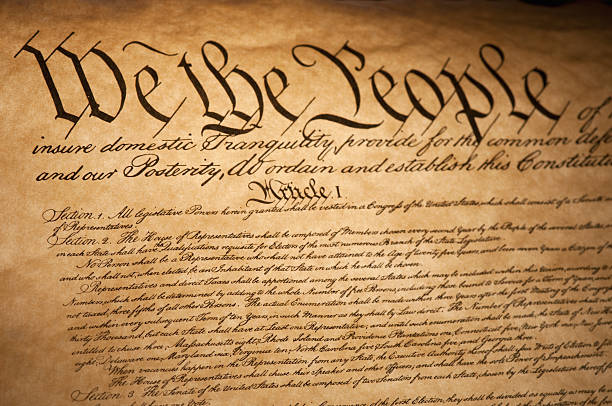
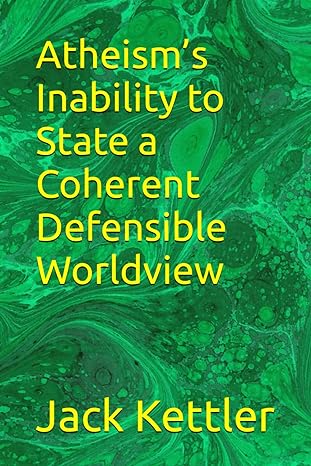




 The Religion That Started in a Hat