Category Archives: Uncategorized

Christian Apologetics in the Marketplace of Ideas – A Review

Christian Apologetics in the Marketplace of Ideas. – A Review

Title: A Thought-Provoking Journey into Christian Apologetics

Introduction:

In “Christian Apologetics in the Marketplace of Ideas,” author Jack Kettler takes readers on a captivating journey through Christian apologetics. His insightful book’s balanced approach and comprehensive analysis make it a must-read for believers and skeptics alike. Through meticulous research and thoughtful arguments, Kettler masterfully presents the case for Christianity, engaging with the marketplace of ideas in a remarkable manner. Kettler’s apologetic method is known as presuppositionalism. Sometimes this is referred to as worldview apologetics.   

Engaging and Comprehensive Arguments:

One of the standout features of Kettler’s work is his ability to present complex ideas clearly and concisely. He skillfully addresses the most challenging and prevalent objections to Christianity, providing credible and well-researched responses that engage even the most ardent critics. Throughout the book, he balances theological depth with philosophical insights, providing readers with a comprehensive and thought-provoking exploration of apologetics.

Furthermore, Kettler adeptly incorporates a wide range of disciplines into his apologetic arguments. He draws from philosophy, science, history, and theology, skillfully weaving these threads together to construct a compelling case for the truth of Christianity. Kettler addresses the challenges and objections that arise in the marketplace of ideas.  

One of the greatest strengths of Kettler’s work is his ability to navigate complex topics with clarity and precision. He breaks down profound concepts in a way that is accessible to both the seasoned theologian and the curious seeker of truth. By employing a logical and systematic approach, he builds a strong foundational argument for the validity of the Christian faith while responding to contemporary objections.

The author also impressively weaves various disciplines, including philosophy, and biblical studies, to support his assertions. This approach adds depth to his arguments, enhancing the overall credibility of his apologetic framework. Kettler exposes contradictions in the logic of atheism.

One example is:

“There is no God, says the atheist absolutely. The atheists have no basis for claiming absolutes, therefore, he is involved in a self-refuting contradiction. In addition, the atheist’s assertion is a universal negative and impossible to prove in terms of how it is advanced by the atheist. One cannot prove a general broad claim that is a ‘negative’ claim. Since the atheist is finite, he cannot really be sure of his assertion, which requires infinite knowledge.” 

An example of some of the material that one will encounter in the book is by Cornelius Van Til, a Dutch-American reformed philosopher and theologian credited with originating presuppositional apologetics.

The book is replete with valuable like the following from Van Til explaining the psychology of unbelief:

“Agnosticism is, in the first place, psychologically self-contradictory upon its own assumptions. Agnosticism wants to hold that it is reasonable to refrain from thorough epistemological speculations because they cannot lead to anything. But in order to assume this attitude, agnosticism has itself made the most tremendous intellectual assertion that could be made about ultimate things. In the second place, agnosticism is epistemologically self-contradictory on its own assumptions because its claim to make no assertion about ultimate reality rests upon a most comprehensive assertion about ultimate reality … the alternative is not between saying something about ultimate reality or not saying anything about it, but that the alternative is rather between saying one thing about it or another. Every human being, as a matter of fact, says something about ultimate reality.”

“It should be noted that those who claim to say nothing about ultimate reality not only do say something about it just as well as everybody else, but they have assumed for themselves the responsibility of saying one definite thing about ultimate reality. They have assumed the responsibility of excluding God. We have seen again that a God who is to come in afterward is no God at all. Agnosticism cannot say that it is open-minded on the question of the nature of ultimate reality. It is absolutely closed-minded on the subject. It has one view that it cannot, unless its own assumption be denied, exchange for another. It has started with the assumption of the non-existence of God and must end with it. Its so-called open-minded attitude is therefore a closed-minded attitude. The agnostic must be open-minded and closed-minded at the same time. And this is not only a psychological self-contradiction, but an epistemological self-contradiction. It amounts to affirmation and denial at the same time. Accordingly, they cancel out one another, if there is cancellation power in them. . .”

“Incidentally, we may point out that, in addition to being psychologically and epistemologically self-contradictory, the agnostic is morally self-contradictory. His contention was that he is very humble, and for that reason unwilling to pretend to know anything about ultimate matters. Yet he has by implication made a universal statement about reality. He therefore not only claims to know as much as the theist knows, but he claims to know much more. More than that, he not only claims to know much more than the theist, but he claims to know more than the theist’s God. He has boldly set bare possibility above the theist’s God and is quite willing to test the consequences of his action. It is thus that the hubris of which the Greeks spoke so much, and upon which they invoked the wrath of the gods, appears in new and seeming innocent garb.” – Van Til.

The book is full of concise arguments that demolish atheism, such as the following:

“When we go to look at the different world views that atheists and theists have, I suggest we can prove the existence of God from the impossibility of the contrary. The transcendental proof for God’s existence is that without Him it is impossible to prove anything. The atheist worldview is irrational and cannot consistently provide the preconditions of intelligible experience, science, logic, or morality. The atheist worldview cannot allow for laws of logic, the uniformity of nature, the ability for the mind to understand the world, and moral absolutes.” – Greg Bahnsen.

Moreover, the book is a gold mine of relevant quotations such as:

“My argument against God was that the universe seemed so cruel and unjust. But how had I got this idea of just and unjust? A man does not call a line crooked unless he has some idea of a straight line. What was I comparing this universe with when I called it unjust? If the whole show was bad and senseless from A to Z, so to speak, why did I, who was supposed to be part of the show, find myself in such a violent reaction against it? … Of course, I could have given up my idea of justice by saying; it was nothing but a private idea of my own. But if I did that, then my argument against God collapsed too–for the argument depended on saying the world was really unjust, not simply that it did not happen to please my fancies. Thus, in the very act of trying to prove that God did not exist – in other words, that the whole of reality was senseless – I found I was forced to assume that one part of reality – namely my idea of justice – was full of sense. If the whole universe has no meaning, we should never have found out that it has no meaning: just as, if there were no light in the universe and therefore no creatures with eyes, we should never have known it was dark. Dark would be without meaning.” – C.S. Lewis.

In conclusion, Jack Kettler’s “Christian Apologetics in the Marketplace of Ideas” is an impressive and insightful work that merits praise. With its extensive research and relevance in today’s cultural climate, it is an essential resource for anyone interested in apologetics. Kettler’s approach, combined with his emphasis on engaging in the marketplace of ideas, challenges and equips Christians to declare and share their faith confidently. This book is highly recommended to believers, skeptics, and seekers alike. It is a valuable contribution to apologetics and a compelling exploration of the Christian worldview. Moreover, the reader will come away after reading the book with a faith-building appreciation of the impenetrable strength of the Christian theistic worldview.

End of the book review. *

“Beware lest any man spoil you through philosophy and vain deceit, after the tradition of men, after the rudiments of the world, and not after Christ.” (Colossians 2:8)

Order here https://www.amazon.com/dp/B09FS31QMG?ref_=pe_3052080_397514860

“Study to shew thyself approved unto God, a workman that needeth not to be ashamed, rightly dividing the word of truth.” (2 Timothy 2:15)

Mr. Kettler has previously published articles in the Chalcedon Report and Contra Mundum. He and his wife, Marea, attend the Westminster, CO, RPCNA Church. Mr. Kettler is the author of 15 books defending the Reformed Faith. Books can be ordered online at Amazon.

* Written with the assistance of ChatGPT and perfected with Grammarly

Leave a comment

Filed under Uncategorized

What is the difference between the prayer of Jabez and the 2nd Chronicles 7:13 prayer?

What is the difference between the prayer of Jabez and the 2nd Chronicles 7:13 prayer?      By Jack Kettler

What can the reader learn about these two prayers? God responds to both prayers, yet how are they different?

The LORD’s response to Solomon:

“If my people, which are called by my name, shall humble themselves, and pray, and seek my face, and turn from their wicked ways; then will I hear from heaven, and will forgive their sin, and will heal their land.”  (2nd Chronicles 7:14)

From the Benson Commentary:

“2 Chronicles 7:14. If my people shall humble themselves, and pray, &c. — Thus, national repentance and reformation are required. God expects, that if his people, who are called by his name, have dishonoured his name by their iniquity, they should honour it by accepting the punishment of their iniquity. They must humble themselves under his hand, must pray for the removal of the judgment, must seek his face and favour: and yet all this will not be sufficient, unless they turn from their wicked ways, and return to him from whom they have revolted. National mercy is then promised, then will I hear from heaven, &c. — God will first forgive their sin, which brought the judgment upon them, and then will heal their land, and redress their grievances.” (1)

The prayer of Jabez:

“And Jabez called on the God of Israel, saying, oh that thou wouldest bless me indeed, and enlarge my coast, and that thine hand might be with me, and that thou wouldest keep me from evil, that it may not grieve me! And God granted him that which he requested.” (1st Chronicles 4:10)

Again, from the Benson Commentary:

“1 Chronicles 4:10. Jabez called on the God of Israel — The living and true God, who alone can hear and answer prayer: and in prayer he had an eye to him as the God of Israel, a God in covenant with his people, the God with whom Jacob wrestled and prevailed, and was thence called Israel. Saying, O that thou wouldest bless me indeed! — He did not say in what respect he desired God to bless him, but leaves that to God, giving him, as it were, a blank paper, that he might write what he pleased. Spiritual blessings are the best blessings, and those are blessed indeed, who are blessed with them. God’s blessings are real things, and produce real effects. We can but wish a blessing: he commands it. And enlarge my coast — Prosper my endeavours for the increase of what has fallen to my lot: drive out these Canaanites, whom thou hast commanded us to root out; and therefore, I justly beg and expect thy blessing in the execution of thy command. That thy hand might be with me — The prayer of Moses for this tribe of Judah was, that his own hands might be sufficient for him; but Jabez expects not that, unless he have God’s hand with him, and the presence of his power. God’s hand with us to lead, protect, strengthen us, and to work all our works in and for us, is indeed a hand sufficient for us, yea, all-sufficient. And keep me from evil — The evil of sin, the evil of trouble; all the evil designs of my enemies, and all disastrous events. That it may not grieve me — That it may not oppress and overcome me. He uses this expression in allusion to his name, which signifies grief: as if he had said, Lord, let me not have that grief which my name implies, and which my sin deserves. God granted him that which he requested — Prospered him remarkably in his undertakings, in his worldly business, in his conflicts with the Canaanites, and his endeavours after knowledge, and holiness, and other spiritual blessings.” (2)

In closing:

There is a significant difference between the 1st and 2nd Chronicles’ prayers in how God answers the prayers. In both cases, God answers the prayers. In the 1st Chronicles prayer, God answers the private prayer of Jabez. However, there is nothing in the prayer that directs God’s people to repeat this prayer of Jabez. In 2nd Chronicles, God answers Solomon by giving him a corporate prayer that extends beyond Solomon to all of God’s people and is to be prayed when national repentance is needed. One prayer is personal, and one is corporate.    

“Study to shew thyself approved unto God, a workman that needeth not to be ashamed, rightly dividing the word of truth.” (2 Timothy 2:15)

Notes:

1.      Benson, Joseph. Joseph Benson’s Commentary of the Old and New Testaments (p. 2720). Kindle Edition.

2.      Benson, Joseph. Joseph Benson’s Commentary of the Old and New Testaments (p. 12772). Kindle Edition.

Mr. Kettler has previously published articles in the Chalcedon Report and Contra Mundum. He and his wife Marea attend the Westminster, CO, RPCNA Church. Mr. Kettler is the author of books defending the Reformed Faith. Books can be ordered online at Amazon.

Leave a comment

Filed under Uncategorized

The Five Points of Scriptural Authority: A Defense of Sola Scriptura – A Review

The Five Points of Scriptural Authority: A Defense of Sola Scriptura – A Review

Title: The Five Points of Scriptural Authority: A Masterful Defense of Sola Scriptura

Introduction:

Jack Kettler’s “The Five Points of Scriptural Authority: A Defense of Sola Scriptura” is a comprehensive and compelling exploration of the principles underlying the doctrine of Sola Scriptura. In this thought-provoking work, Kettler articulates the importance of Scripture as the ultimate authority for Christian belief and practice. Unveiling the significance of the Five Points and ably addressing key objections, Kettler presents a powerful argument that underscores the enduring relevance of Sola Scriptura. Kettler thoroughly defends this crucial biblical principle through meticulous research and a lucid writing style.

Content Summary:

Kettler brilliantly structures his book around the Five Points of Scriptural Authority, providing a solid foundation for his defense of Sola Scriptura. Beginning with exploring the necessity of Scripture, he convincingly demonstrates its vital role in defining the Christian faith and establishing its authority. Kettler then delves into the clarity of Scripture, debunking misconceptions and emphasizing the accessibility of God’s Word to all believers. His focus on the sufficiency of Scripture for life and godliness further reinforces the book’s central thesis to defend the doctrine of Sola Scriptura.

Throughout the book, Kettler demonstrates a thorough understanding of the history, theology, and practical implications of Sola Scriptura. He examines its origins in the Protestant Reformation and relates it to the ongoing debate between Protestant and Catholic perspectives on authority. The author’s extensive research and clear presentation make this book a valuable resource for anyone seeking to deepen their understanding of the doctrine.

One of the strengths of this book is Kettler’s ability to address potential objections to Sola Scriptura. He anticipates and responds to common arguments, providing thoughtful and well-reasoned answers. He easily navigates through complex theological concepts, making them accessible to readers regardless of their theological background.

Kettler’s approach to the topic is refreshingly balanced. While steadfast in his defense of Sola Scriptura, he acknowledges the importance of tradition and reason in their respective places. He points out that these elements can complement Scripture but should never supersede or contradict it. This balanced approach combats the misconception that Sola Scriptura equals an unyielding rejection of all other sources of authority. Particularly appreciated is how Kettler grounds his arguments in Scripture itself. He provides an in-depth analysis of key passages such as 2 Timothy 3:16-17 and 2 Peter 1:20-21, demonstrating how they affirm the authority and sufficiency of Scripture. Kettler’s thorough examination of these passages is convincing and encourages readers to engage with the text themselves, breathing new life into their study of Scripture.

One of the strengths of Kettler’s book is his ability to address common objections to the doctrine of Sola Scriptura. He carefully responds to the charge that Sola Scriptura leads to individualistic interpretation and division within the church. Kettler argues persuasively that the authority of Scripture, when properly understood and guided by the Holy Spirit, actually serves to unify believers. He emphasizes the importance of interpreting Scripture within the context of the historic Christian faith, upholding the creeds and confessions as valuable resources for understanding Scripture’s true meaning.

Furthermore, Kettler tackles the accusation that Sola Scriptura neglects the role of tradition in the church. He acknowledges the valuable insights tradition can provide but deftly distinguishes between authoritative tradition and non-authoritative tradition. By doing so, he upholds the priority of Scripture while acknowledging the significance of historical and theological tradition.

In addition to his rigorous script Jack Kettler’s “The Five Points of Scriptural Authority: A Defense of Sola Scriptura” is a compelling and in-depth exploration of the concept of Sola Scriptura. With clarity and depth, Kettler presents a robust defense of the authority of Scripture, making a persuasive case for its central role in Christian theology and practice.

One of the strengths of Kettler’s book is his thorough examination of the historical context surrounding the development of the doctrine of Sola Scriptura. He traces its origins to the Protestant Reformation, particularly Martin Luther’s emphasis on the primacy of Scripture in his opposition to the Catholic Church’s reliance on tradition and the authority of the Pope. By doing so, Kettler effectively demonstrates the significance and impact of this doctrine on the Christian faith.

Furthermore, Kettler’s systematic examination of the five points of Scriptural authority provides a comprehensive and logical framework for understanding and defending the concept of Sola Scriptura. He examines each point – divine inspiration, divine inerrancy, divine sufficiency, divine authority, and divine clarity of Scripture – with meticulous attention to detail, drawing on biblical scholarship and theological reasoning to support his arguments. This approach not only strengthens the validity of his claims but also equips readers with a solid foundation for their understanding and defense of Sola Scriptura.

One of the key strengths of Kettler’s book is his clear and concise writing style. He explains complex theological concepts in a way that is accessible to readers from various backgrounds. The book is organized into five main sections, each corresponding to one of the five points of scriptural authority. This structure allows readers to follow along and grasp the main ideas being presented.

Kettler begins by discussing the authority of Scripture itself. He presents a compelling argument for why Scripture should be seen as the ultimate authority for Christian belief and practice. He addresses common objections to Sola Scriptura, such as the role of tradition and the authority of the Church, and provides well-reasoned responses.

One aspect that is particularly appreciated about Kettler’s approach is his reliance on Scripture itself to support his arguments. He skillfully navigates through various passages of the Bible, demonstrating how they affirm the authority of Scripture and the sufficiency of God’s Word for all matters of faith and practice. This reliance on Scripture as the primary source of authority is a key tenet of Sola Scriptura, and Kettler effectively defends this position.

Another strength of Kettler’s book is his engagement with historical and theological perspectives on Sola Scriptura. He deftly navigates through the history of the Protestant Reformation, providing a robust defense of the principle against common criticisms. Kettler clearly explains how Sola Scriptura does not mean that the Bible stands alone without any interpretative framework but rather that it holds primary authority over all other sources of religious doctrine. He effectively debunks the misconception that sola scriptura results in a subjective, individualistic approach to biblical interpretation. Instead, he presents a compelling case for the importance of sound hermeneutical principles and the guidance of the Holy Spirit in properly understanding and applying the Scriptures.

One of the most noteworthy aspects of Kettler’s book is his ability to address the concerns raised by proponents of tradition-based authority within Christianity. He skillfully demonstrates how the early church fathers themselves recognized the supreme authority of Scripture, often appealing to it as the final arbiter on matters of doctrine. Kettler’s clear and concise explanations shed much-needed light on the complex relationship between Scripture and tradition, offering a balanced viewpoint that honors the ancient church’s wisdom while upholding the primacy of the written Word of God.

A summary overview and conclusion:

Jack Kettler’s book, “The Five Points of Scriptural Authority: A Defense of Sola Scriptura,” presents a comprehensive defense of the doctrine of Sola Scriptura, which asserts that Scripture alone is the ultimate authority in matters of faith and practice. Kettler highlights five key points that support this doctrine: (1) Scripture’s divine origin and inspiration, (2) its self-attesting authority and clarity, (3) its sufficiency in addressing all matters of theology and Christian living, (4) its necessity as the ultimate standard for testing and correcting all other sources of authority, and (5) its interpretive authority residing in the Christian community under the guidance of the Holy Spirit. By thoroughly examining and explaining these points, Kettler successfully argues for the primacy of Scripture as the ultimate authority for Christians. He aptly defends against common objections and establishes a strong case for the doctrine of Sola Scriptura, reminding readers of the importance of relying on Scripture alone for guidance in matters of faith.

End of the book review. *

Order here https://www.amazon.com/dp/B099C8S7SV

“Study to shew thyself approved unto God, a workman that needeth not to be ashamed, rightly dividing the word of truth.” (2 Timothy 2:15)

Mr. Kettler has previously published articles in the Chalcedon Report and Contra Mundum. He and his wife, Marea, attend the Westminster, CO, RPCNA Church. Mr. Kettler is the author of 15 books defending the Reformed Faith. Books can be ordered online at Amazon.

* Written with the assistance of ChatGPT and perfected with Grammarly

Leave a comment

Filed under Uncategorized

What is a familiar spirit in 1st Chronicles 10:13?

What is a familiar spirit in 1st Chronicles 10:13?                                      By Jack Kettler

“So, Saul died for his transgression which he committed against the LORD, even against the word of the LORD, which he kept not, and also for asking counsel of one that had a familiar spirit, to inquire of it.” (1st Chronicles 10:13)

Why did Saul seek one with a “familiar spirit,” and what is a familiar spirit?

The following comes from the notes of the King James Bible online:

“Sorcerers or necormancers, who professed to call up the dead to” “answer questions, were said to have a “familiar spirit” (Deuteronomy 18:11; 2 Kings 21:6; 2 Chronicles 33:6; Leviticus 19:31; 20:6; Isaiah 8:19; 29:4). Such a person was called by the Hebrews an ‘ob, which” properly means a leathern bottle; for sorcerers were regarded as vessels containing the inspiring demon. This Hebrew word was “equivalent to the pytho of the Greeks, and was used to denote” both the person and the spirit which possessed him (Leviticus 20:27; 1 Samuel 28:8; comp. Acts 16:16). The word “familiar” is from the Latin familiaris, meaning a “household servant,” and was” intended to express the idea that sorcerers had spirits as their servants ready to obey their commands.” (1)

The teachings of Scripture are clear that a familiar spirit is something evil. One sees that a “familiar spirit is condemned expressly in the following passages:

“Regard not them that have familiar spirits, neither seek after wizards, to be defiled by them: I am the LORD your God.” (Leviticus 19:31)

“And the soul that turneth after such as have familiar spirits, and after wizards, to go a whoring after them, I will even set my face against that soul, and will cut him off from among his people.” (Leviticus 20:6)

“A man also or woman that hath a familiar spirit, or that is a wizard, shall surely be put to death: they shall stone them with stones: their blood shall be upon them.” (Leviticus 20:27)

“Or a charmer, or a consulter with familiar spirits, or a wizard, or a necromancer.” (Deuteronomy 18:11)

“Now Samuel was dead, and all Israel had lamented him, and buried him in Ramah, even in his own city. And Saul had put away those that had familiar spirits, and the wizards, out of the land.” (1 Samuel 28:3)

“Then said Saul unto his servants, seek me a woman that hath a familiar spirit, that I may go to her, and enquire of her. And his servants said to him, Behold, there is a woman that hath a familiar spirit at Endor. And Saul disguised himself, and put on other raiment, and he went, and two men with him, and they came to the woman by night: and he said, I pray thee, divine unto me by the familiar spirit, and bring me him up, whom I shall name unto thee. And the woman said unto him, Behold, thou knoowest what Saul hath done, how he hath cut off those that have familiar spirits, and the wizards of the land: wherefore then layest thou a snare for my life, to cause me to die?” (1 Samuel 28:7-9)

“And he made his son pass through the fire, and observed times, and used enchantments, and dealt with familiar spirits and wizards: he wrought much wickedness in the sight of the LORD, to provoke him to anger.” (2nd Kings 21:6)

“Moreover, the workers with familiar spirits, and the wizards, and the images, and the idols, and all the abominations that were spied in the land of Judah and in Jerusalem, did Josiah put away, that he might perform the words of the law which were written in the book that Hilkiah the priest found in the house of the LORD.” (2nd Kings 23:24)

“So, Saul died for his transgression which he committed against the LORD, even against the word of the LORD, which he kept not, and also for asking counsel of one that had a familiar spirit, to enquire of it.” (1st Chronicles 10:13)

“And he caused his children to pass through the fire in the valley of the son of Hinnom: also, he observed times, and used enchantments, and used witchcraft, and dealt with a familiar spirit, and with wizards: he wrought much evil in the sight of the LORD, to provoke him to anger.” (2nd Chronicles 33:6)

“And when they shall say unto you, seek unto them that have familiar spirits, and unto wizards that peep, and that mutter: should not a people seek unto their God? for the living to the dead?” (Isaiah 8:19)

“And the spirit of Egypt shall fail in the midst there-of; and I will destroy the counsel thereof: and they shall seek to the idols, and to the charmers, and to them that have familiar spirits, and to the wizards.” (Isaiah 19:3)

“And thou shalt be brought down, and shalt speak out of the ground, and thy speech shall be low out of the dust, and thy voice shall be, as of one that hath a familiar spirit, out of the ground, and thy speech shall whisper out of the dust.” (Isaiah 29:4)

To supplement an earlier citation:

“Familiar spirit is translated from the Hebrew word, “ob,” which means a necromancer.” (2)

In the Jamieson-Fausset-Brown Commentary on Leviticus 19:31, one reads:

“Regard not them that have familiar spirits – The Hebrew word, rendered “familiar spirit,” signifies the belly, and sometimes a leathern bottle, from its similarity to the belly. It was applied in the sense of this passage to ventriloquists, who pretended to have communication with the invisible world. The Hebrews were strictly forbidden to consult them as the vain but high pretensions of those impostors were derogatory to the honor of God and subversive of their covenant relations with Him as His people. Neither seek after wizards – fortunetellers, who pretended, as the Hebrew word indicates, to prognosticate by palmistry (or an inspection of the lines of the hand) the future fate of those who applied to them.” (3)

In addition, from the Harper’s Bible Dictionary, the reader learns:

“Familiar spirit, the spirit of a dead person, allegedly consulted by mediums who issued prophetic advice of a secular sort. Consultation of mediums was forbidden in the O.T. (Lev. 19:31, 20:6, 27; Deut. 18:11) as apostasy from Yahweh. Medi- ums were punishable by death. King Saul had put “those that had familiar spirits, and the wizards, out of the land” (1 Sam. 28:3) …Josiah put away familiar spirits, together with many other “abominations” (2 Kings 23:24). Isaiah (8:19, see also Isa. 19:3, 29:4) protested against consultation with those who had familiar spirits, and wizards that peep, and that mutter.” (4)

Moreover, commenting on Leviticus 19:31, the Keil-Delitzsch Commentary says:

“True fear of God, however, awakens confidence in the Lord and His guidance, and excludes all superstitious and idolatrous ways and methods of discovering the future. This thought prepares the way for the warning against turning to familiar spirits, or seeking after wizards. בוא denotes a departed spirit, who was called up to make disclosures with regard to the future, hence a familiar spirit, spiritum malum qui certis artibus eliciebatur ut evocaret mortuorum manes, qui praedicarent quae ab eis petebantur (Cler.). This is the meaning in Isaiah 29:4, as well as here and in Leviticus 20:6, as is evident from Leviticus 20:27, “a man or woman in whom is an ob,” and from 1 Samuel 28:7-8, baalath ob, “a woman with such a spirit.” The name was then applied to the necromantist himself, by whom the departed were called up (1 Samuel 28:3; 2 Kings 23:24). The word is connected with ob, a skin. ינעּדי, the knowing, so to speak, “clever man” (Symm. γνώστης, Aq. γνωριστής), is only found in connection with ob, and denotes unquestionably a person acquainted with necromancy, or a conjurer who devoted himself to the invocation of spirits. (For further remarks, see as 1 Samuel 28:7.).” (5)

In closing:

Why did Saul seek one with a “familiar spirit?” Because of the hardness of his heart, he rejected God.   

“Study to shew thyself approved unto God, a workman that needeth not to be ashamed, rightly dividing the word of truth.” (2 Timothy 2:15)

Notes:

1.      Notes of the King James Bible on-line.

2.      Robert Young, Analytical Concordance to the Holy Bible, (London, Lutterworth Press, 1965), p. 327.

3.      Jamieson, Fausset and Brown, Commentary on the Whole Bible, (Grand Rapids, Michigan, Zondervan, 1977), p. 101.

4.      Madeleine S. and J. Lane Miller, Harper’s Bible Dictionary, (New York, Harper & Brothers, Publishers), 1988, pg. 185.

5.      Keil-Delitzsch, Commentary on the Old Testament, The Pentateuch, (Grand Rapids, Michigan, William B. Eerdmans Publishing Company, Reprinted 1985), p. 425.

Mr. Kettler has previously published articles in the Chalcedon Report and Contra Mundum. He and his wife Marea attend the Westminster, CO, RPCNA Church. Mr. Kettler is the author of books defending the Reformed Faith. Books can be ordered online at Amazon.

Leave a comment

Filed under Uncategorized

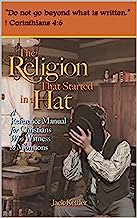
The Religion That Started in a Hat: A Reference Manual for Christians Who Witness to Mormons – A Review

The Religion That Started in a Hat: A Reference Manual for Christians Who Witness to Mormons – A Review

Title: A Must-Have Resource for Christians Engaging with Mormons

Review:

“The Religion That Started in a Hat: A Reference Manual for Christians Who Witness to Mormons” by Jack Kettler deserves high praise for being an invaluable resource for Christians engaging in meaningful dialogue with Mormons. This exceptional reference manual provides comprehensive information and guidance, ensuring greater understanding and effective communication between these two faith traditions.

First and foremost, Kettler’s book is a treasure trove of information about the fundamentals of Mormonism. Each chapter delves into a specific aspect, providing a clear and concise overview of Mormon beliefs, practices, and history. This systematic theological approach helps readers develop a solid understanding of the religion, which is vital for engaging in meaningful conversations with Mormons.

One of the standout features of this manual is its careful organization, which allows readers to navigate through complex theological concepts easily. Kettler adopts a logical progression, systematically unpacking various aspects of the Mormon faith, thereby equipping Christians with the knowledge necessary to address these specific areas during their discussions. Kettler’s extensive research is apparent throughout the book, ensuring accuracy and credibility.

Moreover, the clarity and organization of Kettler’s writing are remarkable. The book is divided into logical sections, making it easy for readers to navigate and comprehend. Each chapter focuses on a specific aspect or challenge faced when engaging with Mormons, such as their unique beliefs about God, Jesus, and salvation, to readers of all backgrounds. Kettler’s manual serves as a valuable resource not just for Christians specifically interested in witnessing to Mormons.

Kettler provides numerous examples of common questions and objections that Christians may encounter when engaging with Mormons, along with well-reasoned and biblically-based responses, which empower readers to engage in informed and respectful conversations that can potentially lead to fruitful dialogue and exchange of ideas.

Kettler presents a fair and respectful portrayal of the beliefs and practices of Mormons. Kettler’s extensive research is evident throughout the book. He provides numerous references to Mormon scriptures, historical documents, and official church publications, allowing readers to delve deeper into the subject matter if they so desire. This level of detail enhances the book’s credibility and equips Christians with accurate information to engage in meaningful discussions with Mormons.

The book has a large and useful scriptural index with references from every book in the Bible. Towards the end of the book, Kettler leaves the reader with a logical unanswerable math problem that cuts right to the heart of Mormonism’s worldview. It has been said, “not to judge a book by its cover,” in the case of Kettler’s book, the cover art is remarkable and is an additional reason to get this book. 

End of book review. *

Order here https://www.amazon.com/Religion-That-Started-Hat-Christians-ebook/dp/B0BGQKJ657?ref_=ast_author_mpb

“Study to shew thyself approved unto God, a workman that needeth not to be ashamed, rightly dividing the word of truth.” (2 Timothy 2:15)

Mr. Kettler has previously published articles in the Chalcedon Report and Contra Mundum. He and his wife, Marea, attend the Westminster, CO, RPCNA Church. Mr. Kettler is the author of 15 books defending the Reformed Faith. Books can be ordered online at Amazon.

* Written with the assistance of ChatGPT and perfected with Grammarly

Leave a comment

Filed under Uncategorized

Was Elijah justified to mock the prophets of Baal in 1st Kings 18:27?

Was Elijah justified to mock the prophets of Baal in 1st Kings 18:27?      By Jack Kettler

“And it came to pass at noon, that Elijah mocked them, and said, cry aloud: for he is a god; either he is talking, or he is pursuing, or he is in a journey, or peradventure he sleepeth, and must be awaked.” (1st Kings 18:27)

Was Elijah justified to use language the Bible calls jesting? Does 1st Kings 18:27 contradict Ephesians 5:4, which forbids jesting?

Synonyms for jesting:

Ridiculing, deriding, scornful, and mocking.

Matthew Poole’s Commentary on 1st Kings 18:27:

“At noon; when they had long tried all means in vain.”

“Elijah mocked them; derided them and their gods, which were indeed, and had now proved themselves to be, ridiculous and contemptible things. By this example we see that all jesting is not unlawful, but only that which intrencheth upon piety and good mannersSee Poole “Ephesians 5:4.” (underlining emphasis mine)

“Either he is talking, or he is pursuing, or he is in a journey; he is employed about some other business, and hath not leisure to mind you; for being a god of a small and narrow understanding, he cannot mind two things at once, and you are immodest and unreasonable to expect it from him.” (1)

Matthew Poole’s Commentary regarding Ephesians 5:4:

“Neither filthiness; obscenity in discourse, filthy communication, Colossians 3:8.”

“Nor foolish talking; affectation of foolish, vain speech, (whether jocose or serious), unprofitable, to the hearers.”

“Nor jesting; either the same as the former, as may seem by the disjunctive particle nor, which may be by way of explication; or (which is of kin to it) scurrility in discourse, which is many times, by them that are addicted to it, called by the name of urbanity, or jesting: for all that jesting is not here condemned appears by 1 Kings 18:27 Isaiah 14:11.”

“Which are not convenient; viz. for saints.”

“But rather giving of thanks; i.e. to God for mercies received, which will better cheer up and recreate the mind than foolish talking and jesting can.” (2)

How are these two passages resolved to escape the charge of contradiction? In the first citation by Poole, he qualifies his comments:

“By this example we see that all jesting is not unlawful, but only that which intrencheth upon piety and good manners.”

The Pulpit Commentary agrees with Poole regarding jesting:

“Verse 4. – And filthiness; αἰσχρότης, implying that such things are disgraceful, ugly, revolting, the opposite of καλός, fair, comely, attractive. And foolish talking or jesting, which are not becoming. This would be well understood in sensual, frivolous Ephesus; a light, bantering, jesting kind of talk, seasoned with double entendres and obscene allusions, very pernicious in its moral effect. There is no reason to suppose that the apostle meant to condemn all play of humor, which is a Divine gift, and which in moderation has its own useful place as a means of refreshing and invigorating the spirit; it was the jesting associated with ribaldry that drew his reproof. But rather giving of thanks. Αὐχαριστία is somewhat similar in sound to εὐτραπελία, jesting: the reason for putting the one in opposition to the other is not very apparent; the meaning seems to be that, in place of giving vent to lively feelings in frivolous talk and jesting, it is better for Christians to do so by pouring out their hearts in thanksgivings to God for all his goodness. Ephesians 5:4” (3)

Both Poole and the Pulpit Commentary see a limitation of the restrictions of Ephesians 5:4 regarding jesting. Ephesians 5:4 forbids “foolish jesting.” Thus, humor in plays, films, and literature is permitted.

In conclusion:

Moreover, another area where jesting or mocking is permitted is in 1st Kings 18:27, and it has apologetic value.

1st Kings 18:27 is an example of presuppositional or worldview apologetics in action. One element of this apologetic is assuming the opponent’s position for the sake of argument and then reducing it to the logical conclusion, absurdity where, “Answer a fool according to his folly, lest he be wise in his own conceit” (Proverbs 26:5) comes in. Elijah’s jesting was not foolish and, therefore, is not in violation of Ephesians 5:4. 

The Biblical case for satire and mocking:

What can be learned from 1st Kings 18:20-40 and Elijah’s victory over the Priests of Baal? Elijah mocked the priests of Baal by saying that maybe their god was off in some other land giving them water, or he was asleep. Similarly, freedom lovers can mock the priests of Baal, i.e., politicians and wicked government rulers today who promote the false god of statism.

Idols are to be cast down: 

The deification of the state takes place when it claims ownership of all things, including the right to make laws without reference to God’s law revealed in Scripture. When this happens, the state becomes idolatrous. In such cases, the Church and the individual Christian must resist. Submission to idols is not a doctrine taught in Scripture.   

R. J. Rushdoony explains this concept of statist idolatry in one brief statement:

“It must be recognized that in any culture the source of law is the god of that society.”

“Rousas John Rushdoony was an American Calvinist philosopher, historian, and theologian. He is credited as being the father of Christian Reconstructionism and an inspiration for the modern Christian homeschool movement.” – Wikipedia.

Rushdoony notes that if the law’s source in society is the state, it has asserted divinity.

“Study to shew thyself approved unto God, a workman that needeth not to be ashamed, rightly dividing the word of truth.” (2 Timothy 2:15)

Notes:

1.      Matthew Poole’s Commentary on the Holy Bible, 1 Kings, Vol. 1, (Peabody, Massachusetts, Hendrickson Publishers, 1985) p. 701.

2.      Matthew Poole’s Commentary on the Holy Bible, Ephesians, Vol. 3, (Peabody, Massachusetts, Hendrickson Publishers, 1985) p. 675.

3.      H. D. M. Spence and Joseph S. Exell, The Pulpit Commentary, Ephesians, Vol. 20., (Grand Rapids, Michigan, Eerdmans Publishing Company reprint 1978), p. 298.

Mr. Kettler has previously published articles in the Chalcedon Report and Contra Mundum. He and his wife Marea attend the Westminster, CO, RPCNA Church. Mr. Kettler is the author of books defending the Reformed Faith. Books can be ordered online at: Amazon

Leave a comment

Filed under Uncategorized

Whose kingdom will be established in 2 Samuel 7:12-13? 

Whose kingdom will be established in 2 Samuel 7:12-13?                             By Jack Kettler

“And as since the time that I commanded judges to be over my people Israel, and have caused thee to rest from all thine enemies. Also, the LORD telleth thee that he will make thee a house. And when thy days be fulfilled, and thou shalt sleep with thy fathers, I will set up thy seed after thee, which shall proceed out of thy bowels, and I will establish his kingdom. He shall build a house for my name, and I will stablish the throne of his kingdom forever.” (2 Samuel 7:11-13) (underlining emphasis mine)

A New Testament reference:

“He shall be great, and shall be called the Son of the Highest: and the Lord God shall give unto him the throne of his father David.” (Luke 1:32)

It is noteworthy that Cambridge Bible for Schools and Colleges connects Luke 1:32 with 2 Samuel 7:12:

“32. shall be called] i. e. shall be. The best comment on this verse is furnished by the passages of Scripture in which we find the same prophecy (Micah 5:4; 2 Samuel 7:12; Isaiah 9:6-7; Isaiah 11:1; Isaiah 11:10; Isaiah 16:5; Jeremiah 23:5; Jeremiah 30:9; Ezekiel 34:24; Hosea 3:5; Psalm 132:11) and its fulfilment (Php 2:9-11; Revelation 22:16). The throne of his father David] according to Psalm 132:11.” (1)

God makes a covenant with David in 2 Samuel 7:11-13. What is a covenant?

The Davidic covenant is where God promises that a descendant of David will reign on Israel’s throne over the people of God forever.

Francis Turretin was a professor of theology at Geneva during the Reformation. Turretin explains in more depth what a covenant is:

“A covenant denotes the agreement of God with man by which God promises his goods (and especially eternal life to him), and by man, in turn, duty and worship are engaged…This is called two‐sided and mutual because it consists of a mutual obligation of the contracting parties: a promise on the part of God and stipulation of the condition on the part of man.” (2)

Herman Witsius was a Dutch theologian, pastor, and a leading professor of the seventeenth century. He concurs with Turretin:

“A covenant of God with man is an agreement between God, about the way of obtaining consummate happiness; including a commination of eternal destruction, with which the contemner of the happiness, offered in that way, is to be punished.” (3)

In summary, God’s Covenant with David or The Davidic Covenant:

The Davidic covenant is recorded in 2 Samuel 7:8-16. The Lord declares that he will build a house and preserve David’s lineage by establishing His kingdom and throne forever. The prophets, during Israel’s exile, reminded the people of the restoration under a Davidic king who would bring peace and justice. For one example, see (Ezekiel 37:24-28).

Luke 1:32 identifies David’s greater son as the Lord Jesus Christ.

To answer the title question about who will fulfill this promise, David’s greater son will accomplish this:

“And when thy days be fulfilled, and thou shalt sleep with thy fathers, I will set up thy seed after thee, which shall proceed out of thy bowels, and I will establish his kingdom. He shall build a house for my name, and I will stablish the throne of his kingdom forever.” (2 Samuel 7:12-13)

In conclusion, from the Westminster Confession on the Covenants:

“Chapter VII. Of God’s Covenant with Man”

“I. The distance between God and the creature is so great, that although reasonable creatures do owe obedience unto Him as their Creator, yet they could never have any fruition of Him as their blessedness and reward, but by some voluntary condescension on God’s part, which He hath been pleased to express by way of covenant, (Isa 40:13-17; Job 9:32-33; 1Sa 2:25; Psalm 113:5-6; Psalm 100:2-3; Job 22:2-3; Job 35:7-8; Luke 17:10; Act 17:24-25).”

“II. The first covenant made with man was a covenant of works, (Gal 3:12); wherein life was promised to Adam; and in him to his posterity, (Rom 10:5; Rom 5:12-20); upon condition of perfect and personal obedience, (Gen 2:17; Gal 3:10).”

“III. Man, by his fall, having made himself uncapable of life by that covenant, the Lord was pleased to make a second, (Gal 3:21; Rom 8:3; Rom 3:20-21; Gen 3:15; Isa 42:6); commonly called the covenant of grace; wherein He freely offereth unto sinners life and salvation by Jesus Christ; requiring of them faith in Him, that they may be saved, (Mar 16:15-16; John 3:16; Rom 10:6, 9; Gal 3:11); and promising to give unto all those that are ordained unto eternal life His Holy Spirit, to make them willing, and able to believe, (Ezekiel 36:26-27; John 6:44-45).”

“IV. This covenant of grace is frequently set forth in Scripture by the name of a testament, in reference to the death of Jesus Christ the Testator, and to the everlasting inheritance, with all things belonging to it, therein bequeathed, (Hebrews 9:15-17; Hebrews 7:22; Luke 22:20; 1Co 11:25).”

“V. This covenant was differently administered in the time of the law, and in the time of the gospel, (2Co 3:6-9): under the law, it was administered by promises, prophecies, sacrifices, circumcision, the paschal lamb, and other types and ordinances delivered to the people of the Jews, all fore-signifying Christ to come, (Hebrews 8-10; Rom 4:11; Col 2:11-12; 1Co 5:7); which were, for that time, sufficient and efficacious, through the operation of the Spirit, to instruct and build up the elect in faith in the promised Messiah, (1Co 10:1-4; Hebrews 11:13; John 8:56); by whom they had full remission of sins, and eternal salvation; and is called the old Testament, (Gal 3:7-9, 14).”

“VI. Under the gospel, when Christ, the substance, (Col 2:17); was exhibited, the ordinances in which this covenant is dispensed are the preaching of the Word, and the administration of the sacraments of Baptism and the Lord’s Supper, (Mat 28:19-20; 1Co 11:23-25): which, though fewer in number, and administered with more simplicity, and less outward glory, yet, in them, it is held forth in more fulness, evidence, and spiritual efficacy, (Hebrews 12:22-27; Jerimiah 31:33-34); to all nations, both Jews and Gentiles, (Mat 28:19; Ephesians 2:15-19); and is called the new Testament, (Luke 22:20). There are not therefore two covenants of grace, differing in substance, but one and the same, under various dispensations, (Gal 3:14, 16; Act 15:11; Rom 3:21-23, 30; Psalm 32:1; Rom 4:3, 6, 16-17, 23-24; Hebrews 13:8).”

“Study to shew thyself approved unto God, a workman that needeth not to be ashamed, rightly dividing the word of truth.” (2 Timothy 2:15)

Notes:

1.      F. W. Farrar, Cambridge Bible for Schools and Colleges, Luke, (Cambridge University Press, 1898), e-Sword version.

2.      Francis Turretin, Institutes of Elenctic Theology, (Phillipsburg New Jersey, Presbyterian and Reformed, 1992), p.574.

3.      Herman Witsius, The Economy of the Covenants Between God and Man, Vol. 1, (Grand Rapids, Michigan, Reformation Heritage Books, reprinted 2010), p. 45.

Mr. Kettler has previously published articles in the Chalcedon Report and Contra Mundum. He and his wife Marea attend the Westminster, CO, RPCNA Church. Mr. Kettler is the author of books defending the Reformed Faith. Books can be ordered online at Amazon.

Leave a comment

Filed under Uncategorized

Declaration of Independence (1776)

Constitution of the United States

IN CONGRESS, July 4, 1776.

The unanimous Declaration of the thirteen united States of America,

When in the Course of human events, it becomes necessary for one people to dissolve the political bands which have connected them with another, and to assume among the powers of the earth, the separate and equal station to which the Laws of Nature and of Nature’s God entitle them, a decent respect to the opinions of mankind requires that they should declare the causes which impel them to the separation.

We hold these truths to be self-evident, that all men are created equal, that they are endowed by their Creator with certain unalienable Rights, that among these are Life, Liberty and the pursuit of Happiness.–That to secure these rights, Governments are instituted among Men, deriving their just powers from the consent of the governed, –That whenever any Form of Government becomes destructive of these ends, it is the Right of the People to alter or to abolish it, and to institute new Government, laying its foundation on such principles and organizing its powers in such form, as to them shall seem most likely to effect their Safety and Happiness. Prudence, indeed, will dictate that Governments long established should not be changed for light and transient causes; and accordingly all experience hath shewn, that mankind are more disposed to suffer, while evils are sufferable, than to right themselves by abolishing the forms to which they are accustomed. But when a long train of abuses and usurpations, pursuing invariably the same Object evinces a design to reduce them under absolute Despotism, it is their right, it is their duty, to throw off such Government, and to provide new Guards for their future security.–Such has been the patient sufferance of these Colonies; and such is now the necessity which constrains them to alter their former Systems of Government. The history of the present King of Great Britain is a history of repeated injuries and usurpations, all having in direct object the establishment of an absolute Tyranny over these States. To prove this, let Facts be submitted to a candid world.

He has refused his Assent to Laws, the most wholesome and necessary for the public good.

He has forbidden his Governors to pass Laws of immediate and pressing importance, unless suspended in their operation till his Assent should be obtained; and when so suspended, he has utterly neglected to attend to them.

He has refused to pass other Laws for the accommodation of large districts of people, unless those people would relinquish the right of Representation in the Legislature, a right inestimable to them and formidable to tyrants only.

He has called together legislative bodies at places unusual, uncomfortable, and distant from the depository of their public Records, for the sole purpose of fatiguing them into compliance with his measures.

He has dissolved Representative Houses repeatedly, for opposing with manly firmness his invasions on the rights of the people.

He has refused for a long time, after such dissolutions, to cause others to be elected; whereby the Legislative powers, incapable of Annihilation, have returned to the People at large for their exercise; the State remaining in the mean time exposed to all the dangers of invasion from without, and convulsions within.

He has endeavoured to prevent the population of these States; for that purpose obstructing the Laws for Naturalization of Foreigners; refusing to pass others to encourage their migrations hither, and raising the conditions of new Appropriations of Lands.

He has obstructed the Administration of Justice, by refusing his Assent to Laws for establishing Judiciary powers.

He has made Judges dependent on his Will alone, for the tenure of their offices, and the amount and payment of their salaries.

He has erected a multitude of New Offices, and sent hither swarms of Officers to harrass our people, and eat out their substance.

He has kept among us, in times of peace, Standing Armies without the Consent of our legislatures.

He has affected to render the Military independent of and superior to the Civil power.

He has combined with others to subject us to a jurisdiction foreign to our constitution, and unacknowledged by our laws; giving his Assent to their Acts of pretended Legislation:

For Quartering large bodies of armed troops among us:

For protecting them, by a mock Trial, from punishment for any Murders which they should commit on the Inhabitants of these States:

For cutting off our Trade with all parts of the world:

For imposing Taxes on us without our Consent:

For depriving us in many cases, of the benefits of Trial by Jury:

For transporting us beyond Seas to be tried for pretended offences

For abolishing the free System of English Laws in a neighbouring Province, establishing therein an Arbitrary government, and enlarging its Boundaries so as to render it at once an example and fit instrument for introducing the same absolute rule into these Colonies:

For taking away our Charters, abolishing our most valuable Laws, and altering fundamentally the Forms of our Governments:

For suspending our own Legislatures, and declaring themselves invested with power to legislate for us in all cases whatsoever.

He has abdicated Government here, by declaring us out of his Protection and waging War against us.

He has plundered our seas, ravaged our Coasts, burnt our towns, and destroyed the lives of our people.

He is at this time transporting large Armies of foreign Mercenaries to compleat the works of death, desolation and tyranny, already begun with circumstances of Cruelty & perfidy scarcely paralleled in the most barbarous ages, and totally unworthy the Head of a civilized nation.

He has constrained our fellow Citizens taken Captive on the high Seas to bear Arms against their Country, to become the executioners of their friends and Brethren, or to fall themselves by their Hands.

He has excited domestic insurrections amongst us, and has endeavoured to bring on the inhabitants of our frontiers, the merciless Indian Savages, whose known rule of warfare, is an undistinguished destruction of all ages, sexes and conditions.

In every stage of these Oppressions We have Petitioned for Redress in the most humble terms: Our repeated Petitions have been answered only by repeated injury. A Prince whose character is thus marked by every act which may define a Tyrant, is unfit to be the ruler of a free people.

Nor have We been wanting in attentions to our Brittish brethren. We have warned them from time to time of attempts by their legislature to extend an unwarrantable jurisdiction over us. We have reminded them of the circumstances of our emigration and settlement here. We have appealed to their native justice and magnanimity, and we have conjured them by the ties of our common kindred to disavow these usurpations, which, would inevitably interrupt our connections and correspondence. They too have been deaf to the voice of justice and of consanguinity. We must, therefore, acquiesce in the necessity, which denounces our Separation, and hold them, as we hold the rest of mankind, Enemies in War, in Peace Friends.

We, therefore, the Representatives of the united States of America, in General Congress, Assembled, appealing to the Supreme Judge of the world for the rectitude of our intentions, do, in the Name, and by Authority of the good People of these Colonies, solemnly publish and declare, That these United Colonies are, and of Right ought to be Free and Independent States; that they are Absolved from all Allegiance to the British Crown, and that all political connection between them and the State of Great Britain, is and ought to be totally dissolved; and that as Free and Independent States, they have full Power to levy War, conclude Peace, contract Alliances, establish Commerce, and to do all other Acts and Things which Independent States may of right do. And for the support of this Declaration, with a firm reliance on the protection of divine Providence, we mutually pledge to each other our Lives, our Fortunes and our sacred Honor.

The 56 signatures on the Declaration appear in the positions indicated:

Georgia

Button Gwinnett, Lyman Hall, George Walton

North Carolina

William Hooper, Joseph Hewes, John Penn

South Carolina

Edward Rutledge, Thomas Heyward, Jr., Thomas Lynch, Jr., Arthur Middleton

Massachusetts

John Hancock

Maryland

Samuel Chase, William Paca, Thomas Stone, Charles Carroll of Carrollton

Virginia

George Wythe, Richard Henry Lee, Thomas Jefferson, Benjamin Harrison, Thomas Nelson, Jr., Francis Lightfoot Lee, Carter Braxton

Pennsylvania

Robert Morris, Benjamin Rush, Benjamin Franklin, John Morton, George Clymer, James Smith, George Taylor, James Wilson, George Ross

Delaware

Caesar Rodney, George Read, Thomas McKean

New York

William Floyd, Philip Livingston, Francis Lewis, Lewis Morris

New Jersey

Richard Stockton, John Witherspoon, Francis Hopkinson, John Hart, Abraham Clark

New Hampshire

Josiah Bartlett, William Whipple

Massachusetts

Samuel Adams, John Adams, Robert Treat Paine, Elbridge Gerry

Rhode Island:

Stephen Hopkins, William Ellery

Connecticut

Roger Sherman, Samuel Huntington, William Williams, Oliver Wolcott

New Hampshire

Matthew Thornton

Primary Source by Richard Henry Lee, John Adams, Benjamin Franklin, Roger Sherman, Thomas Jefferson, George Mason, John Hancock (1776)


Additional Text

On June 7, 1776, Richard Henry Lee brought what came to be called the Lee Resolution before the Continental Congress. This resolution stated “these United Colonies are, and of right ought to be, free and independent states …” Congress debated independence for several days. The Committee of Five — John Adams, Benjamin Franklin, Roger Sherman, Robert R. Livingston, and Thomas Jefferson — was given the job of drafting a formal Declaration of Independence. They gave the task of writing the document to Jefferson.

The Declaration contained 3 sections: a general statement of natural rights theory and the purpose of government; a list of grievances against the British King; and the declaration of independence from England. More than 20 years later, the Second, Third, Fourth, and Sixth Amendments to the Constitution would contain prohibitions against the government to prevent the same forms of tyranny as were listed as grievances. Jefferson’s writing was influenced by George Mason’s Virginia Declaration of Rights, as well as by his study of natural rights theory and the writings of John Locke, including Two Treatises of Government. Franklin and Adams edited Jefferson’s draft, and the final document was presented to Congress about two weeks later.

On July 2, 1776, the Continental Congress voted to declare independence from England. Congress made several changes to Jefferson’s draft, including removing references condemning slavery. On July 4, 1776 the Declaration of Independence was adopted. John Hancock, President of the Continental Congress, signed it that day. The rest of the Congress signed two months later. By affixing their names to the document, the signers courageously pledged to each other their “lives … fortunes … and sacred honor.”

Many consider the Declaration of Independence to be the philosophical foundation of American freedom. It has been quoted by such citizens as Elizabeth Cady Stanton, Abraham Lincoln, and Martin Luther King, Jr. They have called it a beacon of hope for people everywhere.


Leave a comment

Filed under Uncategorized

What was the nature of the love between David and Jonathan in 1 Samuel?

What was the nature of the love between David and Jonathan in 1 Samuel?   By Jack Kettler

“And it came to pass, when he had made an end of speaking unto Saul, that the soul of Jonathan was knit with the soul of David, and Jonathan loved him as his own soul.” (1 Samuel 18:1)

Based upon 1 Samuel 18:1, were David and Jonathan homosexuals?

As will be seen, this passage does not teach David or Jonathan to be homosexuals.

Additionally:

David had multiple wives and concubines (2 Samuel 5:13) and lusted for Bathsheba (2 Samuel 11). Additionally, Jonathan was married to a woman, as seen in (2 Samuel 9).

Strong’s Hebrew 157:

“aheb: to love

Original Word: אָהַב

Part of Speech: Verb

Transliteration: aheb

Phonetic Spelling: (aw-hab’)

Definition: to love”

It is impossible to reach a conclusion that David was a homosexual based on Strong’s Lexicon. To do so is viewing the text with prejudice.   

Unencumbered by today’s sexually deviant propaganda, Ellicott’s Commentary for English Readers explicates: 

“(1) The soul of Jonathan was knit with the soul of David. — We have in this and the following chapters somewhat of a detailed account of David at the Court of Saul. In 1 Samuel 16 this Court life of the future king has been already touched upon, notably in 1Samuel 18:21-23, where the affection of Saul for David was mentioned, where also the appointing of the young shepherd to a post about the king’s person is recorded. But this mention in 1 Samuel 16 considerably anticipated the course of events. In relating the results of this affection of Saul for David, the writer of what we may term the episode treating of the influence of music and poetry passed over, so to speak, the story of several years, in the course of which took place the single combat of David with the Philistine giant, and the victorious campaign in which the young hero took so distinguished a part. The history here takes up the thread of the future king’s life, after the campaigns which immediately followed the discomfiture of the Philistine champion (1Samuel 18:6 and following). 1Samuel 18:1-4 simply relate the beginning of the world-famous friendship between Prince Jonathan and David.”

“The Hebrew is rendered “was knit,” or better, was bound up. This is a strong term, and is used in Genesis 44:30 of Jacob’s love to Benjamin: “seeing that his life is bound up in the lad’s life.” Aristotle, Nicom. ix. 8, has noted that friends are called one soul.”

“Jonathan loved him as his own soul. — As has been before remarked, the character of the princely son of Saul is one of the most beautiful in the Old Testament story. He was the type of a true warrior of those wild, half-barbarous times—among brave men seemingly the bravest—a perfect soldier, whether fighting as a simple man-at-arms or as the general of an army—chivalrous and generous—utterly free from jealousy—a fervid believer in the God of Israel—a devoted and loyal son—a true patriot in the highest sense of the word, who sealed a devoted life by a noble death, dying as he did fighting for his king and his people. The long and steady friendship of Jonathan no doubt had a powerful and enduring influence on the after life of the greatest of the Hebrew sovereigns. The words, the unselfish, beautiful love, and, above all, the splendid example of the ill-fated son of Saul, have no doubt given their colouring to many of the noblest utterances in David’s Psalms and to not a few of the most heroic deeds in David’s life.”

“We read of this friendship as dating from the morrow of the first striking deed of arms performed by David when he slew the giant. It is clear, however, that it was not the personal bravery of the boy hero, or the rare skill he showed in the encounter, which so singularly attracted Prince Jonathan. These things no one would have admired and honoured more than the son of Saul, but it needed more than splendid gallantry and rare skill to attract that great love of which we read. What won Jonathan’s heart was the shepherd boy’s sublime faith, his perfect childlike trust in the “Glorious Arm” of the Lord. Jonathan and David possessed one thing in common—an intense, unswerving belief in the power of Jehovah of Israel to keep and to save all who trusted in Him.”

“The two were typical Israelites, both possessing in a very high degree that intense confidence in the Mighty One of Israel which was the mainspring of the people’s glory and success, and which, in the seemingly interminable days of their punishment and degradation, has been the power which has kept them still together—a people distinct, reserved yet for some mighty destiny in the unknown future.” (1)

Comments:

The above commentary entry is similar to all commentaries of the time period. It would have been unthinkable that the question of David and Jonathan being homosexuals could be supported by this text. 

Jacob’s love for Benjamin is similar to David and Jonathan. For example, Jacob did not send Benjamin with his brethren; “for he said, lest peradventure mischief befall him.” (Genesis 42:4)

Those individuals using 1 Samuel 18:1 as a proof text are reading into the passage something that is not there and is inexcusable. It is similar to the Critical Race Theory advocates who use the same tactics, reading into the Scriptures things that are not in the text. Searching the Scriptures to find a proof text is a pretext.

However, since there are those who pervert the Word of God, it would seem prudent to examine some examples of the misuse of Scripture. Leviticus chapter 18 is a good place to start.

It will be profitable to examine some of Greg Bahnsen’s work “Homosexuality a biblical view:.”

“The list of injunctions in Leviticus 18 is introduced with emphatic divine authority: “You are to perform my judgments and keep my statutes, to walk in them; I am the Lord your God; [40] it ends, “Thus you are to keep my charge. … I am the Lord your God.” [41] The next chapter  contains further laws, introduced with these words: “You shall be holy, for I the Lord your God am holy”;[42] it ends, “You shall thus observe all my statutes, and all my ordinances, and do them: I am the Lord.”[43] Chapter 20 is a continuation of such injunctions: “Then the Lord spoke to Moses, saying, ‘You shall also say to the sons of Israel…’”;[44] it similarly ends, “Thus you are to be holy to me, for I the Lord am holy.”[45] In contrast to such ethical requirements reflecting the lordship and holiness of God, chapter 21 begins a new section dealing with requirements for priests and their cultic service. The preceding passage [46] contains some requirements that are no longer observed in their Jewish form, e.g., those which symbolize the separation of Israel from the abominations committed by her pagan neighbors [47] and a few ceremonial instructions. [48] But the predominant character of its commandments is moral, and their content is generally recognized as binding today (e.g., prohibiting incest, adultery, child sacrifice, idolatry, oppression of the poor, slander, hatred, unjust weights and measures). Christ Himself appealed to them as summarizing all the law and the prophets. [49] Therefore, the context does not support the automatic dismissal of the prohibitions against homosexuality as ceremonial. The defender of homosexuality must produce a viable criterion for distinguishing between moral and ceremonial laws, or else consistently reject them all (contrary to the emphatic word of Christ). We have New Testament warrant for discontinuing obedience to the sacrificial system, [50] and the failure to observe the symbols of separation from the Gentile no longer displeases God. [51] However, the Scriptures never alter God’s revealed law regarding homosexuality, but leave us under its full requirement. [52] Indeed, the Bible repeatedly condemns homosexuality, the New Testament itself stressing that it is contrary to God’s law, [53] bringing God’s judgment and exclusion from the kingdom. [54] Therefore, the prohibition against homosexuality cannot be viewed as part of the ceremonial system prefiguring Christ or as temporary in its obligation.” (2)

Romans Chapter One, the subject of homosexuality, is another text that is relevant.

It would be wise to continue with Dr. Bahnsen’s analysis:

Romans 1

“Identical principles are authoritatively revealed in the first chapter of Paul’s Epistle to the Romans, thus providing explicit New Testament confirmation of the Old Testament ethic regarding homosexuality. For this reason God gave them over to degrading passions; for their women exchanged the natural function for that which is unnatural, and in the same way also the men abandoned the natural function of the woman and burned in their desire towards one another, men with men committing indecent acts and receiving in their own persons the due penalty of their error…. And although they know the ordinance of God, that those who practice such things [the sins listed in verses 28-31] are worthy of death, they not only do the same, but also give hearty approval to those who practice them. [70] In this context Paul was teaching that the wrath of God is revealed from heaven against those who turn from their proper relationship to the Creator; suppressing the truth of God, they resort to various forms of idolatry, serving the creature with darkened minds and foolish reasoning. In response, God gives them over to impure lusts and the dishonoring of their bodies—specifically, to homosexuality, which in turn stimulates further depravities. Men who give up God and His law are eventually given up by God to wander in morally polluted practices that become a way of life. Specifically, the penalty for man’s rebellion against the true service to God is homosexuality, which Paul described with reinforcing disapprobation as “impurity,” “dishonoring of the body,” [71] “degrading passions,” [72] “indecent acts” (or “shameless deeds”), “error,” [73] the “improper” activity of a “depraved mind.” [74] Homosexuality exchanges the natural use of sex for unnatural sexual practices, [75] thereby evidencing immoral perversion in the most intimate of human relations and being “worthy of death.” [76] The best commentary on this teaching is found in the Old Testament, upon which Paul drew heavily. Scripture’s most obvious condemnation of homosexuality as intrinsically immoral is found in this Romans passage. Nevertheless, there are those who seek to evade its straightforward indictment. In the first place there are those who maintain that Paul did not single out homosexuality as especially offensive among sins; it is not taken up as a subject in its own right but merely dealt with incidentally among the results of a perverted relationship to God—presented simply as part of a broader pattern of pagan excesses. Such a response to Paul’s words is plainly wrong. After all, homosexuality is presented precisely as an appropriate illustration of sinful depravity. Indeed, it is Paul’s key illustration of the perversion that results from rebellion against God, a conspicuous symptom of such rebellion. The subject is discussed, to be sure, in relation to its roots and effects, but the moral character of homosexuality is nonetheless discussed in its own right as well. Its vile character clinches Paul’s argument concerning the consequences of suppressing the knowledge of God, and thus what Paul said in describing it cannot be minimized. To contend that homosexuality in Romans 1 is portrayed merely as a punishment for sin and not as a sin itself is to forget that God often punishes sin by turning men over to that sin and its effects completely. [77] This is exactly what Paul said about homosexuality: it is both sin and punishment for sin. [78] Second, there are supporters of homosexuality who claim that Paul is condemning lust and promiscuity, not homosexual love and devotion; the assumption is that the moral quality of homosexuality cannot be judged in isolation from the attitude and context in which one exercises it, the interpersonal support it supplies, and the personal fulfillment it offers. Supposedly there are distinctions to be drawn, with the result that we should recognize a commendable Christian practice of homosexuality in contrast to depraved versions of it. But such a suggestion is mere wishful thinking without biblical support. Paul was quite adept at drawing careful moral distinctions. He recognized pertinent qualifications that had to be made and gave his readers details of intricate ethical problems (such as those regarding meats offered to idols, marriage and divorce, spiritual gifts, exhortations and rebukes, uses and abuses of the law). If homosexuality could gain divine approval in any sense, Paul would have indicated as much and drawn the distinctions which men now wish to impose upon his text.” (3)

Another relevant text:

From Matthew Poole’s Commentary on 1 Timothy 1:10, the reader learns:

“The two next terms express violaters of the seventh commandment, whether by fornication, adultery, incest, sodomy, or any beastly lusts.”

“Men-stealers; the word signifieth such as carry men into captivity, or make slaves of them in the first place; it signifies also any stealing of men. It is probable the first of these is the man-stealing principally intended, being the most common sin by pirates at sea, and soldiers at land; yet not excluding any other stealing of men from their relations, which he instanceth in, as one of the highest violations of the eighth commandment. By liars, he meaneth such as knowingly speak what is false, especially to the prejudice of others.”

“By perjured persons he means such as swear falsely. And cause it would be too long to reckon up all kinds of sinners, he comprehends them all in a general phrase, and if there be any other thing that is contrary to sound doctrine, that is, the holy and pure truth of God, that is not corrupted, but judges aright of good and evil:”

“for these he saith the law is made, that is, to deter from such crimes, or to condemn for them; but not to terrify such who either never were guilty of such flagitious crimes, or if they have been guilty, yet are now washed, and sanctified, and justified in the name of the Lord Jesus, and by the Spirit of God, as the apostle speaks, 1Corinthians 6:11. The law (as the apostle here saith) was never made to terrify, or to condemn and affright, these, for, Romans 8:1: There is no condemnation to those that are in Christ Jesus, who walk not after the flesh, but after the Spirit.” (4)

Jude, the brother of James, declares:

“Even as Sodom and Gomorrha, and the cities about them in like manner, giving themselves over to fornication, and going after strange flesh, are set forth for an example, suffering the vengeance of eternal fire.” (Jude 1:7)

In closing:

Jesus never directly addressed the subject of homosexuality. To use this silence as an argument in support of homosexuality is to use a fallacious argument, namely, an argument from silence.

Jesus did speak to a topic that has implications on a relevant lifestyle question, that of marriage:

“And he answered and said unto them, have ye not read, that he which made them at the beginning made them male and female, and said, for this cause shall a man leave father and mother, and shall cleave to his wife: and they twain shall be one flesh?” (Matthew 19:4-5)

It should be noted that in Matthew 19:4-5 Jesus is quoting from Genesis 1:27; 2:24.

In 1 Corinthians 6:9, Paul mentions, “the sexually immoral, nor idolaters, nor adulterers, nor men who practice homosexuality” will inherit the kingdom of God.

Then Paul says:

“And such were some of you: but ye are washed, but ye are sanctified, but ye are justified in the name of the Lord Jesus, and by the Spirit of our God.” (1 Corinthians 6:11)

In the above passage, the Apostle provides hope for those struggling with sexual sins.

“Study to shew thyself approved unto God, a workman that needeth not to be ashamed, rightly dividing the word of truth.” (2 Timothy 2:15)

Notes:

1.      Charles John Ellicott, Bible Commentary for English Readers, 1 Samuel, Vol.2, (London, England, Cassell and Company), p. 370.

2.      Greg Bahnsen, Homosexuality: A Biblical view (Presbyterian & Reformed Publishing Company, Phillipsburg, New Jersey), pp. 39-41.

3.      Greg Bahnsen, Homosexuality: A Biblical view (Phillipsburg, New Jersey, Presbyterian & Reformed Publishing Company), pp. 47-50.

4.      Matthew Poole’s Commentary on the Holy Bible, (Peabody, Massachusetts Presbyterian & Reformed Publishing Co., Hendrickson Publishers, 1985) p. 774-775.

 Mr. Kettler has previously published articles in the Chalcedon Report and Contra Mundum. He and his wife Marea attend the Westminster, CO, RPCNA Church. Mr. Kettler is the author of books defending the Reformed Faith. Books can be ordered online at Amazon

Leave a comment

Filed under Uncategorized

What is the point of Jotham’s Parable in Judges 9?

What is the point of Jotham’s Parable in Judges 9?                             By Jack Kettler

“And when they told it to Jotham, he went and stood in the top of mount Gerizim, and lifted up his voice, and cried, and said unto them, hearken unto me, ye men of Shechem, that God may hearken unto you.” (Judges 9:7)

The tree is a common metaphor for Israel. Hence, the Parable of the Trees:

·         The Olive Tree is a symbol of Israel’s Religious blessings (9)

·         The Fig Tree is a symbol of security and success for Israel (11)

·         The Vine is a symbol of Israel’s Spiritual blessings (13)

·         The Bramble represents Satan’s realm and brings forth no fruit (15)           

Introductory comments:

In distinction from the other trees, the bramble is not suitable. Jotham is making a point about Abimelech and the appalling mistake being made by the leaders of Shechem.

Shechem’s leaders conspire with a concubine’s son to kill Gideon’s sons. They make Abimelech the ruler. Gideon’s youngest son survives and brings a curse. Using a parable, he says Abimelech and Shechem’s leaders will destroy each other. The leaders try to kill Abimelech and unite behind a new leader. Abimelech discovers the plot and destroys Shechem. When attacking a tower in a nearby town, Abimelech’s skull is crushed by a millstone. Accordingly, Gedeon’s youngest son’s curse is fulfilled.

Commentary entries for the parable of the trees:

7 “And when they told it to Jotham, he went and stood in the top of mount Gerizim, and lifted up his voice, and cried, and said unto them, hearken unto me, ye men of Shechem, that God may hearken unto you.” (Judges 9:7)

Starting with Matthew Poole’s Commentary in verse seven:

“Mount Gerzim lay near Shechem, and near Mount Ebal. The valley between these two mountains of Gerizim and Ebal was a famous place, employed for a religious use, even for the solemn reading of the law, and its blessings and curses, Deu 11:29 27:12 Joshua 8:33; and therefore, it is probable it was still used, even by the superstitious and idolatrous Israelites, for such-like occasions, who delighted to use the same places which their religious ancestors had consecrated and used.

Lifted up his voice, and cried; so as they that stood in the valley might hear him, though not suddenly come at him to take him.

Ye men of Shechem; who are here met together upon a solemn occasion, as Josephus notes, Abimelech being absent.

That God may harken unto you, when you cry unto him for mercy; so, he conjures and persuades to give him patient audience, as they did.” (1)

8 “The trees went forth on a time to anoint a king over them; and they said unto the olive tree, Reign thou over us.” (Judges 9:8)

Yet again, from Matthew Poole’s Commentary in verse eight:

“A parabolical discourse, usual among the ancients, especially in the eastern parts; wherein, under the names of trees, men are represented.

To anoint a king, i.e. to make a king, which was oft done among the Israelites, and some others, with the ceremony of anointing. By the olive tree he understands Gideon.” (2)

9 “But the olive tree said unto them, Should I leave my fatness, wherewith by me they honour God and man, and go to be promoted over the trees?” (Judges 9:9)

The Pulpit Commentary’s entry is helpful in verse nine:

“Verse 9. – They honour God and man: God, by the frequent offerings of oil with the meat offerings (Leviticus 2:1-16, etc.); and man, e.g., by the solemn anointing with oil of kings, priests, and prophets (1 Samuel 16:12, 13; 1 Kings 19:16; Psalm 89:21). To be promoted, literally, to wave, or move, over, i.e. to rule, in the case of a tree. Judges 9:9” (3)

10 “And the trees said to the fig tree, Come thou, and reign over us.” (Judges 9:10)

Ellicott’s Commentary for English Readers says the following in verse ten:

“(10) The fig tree. — The luscious fruit and broad green shade of the ancient fig would naturally make it the next choice; but it returns the same scornful answer.” (4)

11 “But the fig tree said unto them, Should I forsake my sweetness, and my good fruit, and go to be promoted over the trees?” (Judges 9:11)

Barnes’ Notes on the Bible has this to say in verse eleven:

“Honour God and man – Alluding to the constant use of oil in the meat-offerings Leviticus 2:1-16, and in the holy ointment Exodus 30:24-25. In like manner, the allusion in Judges 9:13 is to the drink-offerings of wine. See Leviticus 23:13; Numbers 15:10.” (5)

12 “Then said the trees unto the vine, Come thou, and reign over us.” (Judges 9:12)

Yet again, from Ellicott’s Commentary for English Readers in verse twelve:

“(12) Unto the vine. — We might have felt surprise that the vine was not the first choice, but the low-growing, trellised vine, which needs support for its own tendrils, might seem less suitable. Indeed, ancient nations talked of the female vine—

“Or they led the vine

To wed her elm; she round about him flings

Her marriageable arms,” &c.—Milton.” (6)

13 “And the vine said unto them, Should I leave my wine, which cheereth God and man, and go to be promoted over the trees?” (Judges 9:13)

The Jamieson-Fausset-Brown Bible Commentary says the following in verse thirteen:

“13. wine, which cheereth God and man—not certainly in the same manner. God might be said to be “cheered” by it, when the sacrifices were accepted, as He is said also to be honored by oil (Jud 9:9).” (7)

14 “Then said all the trees unto the bramble, Come thou, and reign over us.” (Judges 9:14)

Back to Matthew Poole’s Commentary in verse fourteen:

“The bramble, or thorn; a mean, and barren, and hurtful tree, fitly representing Abimelech, the son of a concubine, and a person of small use, and great cruelty.” (8)

15 “And the bramble said unto the trees, if in truth ye anoint me king over you, then come and put your trust in my shadow: and if not, let fire come out of the bramble, and devour the cedars of Lebanon.” (Judges 9:15)

Again, from the Pulpit Commentary in verse fifteen:

“Verse 15. – If in truth, i.e. truly, as the same phrase is rendered in vers. 16, 19, with integrity of purpose and sincerity of heart. The English would be less ambiguous if it ran, “If ye anoint me king over you in truth.” The speech of the bramble indicates the grounds for suspicion already existing between Abimelech and the men of Shechem. Let fire come out, etc. – keeping up the propriety of the image, as the natural function of the bramble was to kindle a fire, and as it had no other use; showing, too, how a base bramble could destroy a noble cedar, and the base-born Abimelech could bring ruin upon the lords of Shechem. Judges 9:15” (9)

In closing:

Matthew Henry’s Concise Commentary sums up verses 7-21 of chapter nine:

“9:7-21 There was no occasion for the trees to choose a king, they are all the trees of the Lord which he has planted. Nor was there any occasion for Israel to set a king over them, for the Lord was their King. Those who bear fruit for the public good, are justly respected and honoured by all that are wise, more than those who merely make a figure. All these fruit-trees gave much the same reason for their refusal to be promoted over the trees; or, as the margin reads it, to go up and down for the trees. To rule, involves a man in a great deal both of toil and care. Those who are preferred to public trust and power, must forego all private interests and advantages, for the good of others. And those advanced to honour and dignity, are in great danger of losing their fruitfulness. For which reason, they that desire to do good, are afraid of being too great. Jotham compares Abimelech to the bramble or thistle, a worthless plant, whose end is to be burned. Such a one was Abimelech.” (Judges 9:7-21) (10)

Application deduced from the study of the entire Book of Judges:

“Today, the equivalent of Israel’s Judges are the lower magistrates, i.e., governors, judges, sheriffs, county commissioners, and elected representatives. Some on this shortlist have begun to stand up against fed gov tyranny. Pray that many more like Samson of old will stand up for righteousness and freedom and cast off the yoke of the modern-day Philistines who overthrew the legitimate government!” – Jack Kettler

“Study to shew thyself approved unto God, a workman that needeth not to be ashamed, rightly dividing the word of truth.” (2 Timothy 2:15)

Notes:

1.      Matthew Poole’s Commentary on the Holy Bible, Judges, Vol. 1, (Peabody, Massachusetts, Hendrickson Publishers, 1985) p. 477.

2.      Matthew Poole’s Commentary on the Holy Bible, Judges, Vol. 1, (Peabody, Massachusetts, Hendrickson Publishers, 1985) p. 477.

3.      H. D. M. Spence and Joseph S. Exell, The Pulpit Commentary, Judges, Vol. 3., (Grand Rapids, Michigan, Eerdmans Publishing Company reprint 1978), p. 101.

4.      Charles John Ellicott, Bible Commentary for English Readers, Judges, Vol. 2, (London, England, Cassell and Company), p. 223.

5.      Albert Barnes, THE AGES DIGITAL LIBRARYCOMMENTARY, Barnes’ Notes on the Bible, Judges, Vol. 2 p. 548.

6.      Charles John Ellicott, Bible Commentary for English Readers, Judges, Vol. 2, (London, England, Cassell and Company), p. 223.

7.      Jamieson, Fausset and Brown, Commentary on the Whole Bible, Judges, (Grand Rapids, Michigan, Zondervan, 1977) p. 192.

8.      Matthew Poole’s Commentary on the Holy Bible, Judges, Vol. 1, (Peabody, Massachusetts, Hendrickson Publishers, 1985) p. 477.

9.      H. D. M. Spence and Joseph S. Exell, The Pulpit Commentary, Judges, Vol. 3., (Grand Rapids, Michigan, Eerdmans Publishing Company reprint 1978), p. 101.

10.  Matthew Henry, Concise Commentary, Judges, (Nashville, Tennessee, Thomas Nelson), p. 413.

Mr. Kettler has previously published articles in the Chalcedon Report and Contra Mundum. He and his wife Marea attend the Westminster, CO, RPCNA Church. Mr. Kettler is the author of books defending the Reformed Faith. Books can be ordered online at Amazon

Leave a comment

Filed under Uncategorized